Drones, Sensors and Bushings: Getting More From the Grid
Entergy, Ameren and DOE's $1.9B SPARK program are squeezing more power from existing lines. What it means for line, substation and grid-tech careers.
Every high-voltage line in North America has a speed limit, and most of the time it's set for the worst afternoon of the year: hot, still air and full sun. The line is rated for that and then runs at that rating whether it's a breezy 50-degree morning or a scorcher in July. That's conservative and safe, and it wastes a huge amount of capacity at a time when the grid needs every megawatt it can get.
The past few weeks have brought a run of news showing the industry is finally tackling that problem at scale. It also creates a whole new kind of electrical work, and that's the part I'm most excited about. Drones are clipping sensors onto live conductors, utilities are reconductoring old corridors, and one of the biggest grid-equipment deals of the year has put a 765 kV bushing factory in North Carolina. Here's what's happening and what it means if you work in, or want to work in, transmission, substations and grid tech.
Entergy is putting 600 sensors on 1,125 miles of line, using drones
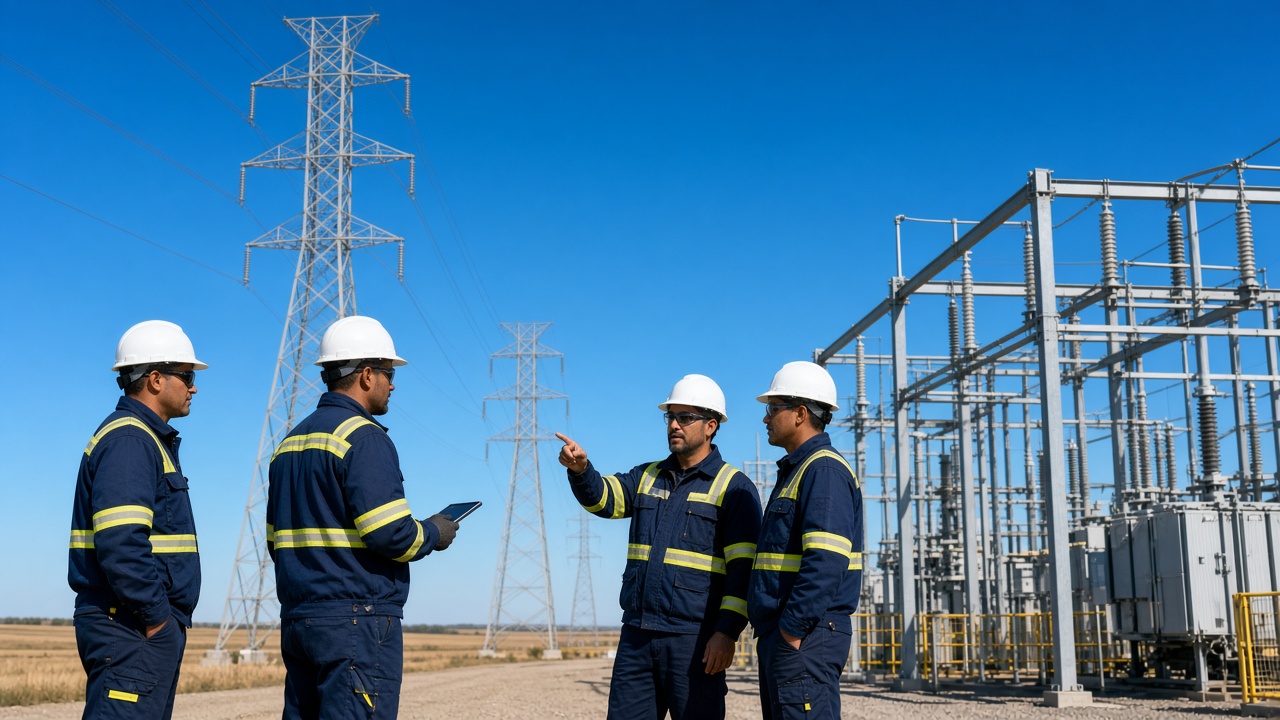
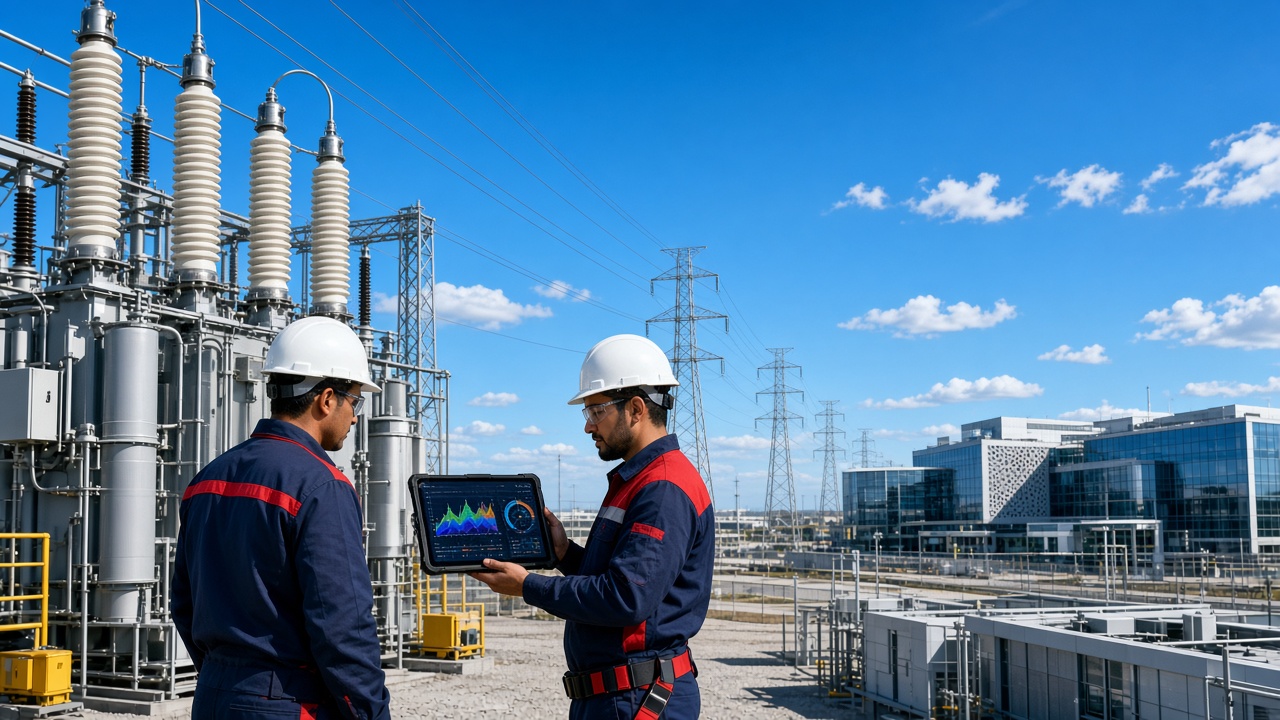
The headline project is in the South. Entergy is deploying dynamic line rating (DLR) across 1,125 miles of existing transmission in Arkansas, Louisiana and Mississippi, backed by a $13.7 million award from the US Department of Energy (Entergy). It's a four-year project with more than 600 sensors, plus targeted substation and terminal upgrades to clear equipment bottlenecks that would otherwise cap what the lines can carry.
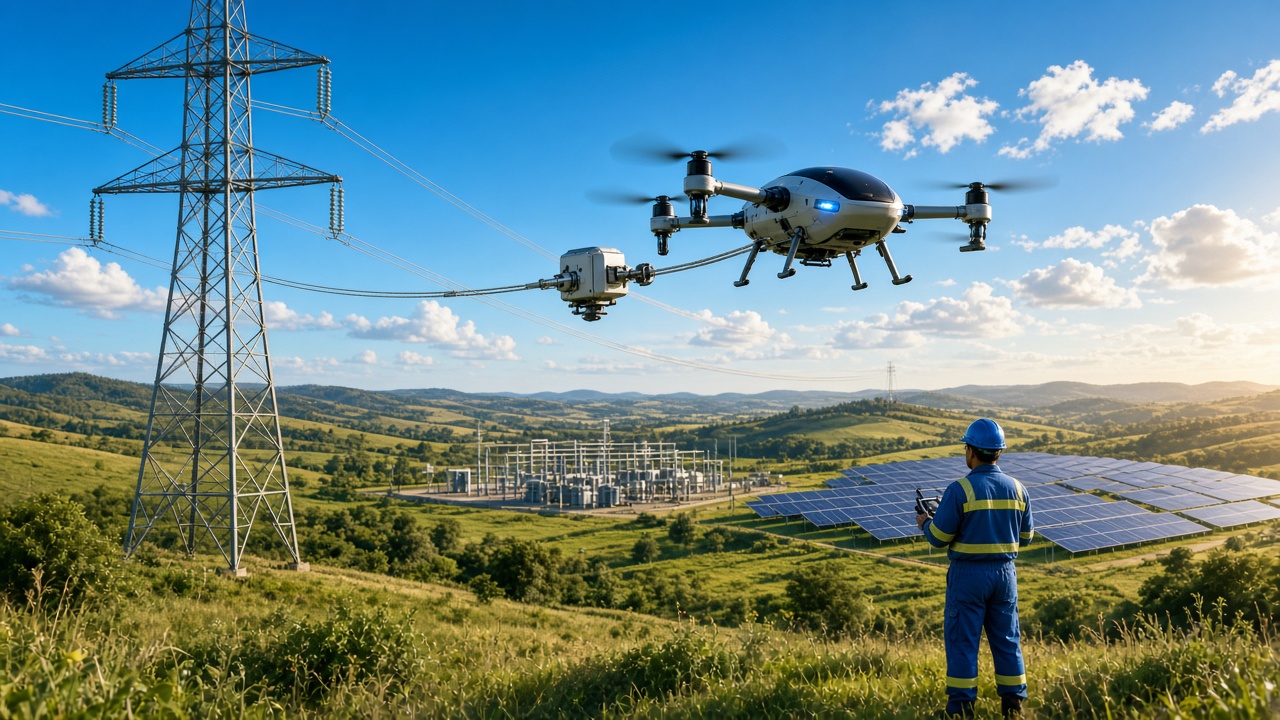
The installation method is what stood out to me. According to T&D World, autonomous drones with LiDAR find the conductor and fit each sensor in under two minutes, with no bucket trucks and no planned outages. The sensors report conductor temperature, sag, wind speed, solar radiation and ambient temperature in real time, so operators can see how much the line can actually carry right now, not on the worst day of the year.
Entergy senior engineer Tim Sansing summed it up well: "DLR is not a new concept, but the installation method and how we go about deploying this is the new piece of it that finally makes it something that people can see the benefit and actually get behind."
The numbers are significant. Entergy says the project is designed to unlock at least a 25% increase in transfer capability on selected corridors, and early modeling showed a potential 29% to 61% increase in available capacity across the project area. That's capacity pulled out of lines that already exist, on rights-of-way that already exist, without a decade of permitting.
Ameren is going even bigger in Missouri and Illinois
Entergy isn't alone. On October 28, Ameren announced that DOE had selected Ameren Missouri, Ameren Illinois and Pitch Aeronautics for a project covering more than 8,000 miles of transmission lines. Pitch will install line-mounted weather sensors at key spots and use software to calculate safe ratings from real-time and forecast weather. Ameren will also reconductor two high-voltage segments, which the company says will more than double their capacity in all weather. The project is valued at about $75.6 million in total, with about $37 million requested from DOE.
The bigger picture: SPARK and 23 GW from existing wires
Both projects come from DOE's SPARK program (Speed to Power through Accelerated Reconductoring and other Key Advanced Transmission Technology Upgrades). In September, DOE announced 31 selected projects across 26 states: $1.9 billion in federal funding and $3.35 billion in recipient cost share, $5.25 billion in all. Recipients expect to reconductor or rebuild more than 1,500 miles of transmission and deploy grid-enhancing technologies across nearly 21,000 miles, freeing up more than 23 GW of additional capacity. DOE expects to finalize awards between October 2026 and January 2027, so more of these announcements are on the way.
I like this a lot. It's the realistic, practical half of the grid story. Big new 765 kV lines matter and they're coming, but they take years. Reconductoring and DLR can deliver capacity within a single budget cycle. Both are needed, and the crews and technicians who can do both will be busy for a long time.
GE Vernova's $9 billion bet on the parts that actually limit the grid
On the equipment side, GE Vernova agreed to buy Trench Group from Triton Partners for $9 billion (T&D World). If you've never heard of Trench, you've almost certainly worked near its products: high- and medium-voltage bushings, instrument transformers and coils, supplied to more than 800 utilities and hyperscalers. Trench has more than 3,000 employees, 11 factories and about $5 billion in backlog and framework agreements.
The US angle is a new plant in Charlotte, North Carolina, expected to become the first domestic maker of transformer bushings up to 765 kV. Production is expected to start in late 2027, and the plant could create up to 140 jobs. The deal itself is expected to close in late 2027.
Why does a bushing matter? Because long lead times on big transformers and the components inside them have been one of the quiet constraints on grid buildout. Every new substation, every 765 kV backbone and every data center interconnect needs this hardware. More domestic capacity means shorter waits, and shorter waits mean projects (and the jobs on them) start sooner.
What this means for electrical careers
This is where it gets personal for our readers. These projects don't install themselves, and each one points to roles that are growing:
- Transmission lineworkers and line crews. Reconductoring is classic line work: pulling out old conductor, stringing new advanced conductor, and working sags and clearances. SPARK's 1,500-plus miles of reconductoring and rebuilds means years of steady work.
- Substation electricians and relay/protection technicians. Entergy's project explicitly includes substation and terminal upgrades. Once you raise a line rating, breakers, switches, CTs, relays and jumpers at each end have to keep up. Protection settings need revisiting when ratings change dynamically.
- Drone pilots with electrical know-how. This is a genuinely new hybrid role. Utilities and their contractors need people who hold an FAA Part 107 certificate and understand energized-line safety. If you're a lineworker or tech who already flies drones as a hobby, that's a valuable combination to build on.
- SCADA, telemetry and grid data specialists. Six hundred sensors feeding real-time ratings into operations means communications, cybersecurity and integration work. It sits right where electrical meets IT.
- Manufacturing electricians and test technicians. The new Charlotte bushing plant and the wider wave of grid-equipment factories need industrial electricians, maintenance techs and high-voltage test specialists.
My practical advice if you want in:
- Lineworkers and substation techs: ask your employer or local JATC about training on advanced conductors and reconductoring. It's specialized, and crews who've done it will be in demand.
- Techs curious about drones: the FAA Part 107 remote pilot certificate is a realistic, low-cost first step. Pair it with your existing electrical qualifications and you stand out.
- Protection and controls people: get comfortable with how dynamic ratings feed into operations and protection settings. That's where the engineering judgment is.
- Everyone: watch the SPARK award list. When a utility near you finalizes an award, hiring for line, substation and contractor work tends to follow.
I'm optimistic about where this is heading. For years the story was "we can't build transmission fast enough." It's now turning into "we'll build the big lines and get far more out of the ones we already have." That's a smarter grid, cheaper power, and more skilled work for electrical people across the USA and Canada.
If you're ready to be part of it, browse transmission, substation and lineworker jobs on ElectricalRoles.com and set an alert so the new roles come to you.