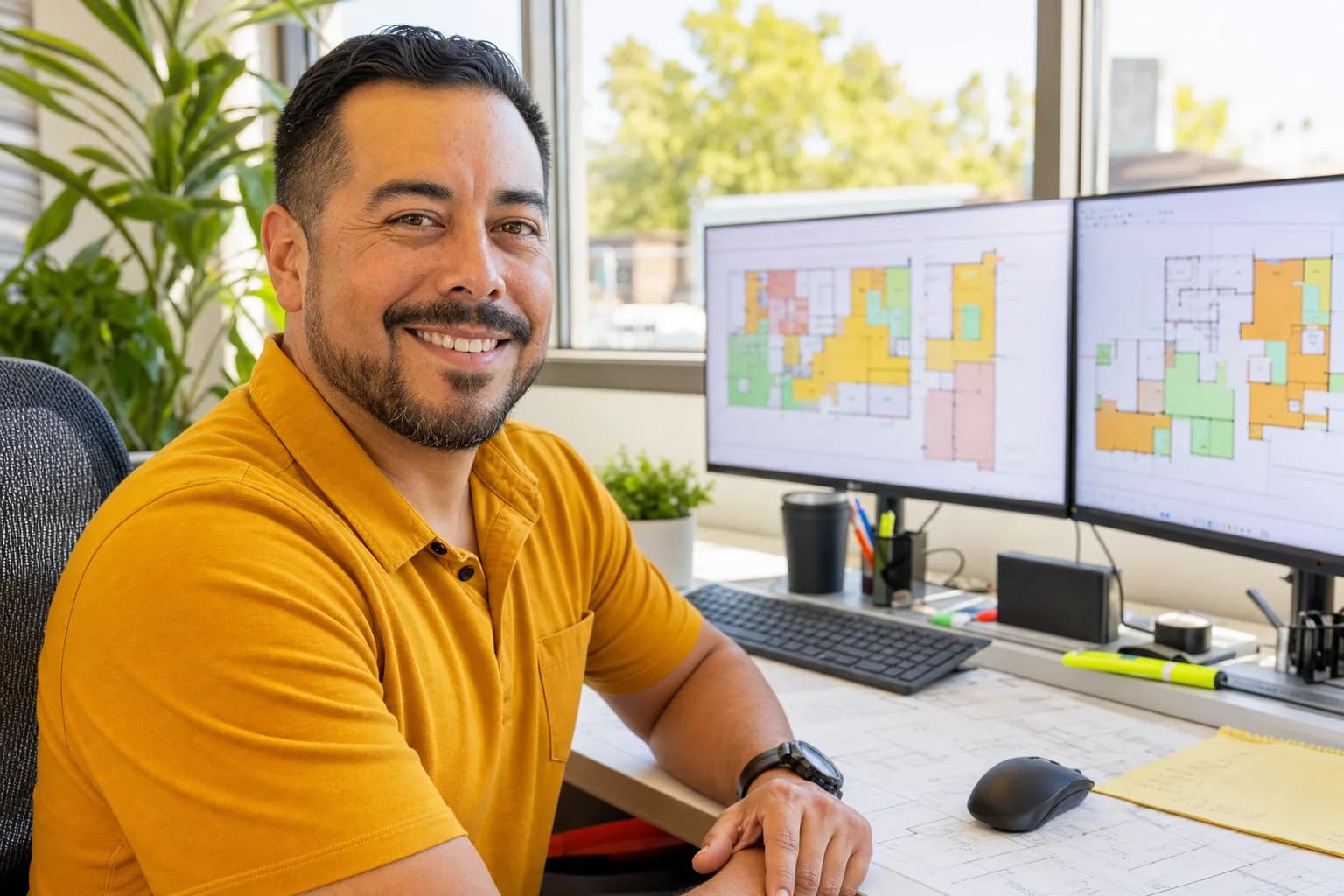
What does an electrical estimator do day to day?
You price work before anyone picks up a tool. BLS describes cost estimators as people who work out the time, money, materials and labor a project needs. They read blueprints, build and adjust estimates, keep records of estimated against actual costs, and help prepare bids. An estimate also has to allow for wasted material, bad weather and shipping delays, since each of those eats into profit.
For an electrical contractor the work follows a set order. NECA's basic estimating course lays it out: define the scope, do the material takeoff, apply labor units, total the costs, then add overhead and profit to get a bid price. The course closes with a simulated bid opening, because that is where your numbers either win the job or lose it.
Takeoffs, labor units and software
A takeoff means going sheet by sheet through the drawings and counting every device, fixture, run of conduit and length of wire. Labor units turn that count into hours. NECA has published its Manual of Labor Units since 1923 as a reference for how long typical electrical and communications installs take. The current edition covers 2025 to 2027. Many shops adjust those units using their own job history.
Takeoffs used to be done on paper. Now they are mostly done in software. BLS says estimators usually learn estimating software on the job, and the training can include BIM and CAD tools. Construction estimators also compare new jobs against databases and records from past projects. Vendors such as Viewpoint sell combined takeoff and estimating packages like ProContractor. Some estimators also pull quantities straight from CAD files.
Moving from the tools into estimating
BLS says employers usually prefer a bachelor's degree in construction or engineering. It also says some construction estimators qualify through work experience alone, and that employers may want field experience from candidates without a degree. That leaves a real path for electricians. If you have run a crew, you know how long a job takes to rough in, and that is exactly what makes a labor estimate believable.
A common route is to start as an assistant estimator or take over takeoffs for a foreman or project manager. A short course such as NECA's three-day Basic Estimating class, offered by local chapters and online, teaches the method. Be ready for the change in pace. Estimating is desk work with deadlines, and some estimators work more than 40 hours a week.
What contractors look for in an estimator
Contractors want accuracy most of all. BLS lists attention to detail, math, analytical skill, time management and writing as the qualities that matter. A small miss on wire quantity or labor hours gets repeated across a whole building. Electrical knowledge matters too: you need to read symbols on a drawing at a glance and know the code requirements behind them.
Bid deadlines do not move, so they want someone who can finish under pressure without cutting corners. They also want estimators who track how jobs actually came out against the bid, since that feedback is what tightens future numbers. Specialty trade contractors employ about a third of all US cost estimators, so electrical and other trade shops are the biggest single source of these jobs.
Pay
USD a year, before tax. Ranges run from the 25th to the 75th percentile for estimating roles. They are based on U.S. Bureau of Labor Statistics OEWS data for May 2025, adjusted to 2026 with a wage index. State figures are modeled. Job size, commercial versus industrial work, and a move to senior or chief estimator all push pay up. Refer to the Electrical Estimating salary guide for figures from live adverts.
What you need
- EducationEmployers generally prefer a bachelor's degree in construction or engineering. Some construction estimators qualify through extensive field experience instead.
- Field experienceSome employers want construction work experience, especially from candidates without a degree. Years as an electrician count directly.
- Blueprint readingYou need to read drawings, specifications and electrical symbols accurately, because every takeoff starts there.
- Estimating softwareMost estimators learn takeoff and estimating software on the job. Training can also cover BIM and CAD tools.
- Math and detailSmall mistakes repeat across a whole project, so precise math and careful checking are essential.
- Optional certificationASPE's Certified Professional Estimator requires more than two years of experience and a written or oral exam. It renews every three years through continuing education.
How to get there
- Year 1-4Electrical apprenticeshipLearn the trade on real jobs. An IEC apprenticeship typically takes about four years and includes at least 8,000 hours of on-the-job training.
- Year 4-7Journeyman and lead rolesRun work, read drawings every day, and learn how long installs really take.
- Any timeEstimating trainingTake a short course such as NECA's three-day Basic Estimating of Electrical Construction to learn takeoffs, labor units and bid summaries.
- First 1-2 years inAssistant estimatorDo takeoffs and pricing support for a senior estimator or project manager while you learn the software.
- After 2+ yearsEstimatorOwn bids from scope review to final price, and track actual job costs against the estimate.
- Later careerSenior or chief estimatorLead the bid team, review other estimators' work, or move into project management.
Open now on ElectricalRoles.com


Questions people ask
Do you need a degree to become an electrical estimator?
Not always. BLS says employers generally prefer a bachelor's degree, but some construction estimators qualify through extensive work experience alone. Electricians with field experience often move in through assistant estimator roles.
What is a takeoff?
A takeoff is a count of every piece of material shown on the drawings, such as devices, fixtures, conduit and wire. Labor units are then applied to that count to estimate installation hours. Together they form the base of the bid.
What are labor units?
Labor units are standard time values for installing each item. NECA's Manual of Labor Units, published since 1923, is a common reference, and its current edition covers 2025 to 2027. Contractors often adjust the units using their own job history.
Is there a certification for estimators?
Yes. The American Society of Professional Estimators offers the Certified Professional Estimator credential. It requires more than two years of experience and an exam, and it renews every three years through continuing education.
Is estimating a growing field?
BLS projects a 3 percent decline in cost estimator employment from 2025 to 2035, partly because software makes each estimator more productive. Retirements and turnover still produce about 17,600 openings a year.
Do estimators work on job sites?
Mostly no. BLS says estimators work mainly in offices, though some visit construction sites to gather information. Expect desk work around bid deadlines, sometimes beyond 40 hours a week.
Sources
- U.S. Bureau of Labor Statistics: Occupational Outlook Handbook, Cost Estimators
- NECA: Basic Estimating of Electrical Construction, Chicago & Cook County Chapter
- NECA: Basic Estimating of Electrical Construction, Boston Chapter
- NECA: Manual of Labor Units (MLU)
- O*NET OnLine: Certified Professional Estimator (CPE)
- ABC: ProContractor by Viewpoint estimating brochure
- IEC: Electrical Apprenticeships
- NYC Jobs: Senior Estimator (Electrical)