The Transformer Crunch Is Creating a New Wave of Grid Jobs
Transformer lead times near 80 weeks are driving new US factories, rebuilds and acquisitions. Here's what the crunch means for electrical careers.
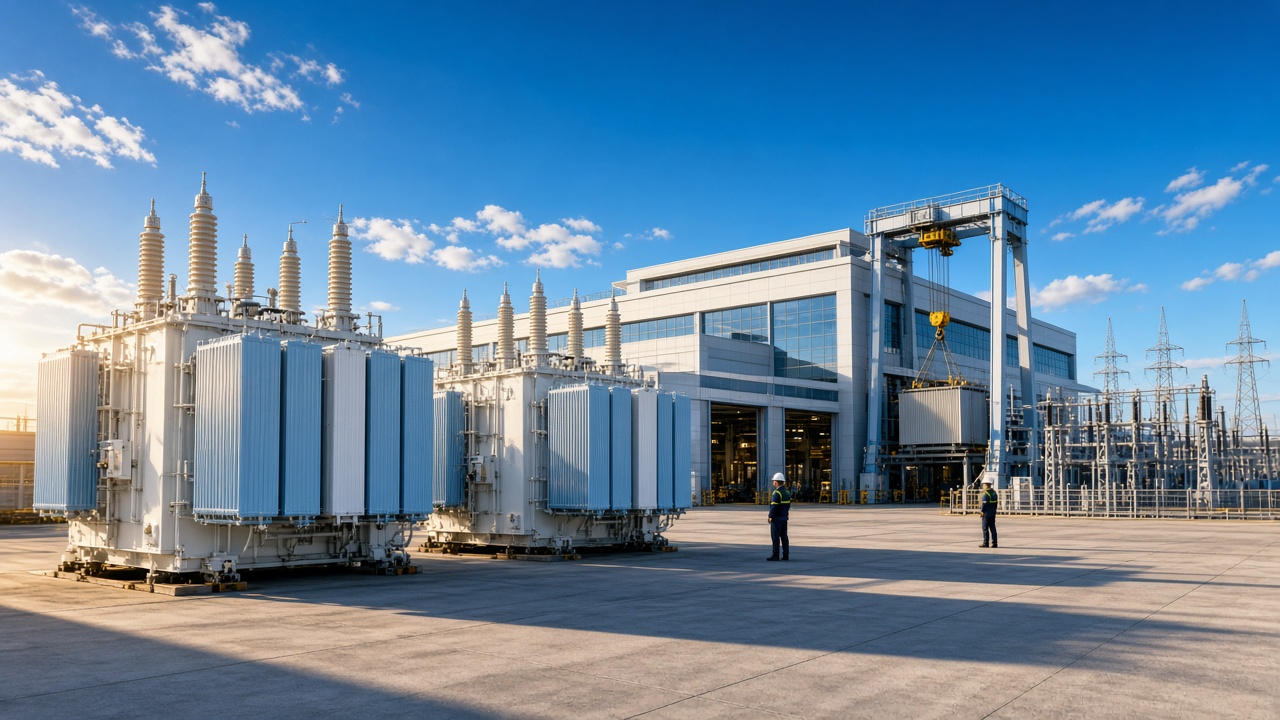
If you want to understand why grid projects across North America are running late, don't start with permits or politics. Start with a big steel box full of copper, oil and electrical steel: the transformer.
Every new data center, every subdivision, every EV charging hub and every solar or battery site needs transformers to step voltage up or down. Right now there aren't enough of them. But the last few weeks of news tell a story that I find genuinely exciting: the industry is responding with new factories, a booming rebuild-and-refurbish market and a wave of acquisitions. And all of that is creating electrical jobs that didn't exist at this scale a few years ago.
How tight is it?
The clearest picture comes from a place you might not expect: a city utility in North Texas. In October, a staff report for Denton Municipal Electric warned customers and developers that it may not be able to connect new service because its transformer supply was running low. The stock it had on hand was at levels set aside for emergencies and routine restoration. Lead times on some units were approaching 80 weeks, vendors couldn't give reliable delivery dates, and the average cost of the transformers it buys had risen 350% or more. A single unit can cost more than $100,000.
Denton's answer was practical: a contract of up to $4 million over five years with a San Antonio firm to refurbish, rebuild and sell salvaged transformers. Tellingly, the city sent its request to 736 firms and got just four responses. That's how thin the specialist bench is.
Zoom out and the federal data says the same thing. In an October 26 update, the Department of Energy's Office of Electricity said the US relies on imports for 80% of its power transformers and 50% of its distribution transformers, with multi-year lead times driven by rising consumption and aging assets. Shortages of domestic electrical steel and copper make it worse.
Fix one: build more factories
The headline response is manufacturing, and the announcements are coming thick and fast.
- Niagara Power Transformer broke ground in Cheektowaga, New York, on a more than $71 million expansion on October 22. It will lift production capacity by 50%, add 96,000 square feet, retain 146 jobs and create 73 new full-time positions, including 57 IBEW union jobs. The company, recently acquired by Quanta Services, builds large liquid-filled power transformers.
- Hitachi Energy announced a $528 million factory in Gallman, Mississippi in September, creating more than 700 jobs, with production slated for 2029. It sits alongside a $457 million expansion in South Boston, Virginia, that Hitachi says will create 825 jobs.
- Korean manufacturers are scaling up too. The Korea Times reported on October 28 that HD Hyundai Electric's second Alabama plant, due in April, should lift its extra-high-voltage transformer capacity by about 50% and allow units up to 765 kV. Hyosung Heavy Industries is investing $300 million to expand its Memphis transformer plant, and LS Electric plans to invest $240 million in US operations by 2030, including its Utah switchgear plant and a campus in Bastrop, Texas.
These are big numbers, but be realistic about timing. A factory announced in 2026 that starts producing in 2029 doesn't help a developer who needs power next spring. New capacity is the long game. That's why the second fix matters so much.
Fix two: rebuild what we already have
This is the part of the story I think is most underrated. The fastest transformer is often one that already exists.
DOE estimates refurbishment can save 10% to 40% compared with buying new, and says that if just 30% of distribution transformers reaching end-of-life were refurbished, ratepayers could save up to $125 million a year. It also says refurbishment can cut lead times from months to weeks. The catch? Domestic refurbishment capacity is limited, and inconsistent remanufacturing standards and testing make some buyers nervous. DOE's new Grid Supply Chain Program, authorized with up to $375 million, is aimed squarely at those problems.
The private market isn't waiting. On October 7, Integrated Power Services closed its acquisition of Belyea Company, an Easton, Pennsylvania, business that remanufactures 69 kV to 230 kV transformers and rents out portable substations. And on November 2, SOLV Energy completed its roughly $45 million acquisition of ASB Energy Services, an Amarillo, Texas, contractor that specializes in substation foundations, civil work and battery storage infrastructure. When companies are buying up high-voltage capability like this, it tells you where they expect the work to be.
What this means for electrical careers
Here's why I'm writing about transformers on a jobs site. Every one of these moves needs skilled people, and a lot of them are roles that most electricians never think about.
Transformer manufacturing. Plants need winders, core stackers, assemblers, test technicians, quality inspectors and maintenance electricians. The IBEW Local 41 business manager noted that the Niagara expansion includes "a path in for people just starting out." Factory roles tend to offer steadier hours and less travel than field construction, which is a real lifestyle advantage.
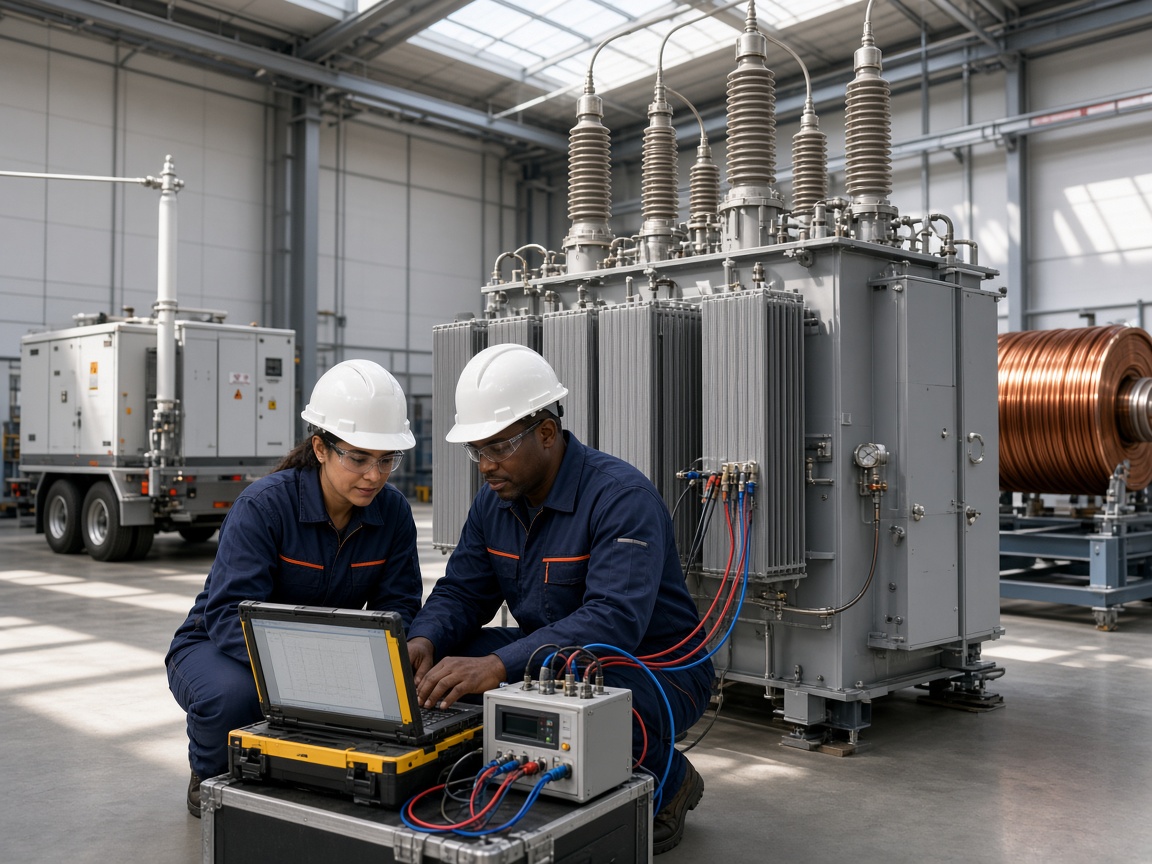
Test and commissioning. Every new or rebuilt unit has to be tested before it goes live, and every substation it lands in has to be commissioned. That's skilled work for NETA-certified technicians, relay techs and commissioning engineers. If you're an electrician who enjoys troubleshooting more than pulling wire, this is a high-value niche. Our recent explainer on what a relay technician does is a good place to start.
Remanufacturing and field service. Teardown, rewinds, oil processing, vacuum drying and return-to-service work all require hands-on craft skills that are hard to replace. These shops are small, specialized and growing, which often means fast responsibility for good people.
Substation and utility construction. More transformers mean more pads, foundations, bus work and protection schemes. Substation electricians, lineworkers and civil crews benefit directly. The BLS lists a May 2025 median of $95,320 for power-line installers and repairers, and $105,080 for power plant operators, distributors and dispatchers, so the grid side of the trade pays well.
Engineering and supply chain. Utilities and developers need people who understand equipment specs, procurement, and asset condition. If you can read a test report and know whether a refurbished unit is fit for service, you're valuable.
My practical advice
If you're an electrician or apprentice wondering how to ride this wave, here's what I'd do.
- Learn the equipment, not just the install. Understand transformer basics: ratings, impedance, cooling classes, oil testing and protection. That knowledge travels across manufacturing, field service and utility work.
- Get testing credentials. NETA certification and experience with insulation resistance, turns ratio and power factor testing open doors fast.
- Look beyond contractors. Manufacturers, remanufacturers, utilities and equipment service companies all hire electrical talent. Some of the best-paid, most stable roles are on the factory floor or in field service.
- Follow the plants. New York, Mississippi, Virginia, Alabama, Tennessee, Texas and Utah all came up in the news this fall. If you're open to relocating, that's a shortlist.
- Keep an eye on our jobs board. As I write this, there are 28 live roles on ElectricalRoles.com mentioning substations, from substation electrician apprenticeships and journeyman roles at Xcel Energy in Texas and PacifiCorp in Oregon to substation technicians at Tri-State in Colorado and substation project engineers at GE Vernova. The demand is real and it's broad.
The bigger picture
It's easy to see the transformer shortage as a problem holding back the grid. I see it as a signal. Demand for electricity is rising so fast that we've outgrown the supply chain we built for a slower century. The response, with new factories, smarter reuse, better materials and serious investment, is exactly what a healthy industry does when it's growing.
For electrical workers, that means more paths into the trade, more specialties to master and more leverage for the people who know how this equipment works. The big steel boxes are the bottleneck today. The people who build, test and fix them are going to be in demand for a long time.