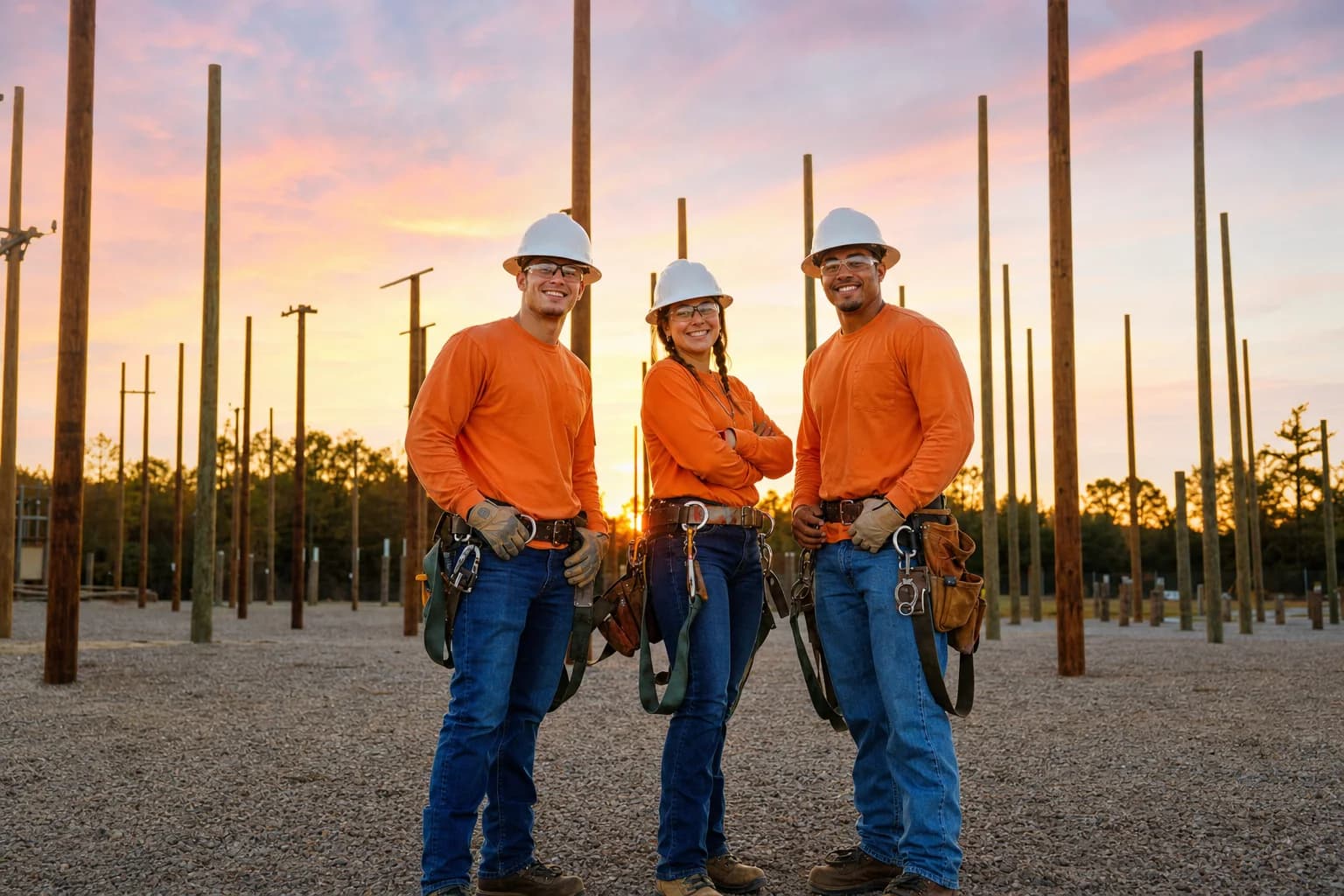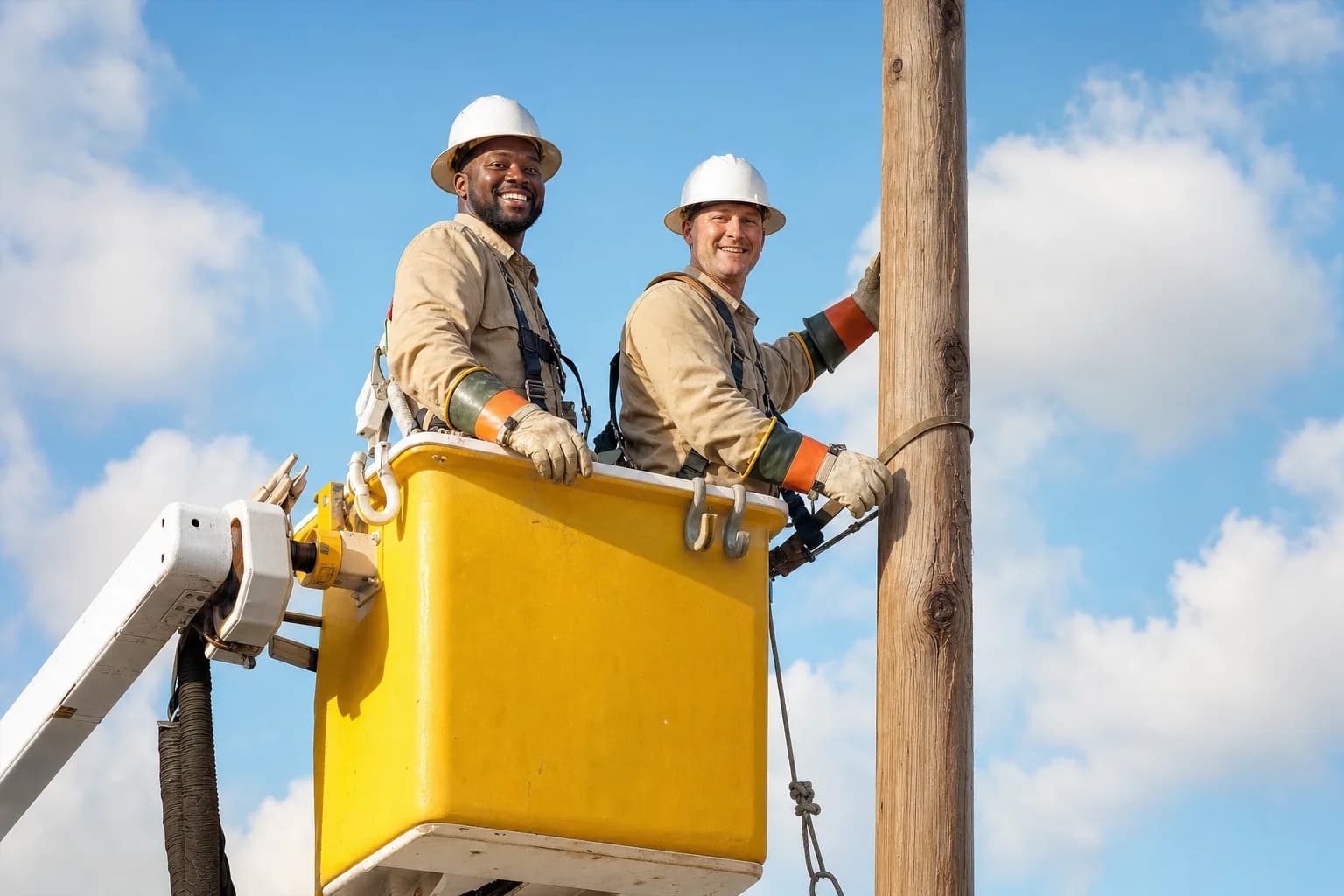
What are the routes into line work?
Almost every route runs through an apprenticeship or other employer-run training program. BLS says most power-line workers learn through apprenticeships or other training run by the employer. These combine paid work on a crew with classroom instruction. Some are run jointly by the employer and the union. Your employer will be a utility or a line construction contractor. Utilities employ about half of all power-line workers, and utility system construction firms employ another 29 percent.
Many people go to lineworker school first. Community colleges offer 1-year certificates and 2-year associate degrees. They cover electrical distribution, line construction, and pole top and bucket rescue, and some include an internship or fieldwork. A certificate does not make you a lineman. It shows a hiring committee you can climb, you know the basics, and you are serious. Some people start as a ground hand on a crew instead and move into an apprenticeship opening from there.
The CDL and climbing
Line trucks are heavy vehicles, so plan on getting a commercial driver's license. BLS says workers who drive heavy vehicles usually need a state CDL. Crews that cross state lines need an interstate CDL, which falls under the Federal Motor Carrier Safety Administration. The Cal-Nev Power Lineman JATC lists a valid CDL as a requirement. Applicants must be able to get one once they are indentured. Under federal rules, anyone taking a Class A or Class B skills test for the first time must first finish entry-level driver training. That training has to come from a provider on FMCSA's Training Provider Registry.
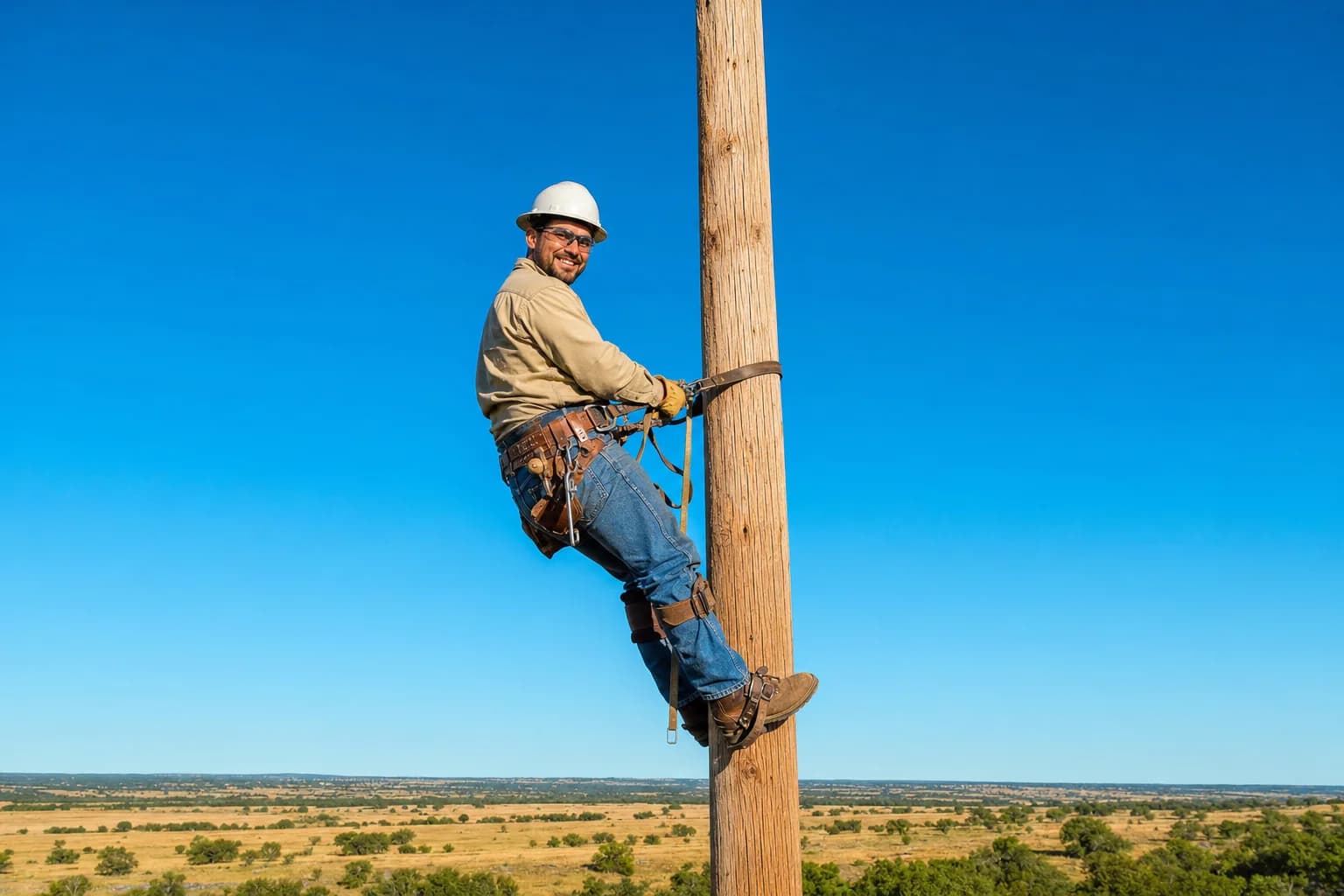
Climbing is the other gate. You have to climb poles and towers carrying heavy tools, keep your balance at height, and work in confined spaces. Apprenticeships may make you pass a fitness test. Wires are color coded, so you need good color vision. If heights bother you, find out before you spend money on school.
How long does it take to top out?
BLS says line apprenticeships can last up to 3 years, and that qualified apprentices reach journey level after 3 or 4 years of work. Program lengths vary. California's apprenticeship database lists the Cal-Nev Power Lineman JATC at 42 months, with a starting wage of $34.07 an hour. In Texas, you need 7,000 hours in a U.S. Department of Labor-approved apprenticeship to apply for the state's journeyman lineman license. Once you top out, you can do most tasks without supervision. Experienced linemen can move up to foreman, supervisor or trainer jobs.
What the work is really like
It is outdoor work in every kind of weather. Storms and other disasters knock lines down, and someone has to go out in the rain and wind to put them back up. Most linemen work full time, and some work more than 40 hours a week. After a big storm, crews may travel to the damaged area and work long hours several days in a row. Crews on interstate grid work can travel long distances.
The hazards are serious. Touching a live high-voltage conductor can kill you, so linemen use insulated tools and protective gear on energized lines. They also wear fall protection on poles and towers. BLS says safety procedures and training have reduced the danger. Linemen depend on each other for their safety, so how you work as part of a crew matters as much as your skills.
Pay
USD a year, before tax. Ranges run from the 25th to the 75th percentile for power and utility work. They are based on BLS Occupational Employment and Wage Statistics, May 2025, and adjusted to 2026 with a wage index. State figures are modeled. BLS reports a May 2025 median of $95,320 for power-line installers and repairers. Pay is higher at utilities than at line construction contractors, and storm overtime adds to it. Refer to the Power & Utilities salary guide for figures from live adverts.
What you need
- High school diploma or GEDThis is the usual entry requirement. Employers may prefer candidates who know basic algebra and trigonometry.
- AlgebraApprenticeships may require a year of high school algebra. The Cal-Nev Power Lineman JATC asks for two semesters of high school algebra or one semester of college algebra.
- Aptitude test and drug screenBLS says apprenticeship entry may include a qualifying score on an aptitude test and a substance abuse screening.
- Physical fitnessYou must be able to climb poles and towers carrying heavy equipment, and some programs require a fitness test.
- Commercial driver's licenseMost line jobs involve driving heavy trucks. First-time Class A or B applicants must finish entry-level driver training with an FMCSA-registered provider before the skills test.
- Minimum ageThe Cal-Nev Power Lineman JATC sets a minimum age of 18. Other programs set their own rules.
- Willingness to travelContractor apprenticeships can cover large areas. The Cal-Nev JATC requires apprentices to travel across California and Nevada.
State by state
| Texas | TDLR issues a Journeyman Lineman license for transmission and distribution work. It is a limited license and does not equal a Journeyman Electrician license. To qualify, you need 7,000 hours in a DOL-approved apprenticeship or 3.5 years as a journeyman lineman in Texas, plus a $30 application fee and an exam, and you renew every year. |
|---|---|
| California and Nevada | The Cal-Nev Power Lineman JATC apprenticeship runs 42 months and starts at $34.07 an hour. Applicants must be at least 18 with a high school diploma or GED, pass an oral exam, and hold a valid CDL. |
How to get there
- Before applyingFinish school and algebraGet a high school diploma or GED with at least a year of algebra. Many apprenticeship programs screen for it.
- Up to 1 to 2 yearsConsider lineworker schoolA community college certificate or associate degree teaches distribution basics, line construction, climbing, and pole top and bucket rescue.
- Before or at hireWork toward a CDLFinish entry-level driver training with an FMCSA-registered provider, then pass the skills test. Some programs need the CDL at indenture.
- Application stageGet into an apprenticeshipApply to a utility or contractor program. Expect an aptitude test, a drug screen, an interview or oral exam, and possibly a fitness test.
- Year 1 to 4Serve the apprenticeshipWork on crews under journeymen while you complete classroom instruction. Texas licensing counts 7,000 hours. The Cal-Nev JATC runs 42 months.
- After year 3 or 4Top out as a journeymanAt journey level you work mostly without supervision. In Texas you can apply for the TDLR Journeyman Lineman license.
Open now on ElectricalRoles.com


Questions people ask
Do I need to go to lineworker school to become a lineman?
No. BLS lists a high school diploma as the typical entry education, and apprenticeships do the real training. A 1-year certificate or 2-year associate degree from a community college can help you stand out when you apply, because it covers climbing, line construction and rescue.
Do linemen need a CDL?
In practice, yes. BLS says workers who drive heavy vehicles usually need a state CDL, and crews crossing state lines need an interstate CDL. Some apprenticeships, including the Cal-Nev Power Lineman JATC, require a valid CDL.
How long does it take to become a journeyman lineman?
BLS says qualified apprentices reach journey level after 3 or 4 years. The Cal-Nev Power Lineman JATC program is 42 months. Texas requires 7,000 hours in a DOL-approved apprenticeship before you can apply for its journeyman lineman license.
Is a lineman license required in every state?
No single national lineman license exists. Texas does license journeyman linemen through TDLR, with a $30 application fee, an exam and annual renewal. Other states handle it differently, so check the rules in the state where you will work.
How much do linemen make?
BLS reports a May 2025 median of $95,320 a year for electrical power-line installers and repairers. Our modeled 2026 range for power and utility work runs from about $69,600 to $113,600 nationally, from the 25th to the 75th percentile. Utility jobs pay more than contractor jobs on average.
How much travel and storm work is involved?
Expect some. After storms and disasters, crews may travel to damaged areas and work long hours several days in a row. Crews on interstate grid work can travel long distances. Contractor programs may require you to travel across a wide region.
Sources
- U.S. Bureau of Labor Statistics: Electrical Power-Line Installers and Repairers, Occupational Outlook Handbook
- Texas Department of Licensing and Regulation: Apply for a New Journeyman Lineman License
- California Department of Industrial Relations: Cal-Nev Power Lineman J.A.T.C. program detail
- eCFR: 49 CFR Part 380 Subpart F, Entry-Level Driver Training Requirements