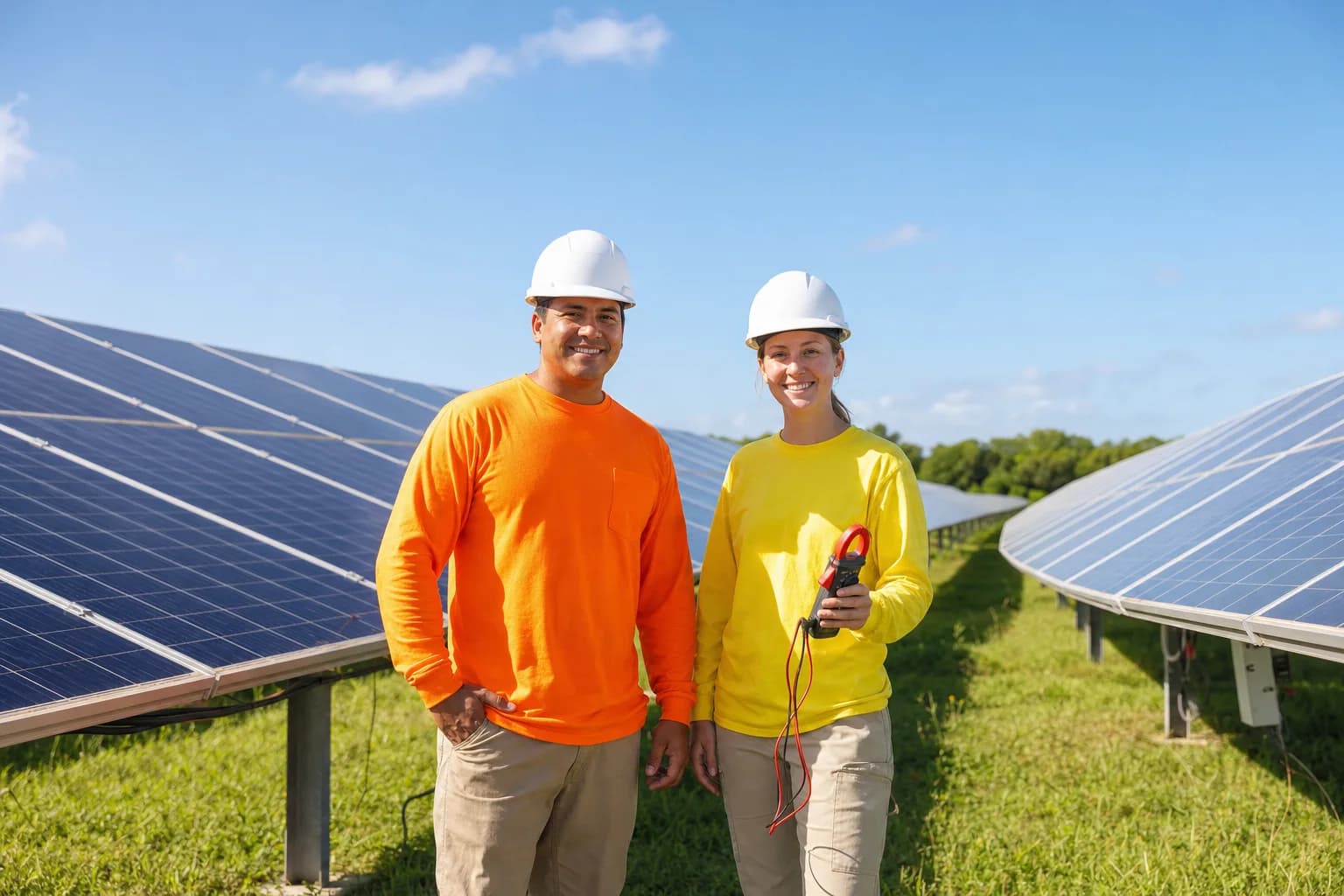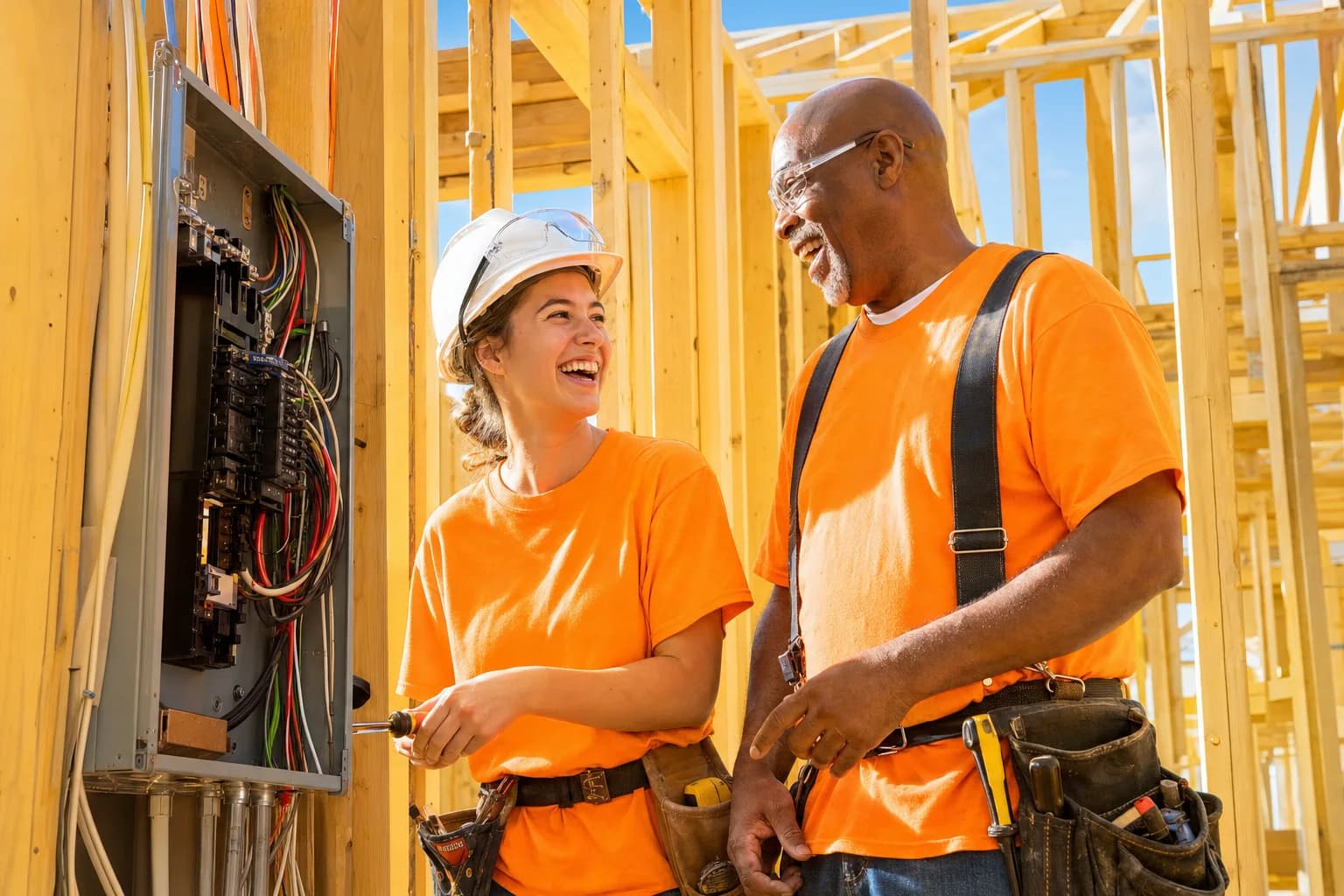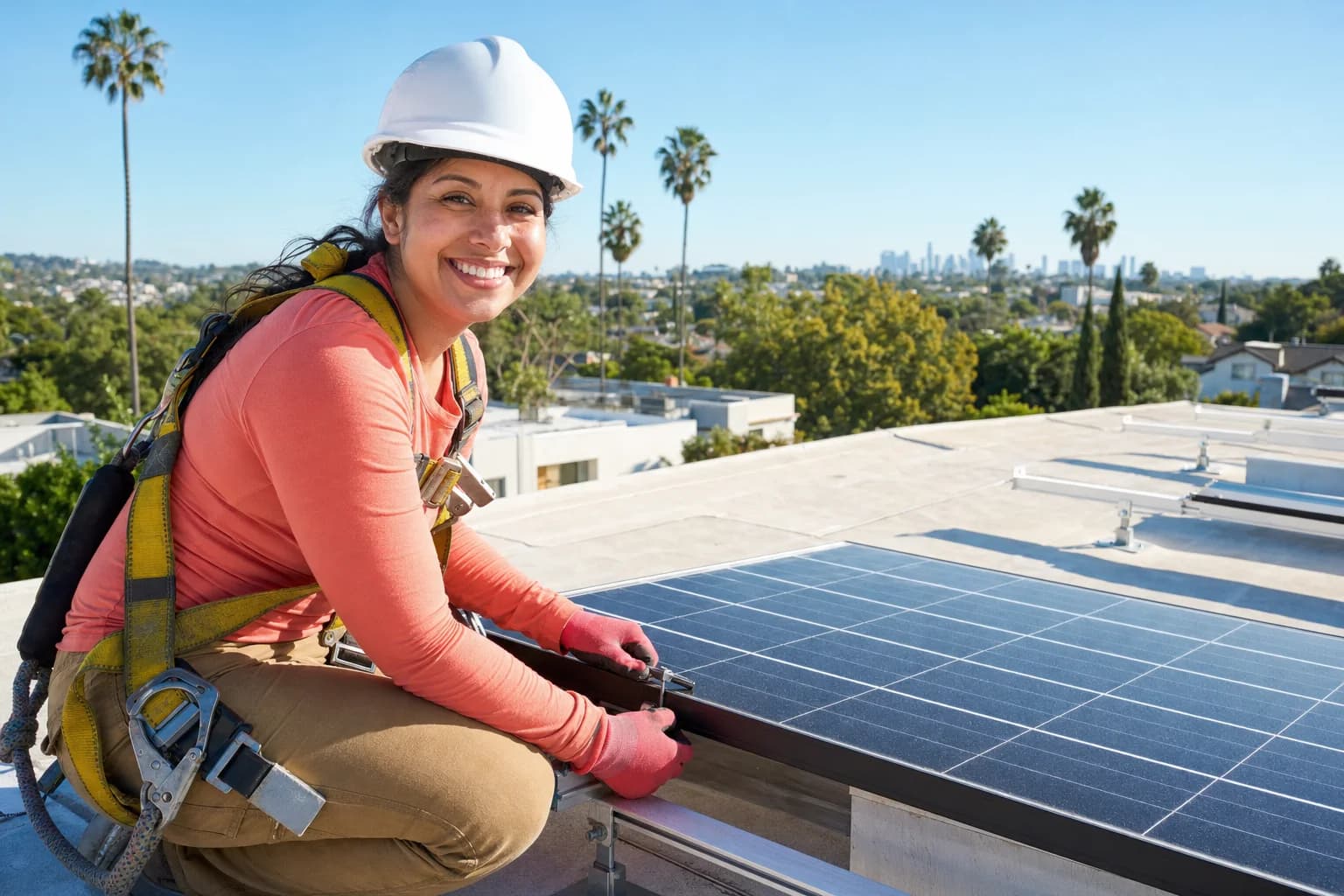
What does a rooftop solar installer actually do?
You mount racking, set panels, run conductors and connect the array to the building's electrical system. BLS describes installers checking wiring, polarity and grounding once the panels are up, then coming back to do maintenance. Whether you make the final grid connection depends on the job and on state law. On many jobs an electrician handles that part.
Plan on roofs, ladders and lifts, plus time in attics and crawl spaces. BLS lists falls, electric shock and burns from hot materials as the main hazards, and harnesses, gloves and hard hats as standard gear. You will drive to a different site most days, so employers often ask for a driver's license. You also need enough math to work out angles, measurements and areas.
How do most people get in?
Most installers learn the work on a crew under experienced hands. BLS puts on-the-job training at one month to a year. Some people take community college or technical school courses first, and those run anywhere from a few days to several months. Some come in through an apprenticeship. Equipment makers also run short courses on how to install their own products.
Experience from another trade makes the start quicker. If you have worked as an electrician, roofer, carpenter or laborer, you already know basic construction tasks, and that can shorten your training. Later on, installers can move up to project supervisor or project manager, shift into solar sales, or start their own installation business.
NABCEP PV Associate and PV Installation Professional
The North American Board of Certified Energy Practitioners (NABCEP) runs the certifications employers know best. The PV Associate (PVA) is the entry-level credential. The PV Installation Professional (PVIP) is the senior one, and it is aimed at people in decision-making roles such as lead installer, foreman, designer or electrician. Both are voluntary. NABCEP says its credentials are not government licenses, and they do not authorize you to practice.
To sit the PVIP exam you need OSHA 10 for Construction, at least 58 hours of advanced training and six project credits. Forty of those hours have to come from an accredited provider, such as a college or a DOL Registered Apprenticeship. Holding an active PV Associate credential can count toward the other 18 hours. Each system from 1 to 999 kW earns two credits. Each one needs a permit and a final inspection and must be finished within the last two calendar years.
Who is allowed to do the electrical work?
That depends on the state. BLS notes that some states require a license for PV installers, and whether installers or electricians make the grid connection varies with state law. In California, the Contractors State License Board has a C-46 Solar Contractor classification. It covers installing, modifying, maintaining and repairing thermal and photovoltaic systems. A C-46 holder may take on other building trades only when the solar installation requires them.
Some states also require certified installers on every project that receives solar subsidies. If you want to own the wiring side of the job anywhere, the most reliable route is an electrical apprenticeship that leads to a journeyman license. NABCEP lists electricians among the roles that qualify for PVIP.
Pay
USD a year, before tax. Refer to the Renewables & Solar salary guide for figures from live adverts.
What you need
- EducationA high school diploma is the usual entry requirement. Community college or technical school PV courses help but are optional.
- Physical fitnessYou will work at height on roofs, ladders and lifts, and you will carry panels and racking.
- Driver's licenseEmployers often require one because installers travel to a different jobsite most days.
- OSHA 10NABCEP requires at least 10 hours of OSHA Outreach training for Construction before you can sit the PVIP exam.
- 58 hours advanced PV trainingFor PVIP, 40 hours must come from an accredited provider and 18 can come from other sources, including a PV Associate credential. All of it must have been completed within the past five calendar years.
- Six project creditsThese must come from permitted, inspected systems of at least 1 kW DC where you held a decision-making role, finished within the last two calendar years.
- Age 18NABCEP requires board certification applicants to be at least 18.
State by state
| California | The Contractors State License Board licenses solar contractors under the C-46 classification, which covers installing, modifying, maintaining and repairing thermal and PV systems. C-46 holders may take on other building trades only when a solar installation requires them. |
|---|
How to get there
- Months 0-12Join a crew as a helper or installerLearn racking, panel setting, wiring and roof safety from experienced installers. On-the-job training usually takes between one month and one year.
- Year 1Get OSHA 10 and entry-level PV trainingOSHA 10 for Construction is a hard requirement for PVIP. A NABCEP PV Associate credential shows you know the basics and counts toward the 18 non-accredited training hours.
- Years 1-3Step into a decision-making roleWork as lead installer, foreman or designer on permitted jobs. You need six project credits, which is three systems between 1 and 999 kW, each with a final inspection, finished within two calendar years.
- Years 1-3Complete 58 hours of advanced trainingTake at least 40 hours from an accredited provider, such as a college, a DOL Registered Apprenticeship or an IREC-accredited program. All hours must fall within the past five calendar years.
- Years 2-4Pass the PVIP examUnder NABCEP's Board Eligible pathway, you can test once your training is done and then finish the installation experience within three calendar years.
- Every 3 yearsRecertify every three yearsComplete 30 hours of continuing education: 6 on the NEC, 12 on the PVIP job tasks and 12 on renewable energy, including 2 on building or fire codes. You also need an employer letter confirming you still work in solar.
Open now on ElectricalRoles.com


Questions people ask
Do I need NABCEP certification to get hired as a solar installer?
No. BLS says certification is not required for employment, and most installers learn on the job. Certification does prove competency, and some states require certified installers on projects that receive solar subsidies.
Do I need a license to install solar panels?
Some states require a license for PV installers, and state law decides whether installers or licensed electricians make the grid connection. California, for example, licenses solar contractors under the CSLB's C-46 classification. A NABCEP credential does not replace a state license.
How many installs do I need for the NABCEP PVIP?
You need six project credits. A system between 1 kW and 999 kW earns two credits, and a system of 1 MW or more earns three. Each system must be permitted, pass final inspection and have been finished within the two calendar years before you apply.
Can I take the PVIP exam before I have the installation experience?
Yes. Under NABCEP's Board Eligible pathway, you can test once your OSHA and advanced training requirements are met. You then have three calendar years after passing to complete the project credits, or you must reapply and retest.
How much do solar installers earn?
BLS reported a median of $53,140 for solar PV installers in May 2025. Indexed to 2026, the national middle range is about $48,300 to $65,100. New Jersey and California pay above that range, and Texas and Florida pay below it.
Can veterans use the GI Bill for NABCEP exams?
Yes. NABCEP says the PV Associate and PVIP exams, along with its other solar PV exams, are approved for GI Bill exam fee reimbursement. NABCEP also runs a veterans pathway for PVIP that uses a DD-214 and an employer letter to document experience.