
Batteries Go Live From Florida to Utah, Plus EMCOR Buys P1
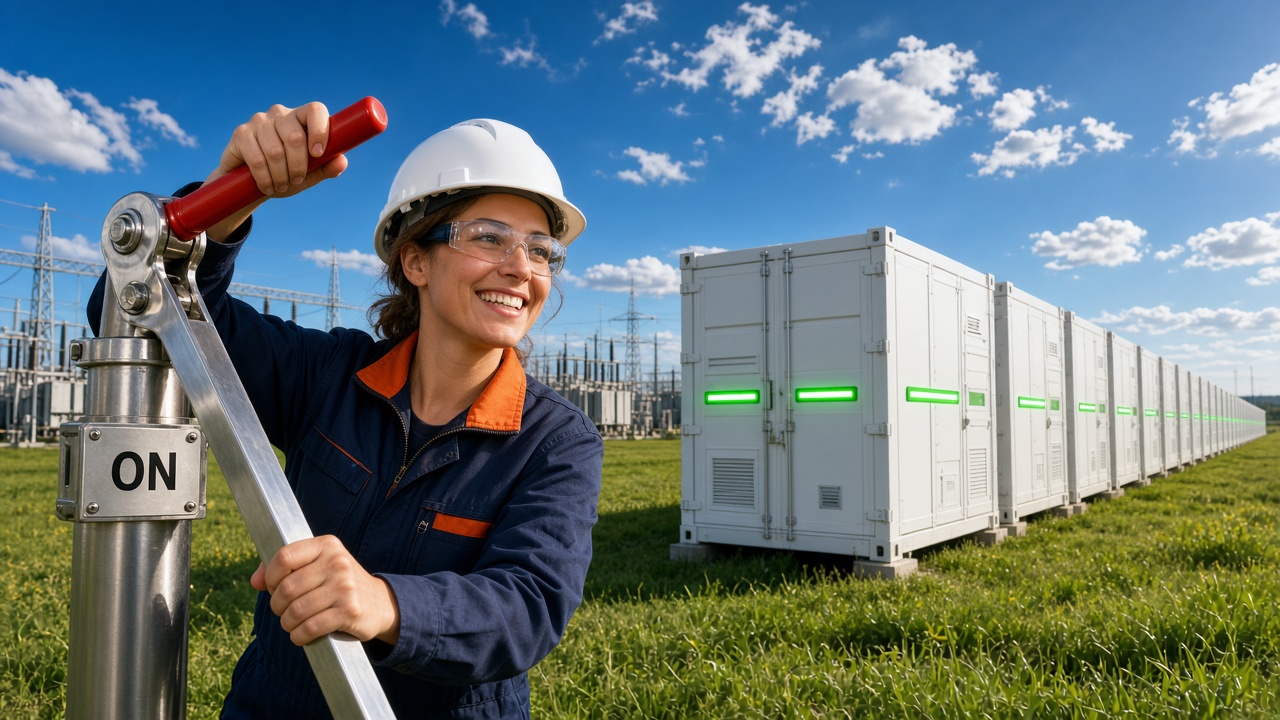
Five battery plants switched on across the US in a week, EMCOR is buying a $600M+ data center contractor and Québec needs 12,000 MW more. Here's what it means.
Some weeks the electrical news is all plans, filings and promises. This week was different. This week things got switched on.
Between November 6 and November 11, battery plants in Florida, Georgia, California, Utah and Ohio were commissioned, cut a ribbon or entered commercial operation. On Friday EMCOR agreed to buy one of the Midwest's big mission-critical electrical and mechanical contractors. And up in Québec, Hydro-Québec laid out just how much more power the province will need by 2041.
I love weeks like this, because finished projects are proof. Every battery that goes live is a job that a crew of electricians actually built, tested and handed over, and the numbers on these sites tell you a lot about where the work is right now. Here's the roundup and what I think it means for you.
Five batteries, one week
Florida: FPL's biggest battery yet, on an old coal yard
On November 9, Florida Power & Light announced the commissioning of its Lansing Smith Battery Energy Storage System in Bay County. It can put out 400 MW for up to four hours, 1,600 MWh in total, which FPL says is enough to power about 300,000 homes over that four-hour window. That makes it FPL's largest battery by energy capacity, and it takes the utility's battery fleet to nearly 2 GW.
The detail I like most is the site. The batteries sit on land that used to be a coal storage area. It's hard to think of a better picture of how fast the grid is changing.
Georgia: 530 MW, and it beat its own schedule
Georgia Power cut the ribbon on November 6 on its McGrau Ford Battery Facility in Cherokee County, a 530 MW installation that it calls the state's largest battery. As The Duck Curve reported, the site is actually two 265 MW units, one with two hours of storage and one with four, for about 1,590 MWh in all. Burns & McDonnell engineered and built both phases, and according to federal EIA data both units had already been running since August, ahead of the dates Georgia Power projected in 2025. A county commissioner put the construction workforce at around 200 jobs.
Two things stand out for me. First, early is possible. We hear so much about projects slipping that it's worth celebrating one that landed ahead of plan. Second, the two phases share one transmission connection, which Georgia Power planned from the start by designing the Phase I substation and gen-tie so they could be expanded. That kind of build-it-once thinking is exactly what good electrical design looks like.
California: four years, 1,000 jobs, 880,000 hours
Terra-Gen held a ribbon-cutting for its Lockhart Solar and Storage project at Hinkley in San Bernardino County, and on November 11 BESS News reported that 173.7 MW of storage there is now in commercial operation. It's a $950 million complex: 248 battery enclosures paired with 365 MW of solar, 538.7 MW in total.
The workforce numbers are the part every electrician should read twice. Engineering and construction took four years, more than 1,000 jobs were created on site, and crews worked 880,000 hours. Cupertino Electric was the balance-of-plant EPC contractor and EPC Services was the high-voltage contractor. When people ask me whether the clean energy build-out is "real work", that's my answer.
Utah: mobilization to operation in about ten months
On November 10, Lydian Energy brought its Faraday BESS in Utah County into commercial operation, Energy-Storage.News reported. It's a 150 MW / 600 MWh, four-hour lithium iron phosphate system on about eight acres, sharing the substation and interconnection of Lydian's 525 MW Faraday solar plant next door. It's contracted to support Meta's Eagle Mountain data center while delivering capacity to PacifiCorp.
Lydian says it went from mobilization to commercial operation in roughly ten months. That's quick, and it tells you why batteries have become the go-to "speed to power" tool for data centers. There's more coming too: a second phase of up to 375 MW / 1,500 MWh is targeted for the fourth quarter of 2028.
Ohio: a battery for a hospital and university district
The smallest project on this list might be my favorite. On November 10, Intelligent Generation commissioned a 15.4 MW / 30.8 MWh battery for the Medical Center Company in Cleveland, the non-profit district energy system that serves University Circle, including Case Western Reserve University, University Hospitals and the Cleveland Museum of Art.
This is the other half of the storage story. Not every battery is a 500 MW utility plant in the desert. Plenty are behind-the-meter systems at campuses, hospitals, factories and data centers, built by commercial electrical contractors in the middle of busy cities. If you're a commercial or industrial electrician, that's your way in.
What these five projects tell you
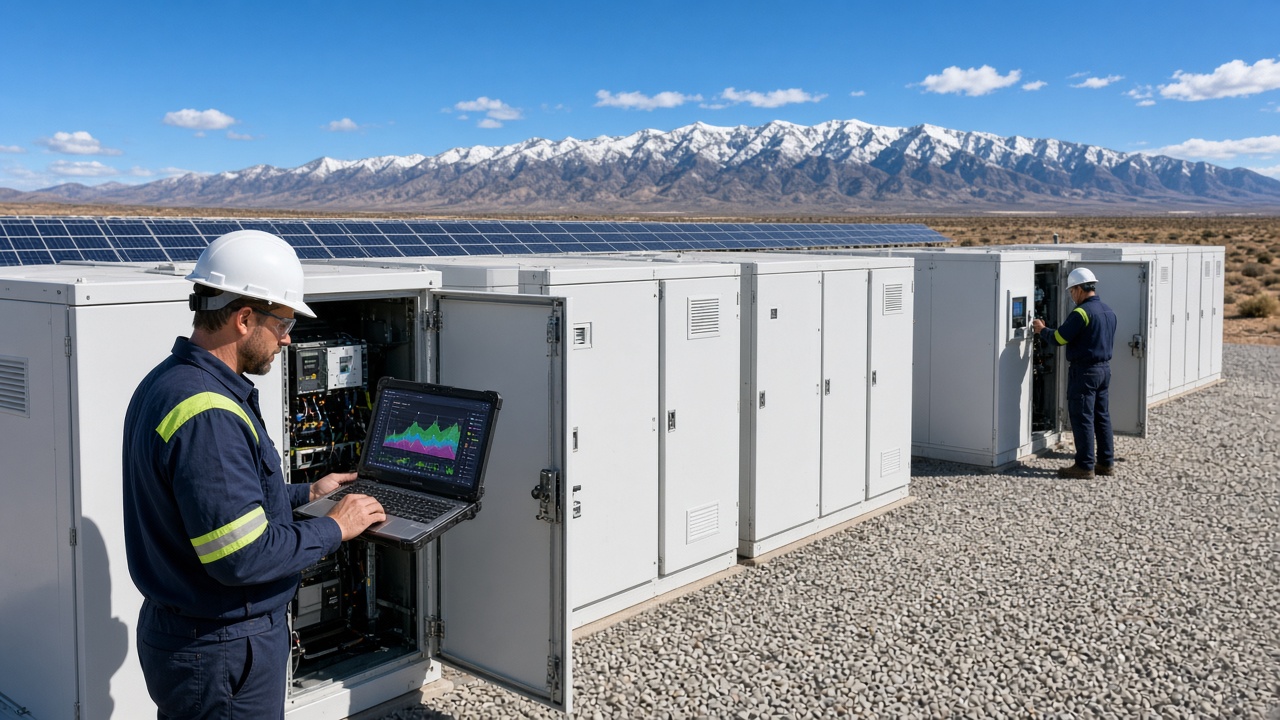
Put them side by side and a few patterns jump out.
- Batteries are going up everywhere, not just in Texas and California. This week alone it was Florida, Georgia, Utah and Ohio as well. Wherever you live in the US, there's probably a storage project within driving distance.
- They're being built on old sites and shared infrastructure. A former coal yard in Florida, a shared substation in Utah, a shared gen-tie in Georgia. Reusing interconnections is faster, and it means a lot of substation and protection work at existing sites.
- Data centers are now a direct customer. Faraday is contracted to support a Meta campus. Expect more batteries to be built specifically to get data centers powered sooner.
- Commissioning is the bottleneck and the opportunity. Every one of these milestones came after weeks of testing, energizing and handing over. Techs who can work through a commissioning plan with SCADA, the battery management system and the utility's protection engineers are some of the most valuable people on site.
EMCOR agrees to buy P1 Construction
On November 13, EMCOR Group announced a definitive agreement to buy P1 Construction, a mechanical and electrical specialty contractor based in Lenexa, Kansas, in an all-cash deal. Terms weren't disclosed. P1 was founded in 1919, expects $600 million to $650 million in revenue for 2026, and has built a reputation on hyperscale data centers, advanced manufacturing, healthcare and other mission-critical work. EMCOR expects the deal to close in the first quarter of 2027.
For people who work at P1, the release says CEO Bruce Belcher and the leadership team stay in place and the company stays headquartered in Lenexa. EMCOR's chairman and CEO Tony Guzzi singled out P1's "expertise in engineering, preconstruction, virtual design and construction, and fabrication".
That last line is the career signal. The biggest contractors in the country are paying for prefabrication shops and VDC teams, because building more of a data center's electrical system off-site, in a controlled shop, is how you hit aggressive schedules with a limited workforce. If you're an electrician who enjoys shop work, or you've been curious about VDC and modeling, this is a very good time to lean into it. Kansas City and the wider Midwest are becoming a serious mission-critical market.
Canada: Québec maps out a big decade
North of the border, Hydro-Québec published its Overview of Energy Resources on November 3 as part of its Electricity Supply Plan 2027–2041. The headline numbers are big. Québec's energy needs are expected to grow by about 60 TWh to 240 TWh by 2041, mostly from transportation electrification and industry, and winter peak demand is forecast to rise by about 12,000 MW to 52,000 MW.
The plan is a mix: renewing existing power contracts, about $10 billion of energy efficiency investment through 2035, new wind, more capacity at some hydro stations, solar, self-generation, new battery storage, and modernizing the Bécancour generating station for peak periods.
For Québec electricians, that reads like a long, steady pipeline across almost every part of the trade, from wind farm collection systems to substations to commercial efficiency retrofits. And it's another sign that batteries are now a normal part of utility planning in Canada, not a pilot project.
What I'd do this month if I were you
- Learn the commissioning side of storage. Read up on NFPA 855 and the energy storage articles of the 2026 NEC, and ask your foreman if you can shadow the testing and start-up team on your next job.
- Get comfortable with medium voltage. Most of these plants collect power at medium voltage before it's stepped up to transmission. MV terminations, splicing and hi-pot testing are skills that travel with you.
- Look at the contractors behind the headlines. Cupertino Electric, EPC Services, Burns & McDonnell and EMCOR all showed up in this week's news. Companies that just delivered a project are often the ones hiring for the next one.
- Don't overlook behind-the-meter work. Campuses, hospitals and factories are installing batteries too, and those jobs are often closer to home.
- If you like the shop, say so. Prefab and VDC are where the big contractors are investing. That's a career path, not a side job.
Five batteries live in a week, a 107-year-old contractor joining one of the biggest names in the business, and Québec planning for 12,000 MW of new peak demand. The grid isn't waiting for anyone, and that's great news for anyone who knows how to wire it.
If you want to be part of the next one, browse the latest electrical, battery storage and data center jobs on ElectricalRoles.com and set up a job alert so the right role finds you first.