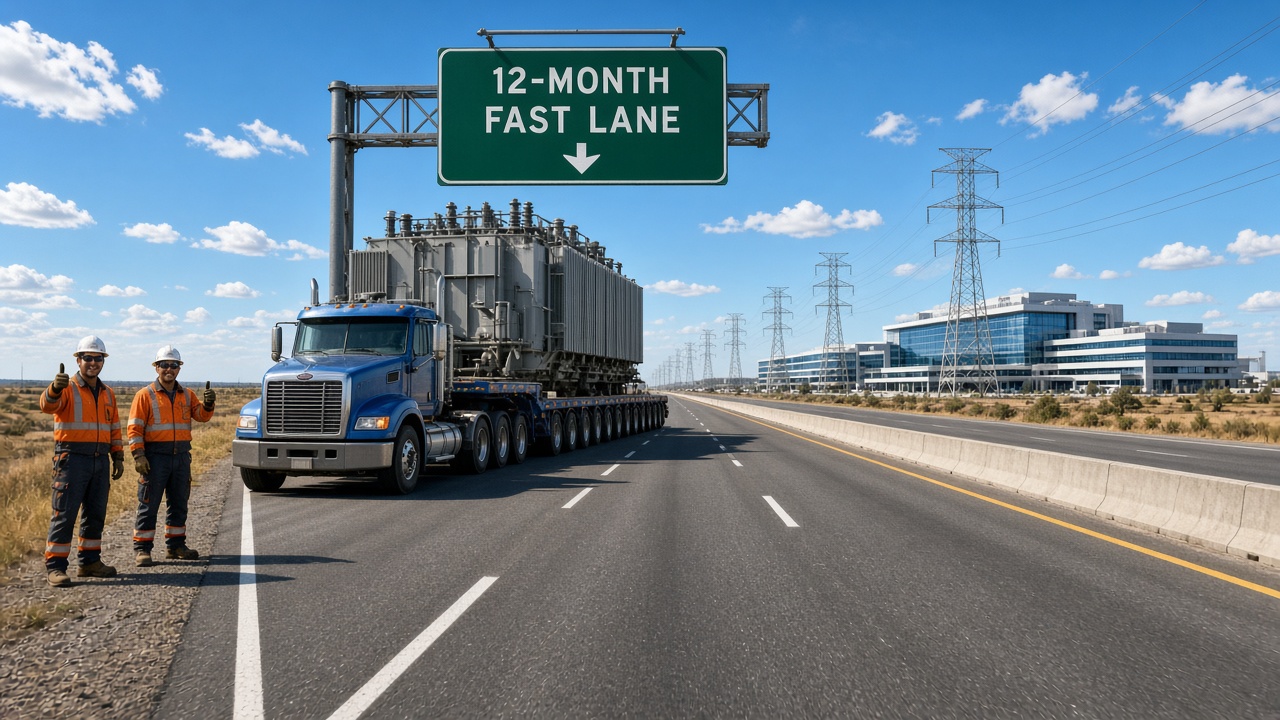

A $2.8B Grid Loan, Valley Link's Reset and Why Crews Win
PJM's Valley Link jumps to $5.1B on labor costs, DOE offers $2.8B for a Wyoming HVDC line, and contractors pay premiums. Here's what it means for crews.
If you want to know where the electrical industry is heading, stop reading the press releases for a minute and read the cost revisions. This week gave us a perfect one. On November 18, PJM's board signed off on a $5.1 billion price tag for the Valley Link 765 kV backbone, up from about $3.0 billion when it was awarded, and the first reason it gave wasn't steel or copper. It was construction labor.
The same week, the Department of Energy offered a $2.8 billion conditional loan to push a new high-voltage direct current line across Wyoming, ENR's Top 600 specialty contractors reported a 14.7% jump in revenue, and a Fluke survey found that more than half of data center operators are finding it harder to hire qualified technicians.
Put those together and the message is about as clear as it gets: North America is building wires as fast as it can pay for them, and the scarcest thing on the job isn't money. It's skilled people. Here's what happened and what I think it means if you work in the trade.
Valley Link's reset: the price of a grid that's growing fast
PJM serves 67 million people across 13 states and Washington, DC. On November 18 its Board of Managers approved scope and cost changes to several projects in its Regional Transmission Expansion Plan. The biggest were the Valley Link projects, being built by a consortium of Transource, Dominion Energy and FirstEnergy: two major 765 kV lines and their substations, designed to move large amounts of power along PJM's west-to-east corridor.
The estimate rose from roughly $3.0 billion (in 2024 dollars) to $5.1 billion (in 2026 dollars), and in-service dates moved from June 2029 to between January 2030 and May 2031, depending on the facility. PJM listed the primary cost drivers in order: construction labor and outside services, "reflecting significant national infrastructure investment that is driving competition for highly skilled construction resources," then right-of-way and land costs, then materials and equipment.
A separate group of projects awarded to Exelon and its subsidiaries, many tied to letting the Brandon Shores and Wagner units in Maryland retire on schedule, rose by $783 million to $1.69 billion. Again, PJM pointed first at labor: higher electric utility rates for engineering, construction and commissioning, driven by workforce shortages, unprecedented infrastructure investment, competition for skilled resources and wage inflation.
Here's the bit I'd underline. PJM didn't cancel or shrink anything. Its staff said the reliability needs haven't changed, the timeline is "increasingly acute," and delaying would only push costs higher. So the work is going ahead at the new price. When a grid operator formally approves billions in extra spending and names your labor as the main reason, that's about the strongest bargaining signal a skilled lineworker, substation electrician or commissioning tech will ever get.
A $2.8B loan to stitch two grids together
On November 17 the DOE's Office of Energy Dominance Financing announced a conditional loan commitment of up to $2.8 billion for Grid United's Wyoming Intertie. It's a 1.8 GW HVDC line running about 106 miles between a converter station in Platte County and an existing substation in Carbon County, linking the Southwest Power Pool with the Western Electricity Coordinating Council.
Why does that matter? The US has two big grids, East and West, that barely talk to each other. Utility Dive reports that in 2021 DOE counted only about 1,320 MW of transfer capacity between them. The Wyoming Intertie on its own would double transfer capacity between SPP and WECC, and together with Grid United's North Plains Connector and Three Corners Connector (both also backed by DOE), plus an Xcel project between Colorado and Texas, the recent decisions could add about 7 GW of East-West capacity. DOE estimates the Wyoming project alone could save up to $39 billion for customers across 17 states.
Let's be realistic about timing, because the hype cycle never is. This is a conditional commitment: Grid United still needs full right-of-way, capacity contracts and federal, state and local permits. The company expects to finish permitting in 2029, start construction in 2030 and come online in 2032 or 2033, depending on when it can get its HVDC equipment. So this isn't a job you can apply for next month.
But it's exactly the kind of project worth planning a career around. HVDC converter stations are some of the most sophisticated electrical sites on the continent, packed with power electronics, controls, protection and cooling. The people who commission and maintain them in the 2030s are today's apprentices and second-year techs. If you like the idea of working at the cutting edge of power, HVDC is a skill set I'd start reading about now.
Smaller lines, same story
Not every project is a megaproject, and honestly the small ones tell you just as much. On November 16, the Columbia City Council in Missouri unanimously approved a $34.9 million, 7.7-mile, 161 kV line between its Perche Creek and Grindstone substations. It calls for about 90 steel monopoles of 105 to 115 feet, and the city plans to move parts of the existing 13.8 kV distribution lines underground along the corridor. Voters first approved the bonds in 2015, and supporters pointed out that every year of delay pushed the cost up. Engineering alone is expected to cost $3 million to $6 million over the next two years.
In Ohio, AEP Transmission and Ohio Power announced a preferred route for the Patina-Mirkwood project in Madison County: two new substations and two parallel 345 kV lines of about 12.5 miles each, built to serve a new customer facility, with that customer covering the costs of its own connections. AEP plans to file with the Ohio Power Siting Board from early 2027, start construction in spring 2027 and finish in late 2029. For context, AEP says it expects to invest $100 billion from 2027 through 2031.
North of the border, Hydro-Québec on November 18 launched a regional study and public consultation on the combined effects of wind and transmission in the Bas-Saint-Laurent. The context is big: a new 315 kV line and two substations under the Appalaches–Bas-Saint-Laurent project, plus wind partnerships with the Alliance de l'énergie de l'Est and First Nations covering estimated potential of 1,000 MW in the Wocawson zone, up to 1,500 MW under the Wetsok agreement and up to 6,000 MW under the Gespe'gewa'gi agreement. The utility says the route for phase one of the line will be presented in the coming months. I like this approach. Planning a whole region with the communities that live there tends to make the projects that follow move faster, and that's good for everyone who builds them.
Contractors are rewiring how they work
ENR's Top 600 Specialty Contractors report, published November 17, shows list revenue up 14.7% to $275.1 billion, with telecom-related revenue up 65% thanks to data centers. The executives' comments were the most useful part.
Helix Electric COO Casey Long said prefabrication and industrialized construction are among the biggest forces reshaping the business, and the firm is expanding into Alabama with a campus of roughly 1.2 million square feet across three buildings for off-site fabrication. Hunt Electric President Jeff Young said the firm works in 41 of the lower 48 states and is "paying premium rates, per diems and incentives" to attract and keep workers outside its home market. Encore Electric has invested in its medium-voltage team, and President Andy Gordon said the firm has "more entry-level candidates looking to start careers in the trades than ever."
That last quote is my favorite piece of news this week. The pipeline is filling up. The opportunity now is turning those eager entry-level people into skilled medium-voltage and controls hands quickly enough.
The last mile is inside the building
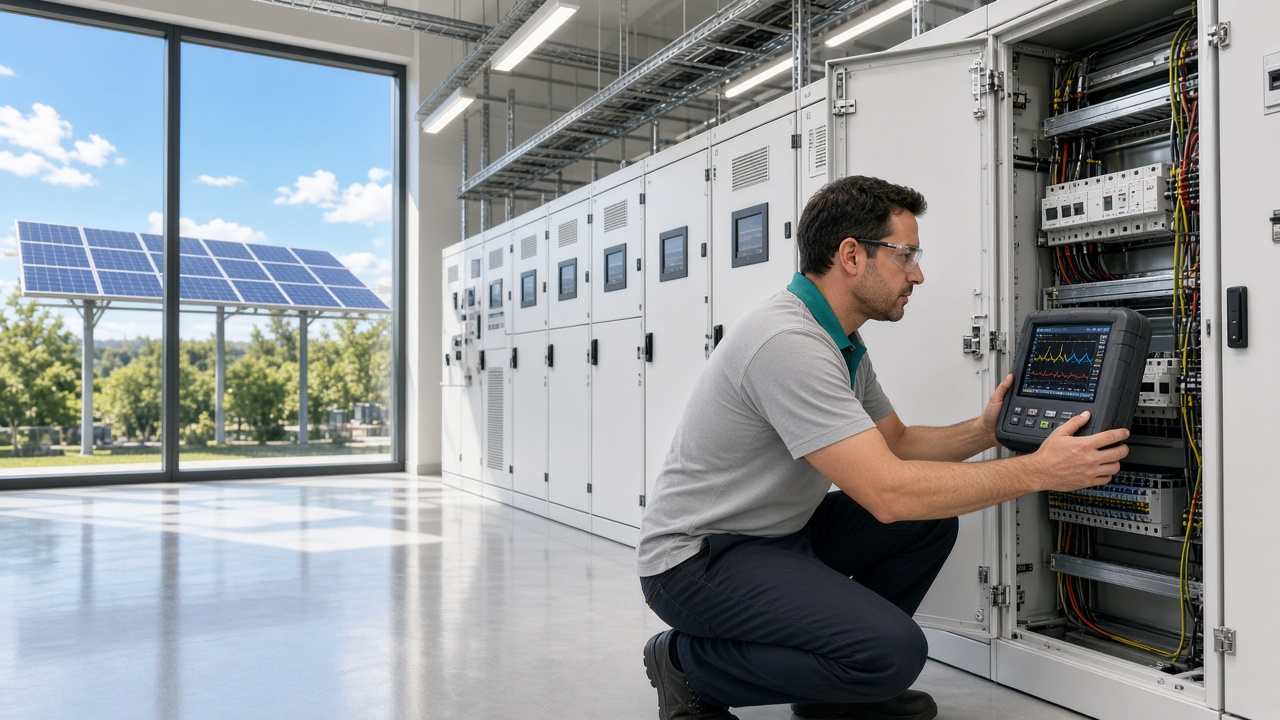
The final piece is the one I think gets overlooked. A Fluke survey of 1,300 data center operators, reported by Facilities Dive on November 17, found that power quality issues caused disruption, delays, downtime or serious near-misses for 78% of operators in the past year. More than half said qualified technicians had become harder to recruit, and only a third said their electrical infrastructure is fully ready for higher-density AI workloads.
Fluke President Parker Burke summed it up well: the industry "risks having the power to expand, but not the infrastructure to deliver." Getting power to the fence line is only half the job. Somebody has to make sure the switchgear, UPS systems, busway and protection inside the building handle it cleanly, and keep monitoring it once the facility is live.
What I'd do with this news
If you're an electrician, lineworker or technician in the US or Canada, here's my practical read.
- Know your value. When PJM formally cites skilled labor as a primary cost driver, wages and per diems are going up across transmission and substation work. Look at what travel and premium-rate roles are paying before you renew your next contract.
- Climb the voltage ladder. Medium-voltage terminations, 345 kV and 765 kV substation work, and HVDC are where the backlogs are deepest. Every certification that moves you up that ladder pays off for years.
- Learn to read power quality. Data centers need people who can use analyzers, interpret harmonics and transients, and fix problems before they become outages. That's a skill you can build now with the right training and a good mentor.
- Get comfortable with prefab. Shop-built assemblies are becoming standard. People who can lead a fabrication shop, or install prefabricated systems quickly and accurately, are in demand.
- Pick a corridor. Ohio, Wyoming, the PJM 765 kV route and eastern Québec all have work coming over the next decade. Moving early is how you end up as the foreman when the crews arrive.
I'll admit it's a little funny to cheer for higher cost estimates. But behind every one of these revisions is the same good news: North America has decided to build the grid it needs, and it's willing to pay the people who build it. If you're ready for that next step, browse the latest electrical jobs across the USA and Canada.