
What Does an I&C Technician Do? Pay, Certs & Outlook
What instrumentation and controls technicians do, what they earn in the USA and Canada, Red Seal and ISA CCST paths, and why nuclear and data centers want them.
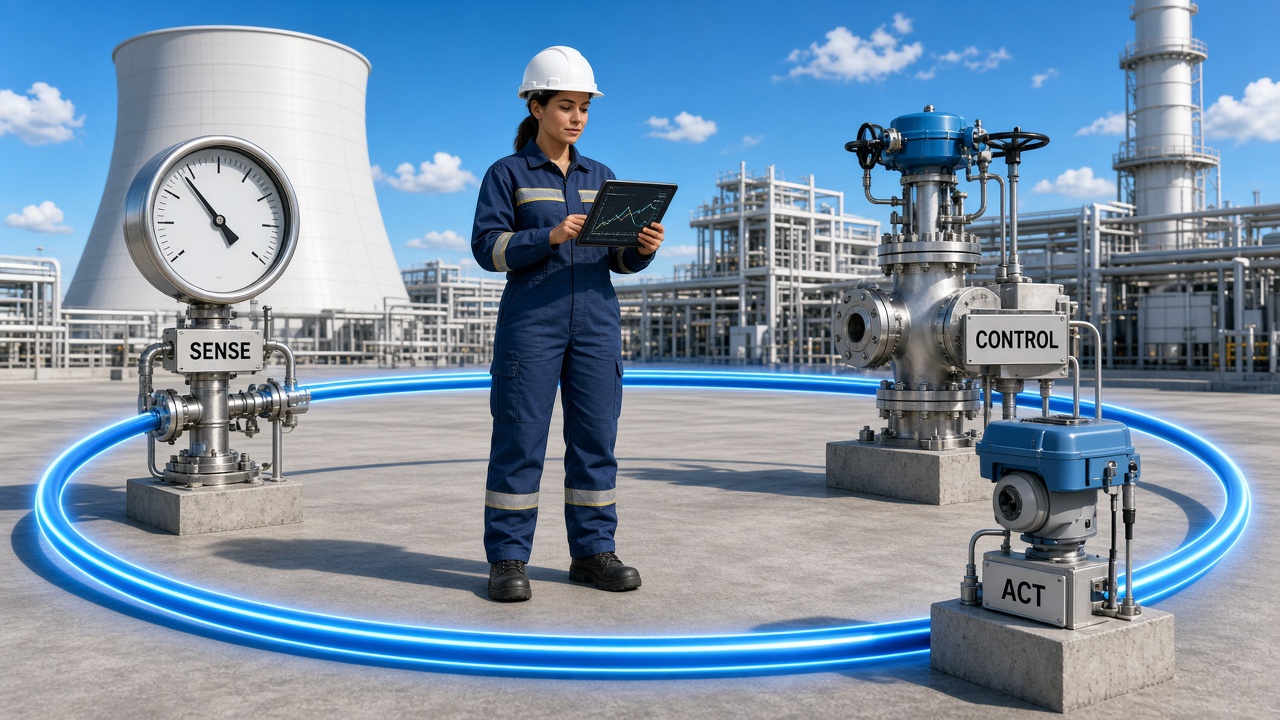
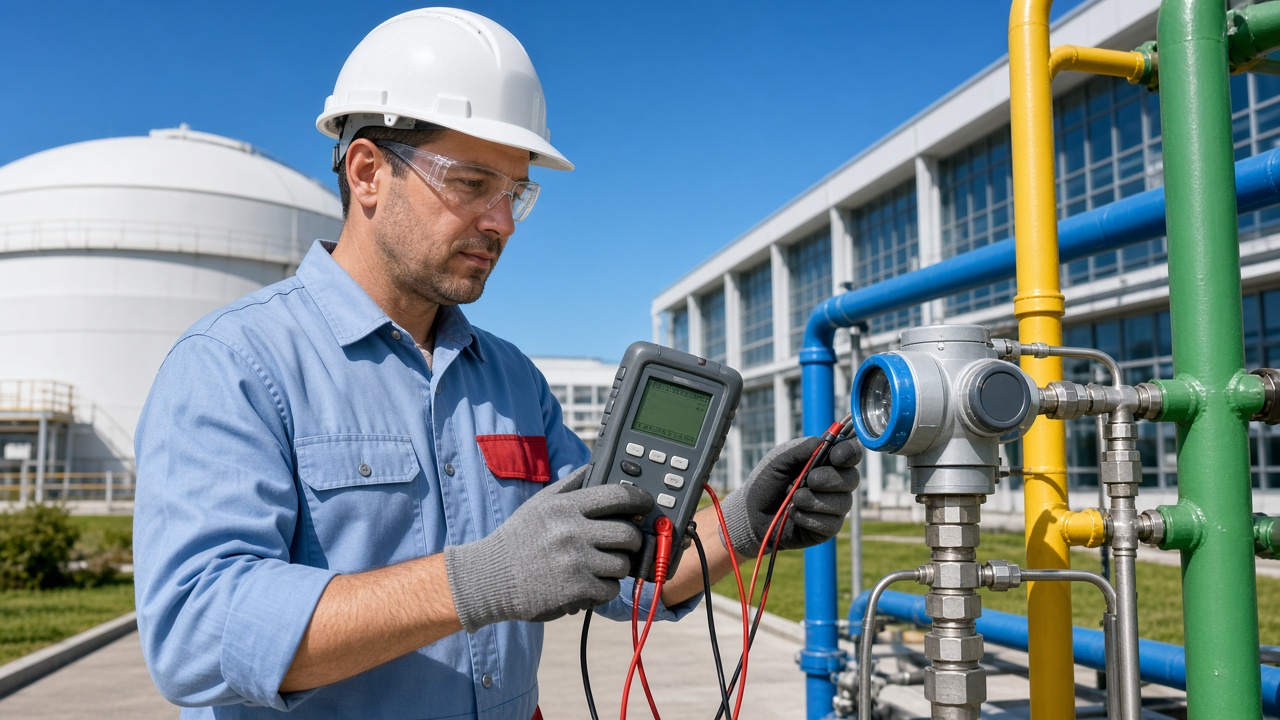
Every modern plant has a nervous system. Pressure transmitters, flow meters, temperature sensors, control valves, analyzers and the control systems that tie them all together are what let a power station, a water plant or a data center cooling loop run itself safely, hour after hour. When a reading drifts or a valve stops responding, the person who gets the call is the instrumentation and controls technician.
I&C technicians are one of my favorite roles in this series because they sit right where electrical skill meets software and process know-how. It's hands-on work with a screwdriver and a calibrator in the morning and a laptop plugged into a control system in the afternoon. And right now, with nuclear projects, AI data centers and advanced manufacturing all hiring from the same talent pool, it's a role with serious momentum.
If you've been following along, we've already covered industrial electricians, relay technicians and testing and commissioning electricians. The I&C tech is a close cousin of all three, but with a distinct focus: measurement and automatic control.
What an I&C technician actually does
Canada's Red Seal program describes the trade neatly. Instrumentation and control technicians are "knowledgeable in measurement and automation of process control systems," and they install and service safety, energy delivery (hydraulic, pneumatic and electrical), communication and process control systems, along with the instruments that monitor process variables and equipment.
A real job ad shows what that looks like day to day. Oklo, the advanced nuclear company, is hiring an Instrumentation & Controls Technician in Idaho Falls to support test platforms for advanced nuclear technology. The duties include installing, terminating, configuring and verifying sensors, transmitters, control valves, analyzers and data-acquisition equipment; troubleshooting distributed control systems (DCS), PLCs and HMIs; building instrument panels, control cabinets, junction boxes, conduit and tubing; and supporting startup, test runs and shutdown.
Pull that together and a typical week for an I&C tech might include:
- Calibration. Checking that a pressure transmitter, flow meter or temperature element reads accurately against a traceable standard, then adjusting it and documenting the result. In regulated industries, this paperwork matters as much as the wrench work.
- Loop checks. Following a signal from the field device, through the wiring and marshalling cabinets, into the control system and back out to the valve, to prove the whole loop works before startup.
- Troubleshooting. A reading looks wrong, an alarm keeps firing or a valve is hunting. The I&C tech works out whether the cause is the sensor, the wiring, the configuration or the process itself.
- Control system work. Supporting changes to PLC logic or DCS configuration, graphics and alarms, under change control.
- Installation and commissioning. Mounting instruments, running tubing, terminating cables and bringing new systems online.
- Preventive maintenance. Keeping analyzers, valves and safety instrumented systems in top condition so they work the day they're needed.
The skills that make you valuable
The Oklo ad is a great checklist of what employers want right now. Minimum qualifications include reading electrical schematics, loop diagrams, P&IDs (piping and instrumentation diagrams) and instrument data sheets; familiarity with 4–20 mA signals, discrete I/O, HART and Ethernet-based communications; and hands-on use of multimeters, process calibrators, pressure calibrators, loop simulators and communicators. Bonus points go to experience with the Emerson DeltaV DCS and with ASME NQA-1, the nuclear quality assurance standard.
What I love about this list is that it's learnable. Nobody is born knowing what a HART communicator does. It's a combination of electrical fundamentals, careful habits and curiosity about how a process actually works. If you're the person who always wants to know why the machine does what it does, this trade will suit you.
Where I&C technicians work
The Red Seal description lists oil and gas refineries, power generation plants, pulp and paper mills and manufacturing facilities. To that I'd add a few areas growing fast across the USA and Canada:
Nuclear power. The DOE's 2026 workforce trends summary says the nuclear energy sector grew to more than 70,000 workers in 2025, with nuclear power generation employment up 4% while broader power generation employment fell 2%. It also found that 65% of nuclear employers reported some hiring difficulty, and 17% of nuclear power generation employers said finding technicians and mechanical support workers was hard. Plants, outage contractors and advanced reactor developers all need I&C people.
Data centers. Deloitte's analysis of US job postings from 2023 to 2025 found that data center postings for electrical technicians climbed more than 180%, the largest increase of any occupation it analyzed. Modern AI facilities are full of monitoring, building management and cooling controls, and that's I&C territory.
Utilities, water and advanced manufacturing. Generating stations, water and wastewater plants, semiconductor fabs and pharmaceutical plants all run on instrumentation. If a facility measures, controls and records a process, it needs I&C technicians.
How much do I&C technicians earn?
Pay varies a lot by industry and region, so I'll give you a few honest reference points rather than one magic number.
In the USA, the Bureau of Labor Statistics doesn't publish a single "I&C technician" category. The closest fit is electrical and electronics repairers of commercial and industrial equipment, a group BLS says works on equipment such as industrial controls and transmitters. According to the BLS Occupational Outlook Handbook, that group earned a median of $74,090 in May 2025. Techs who specialize in generating stations, substations and relays (the powerhouse, substation and relay group) earned a median of $103,020. If your I&C work is in generating stations or substations, that higher group is the closer comparison.
Real job ads back this up. Oklo's Idaho Falls posting lists $30 to $55 an hour, plus equity, bonuses, a 401(k) and health benefits.
In Canada, Job Bank publishes wages specifically for instrumentation and control technicians (NOC 22312). The national median is $46.31 an hour, with a high of $71.00. Medians run from $38.87 in Nova Scotia to $50.00 in Alberta and $51.51 in Newfoundland and Labrador. Job Bank also reports that 86.2% of workers in the occupation receive at least one non-wage benefit, such as a pension or health plan.
How to become an I&C technician
There's more than one way in, which is part of the appeal.
In Canada, this is a Red Seal trade. The Red Seal page shows Instrumentation and Control Technician designated in AB, BC, MB, NB, NL, NS, NT, NU, ON, PE, SK and YT, with titles such as Industrial Instrument Mechanic in Yukon and Nunavut and Instrument Technician in the Northwest Territories. The usual path is an apprenticeship that combines paid work with technical training, finishing with the interprovincial exam. Many people start with a college instrumentation diploma, which can give them a head start.
In the USA, routes include associate degrees in instrumentation or industrial automation, registered apprenticeships, military technical training and moving across from electrical or electronics work. The Oklo ad accepts an associate degree, technical diploma, apprenticeship, military technical training or equivalent experience, plus at least three years of hands-on work.
Certification is where you can stand out. The International Society of Automation's Certified Control Systems Technician (CCST) has three levels:
- Level 1: at least 5 years of combined education, training and experience, including at least 1 year of related work.
- Level 2 (Specialist): at least 7 years combined, including at least 2 years in instrumentation, measurement and control.
- Level 3 (Master): at least 13 years combined, including at least 5 years in instrumentation, measurement and control.
ISA counts a registered apprenticeship in instrumentation, electronics, electrical or mechanical work, and up to four years of a related degree, toward those totals. For many techs, a CCST becomes the credential that unlocks senior or lead roles.
The outlook: honest and bright
I'll be straight about the official numbers. BLS projects slower-than-average growth for the broad electrical and electronics repairer group from 2025 to 2035, and it notes that more automated, digital control systems may reduce demand for traditional hard-wired repair. That's worth knowing.
But read the detail and the picture improves. BLS projects 10% growth for the powerhouse, substation and relay specialists because of increased strain on the grid. And the shift to digital controls doesn't remove the I&C technician. It changes the job. Smart transmitters, networked instruments and DCS platforms need people who understand both the field device and the network it talks to. Add the nuclear hiring push and the data center surge, and I think I&C is one of the best-positioned technical careers of the next decade.
My advice if you're interested
- Master the fundamentals. Ohm's law, 4–20 mA loops, pressure, flow, level and temperature measurement. Everything else builds on these.
- Get comfortable on a control system. Even basic PLC programming and HMI skills will set you apart. If you can get time on a DCS like DeltaV, take it.
- Treat documentation as a skill. In nuclear, pharma and utility work, clean calibration records and procedure discipline are what make you trusted.
- Plan for a certificate. In Canada, work toward your Red Seal. In the USA, map your experience against CCST Level 1 and set a date.
- Follow the build-out. Nuclear restarts and new reactors, AI data centers and new manufacturing plants are where the newest systems and the strongest pay are.
The I&C technician is the person who makes sure a plant knows what it's doing. As more of our energy and computing infrastructure gets smarter and more automated, that job only gets more important. If you're ready to take the next step, browse the latest electrical and controls jobs across the USA and Canada.