The Speed-to-Power Race Is Rewiring North America's Grid
765 kV lines in Ohio, smarter wires across TVA, BPA's 5 GW SPRINT plan and big Canadian builds: what the speed-to-power race means for electrical careers.
If you want to know where the electrical jobs of the next decade are coming from, stop looking at the data center renderings and start looking at the wires. Over the past three weeks, a cluster of announcements across the US and Canada has made one thing crystal clear to me: the race for AI and industrial growth has become a race for speed to power, and the people who build and maintain the grid are now the critical path.
I find this genuinely exciting. For years, transmission was the slow, unglamorous corner of the industry, a world of decade-long permitting fights and projects that never seemed to break ground. In October 2026 it feels different. Utilities, grid operators and governments are inventing new ways to get capacity online faster, and every one of those ideas lands on the desk of an electrical worker eventually. Here's what's happened, and what I think it means if you work in, or want to work in, this industry.
765 kV comes to Ohio
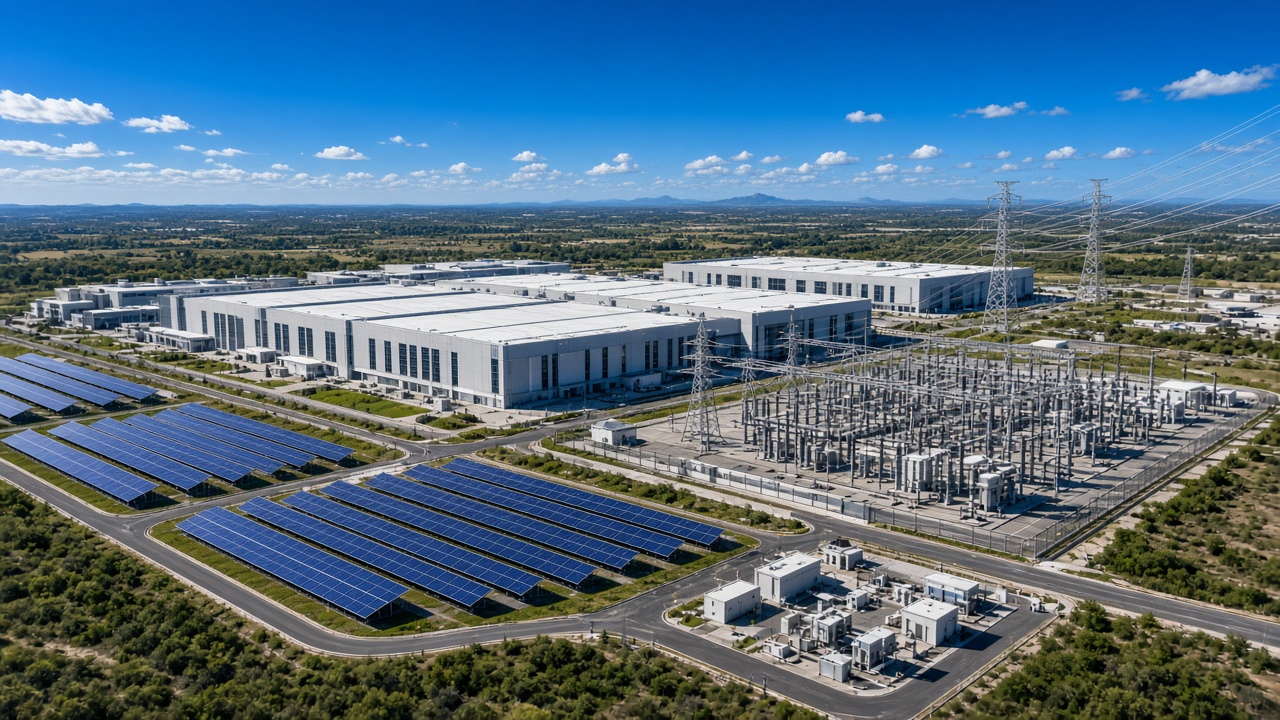
The biggest headline came out of PJM, the grid operator covering much of the Mid-Atlantic and Midwest. Utility Dive reported on Oct. 14 that PJM filed a study agreement with federal regulators to assess SoftBank's "Flagship" project, a roughly 10 GW AI data center complex planned mostly at the Department of Energy's former Portsmouth Gaseous Diffusion Plant in Pike County, Ohio. The study covers an additional 9.6 GW of load and 10.2 GW of new gas-fired generation to be built by SB Energy in phases through 2032, on top of an initial 800 MW phase served under an AEP Ohio data center tariff.
The part that jumped out at me: AEP Ohio plans to build three 765 kV transmission lines and related infrastructure to serve it. That's the highest voltage class in common use in North America. Projects at that scale mean years of work for transmission line crews, substation electricians, relay and protection technicians, civil crews and the engineers who design and commission it all.
There's an important realism check, too. PJM was explicit that its studies "will not themselves select transmission projects or designated entities, establish cost allocations, or grant the Flagship Project transmission service or interconnection rights." Ohio regulators and FERC still have to decide how this gets paid for. SB Energy has committed to paying for the generation and delivery infrastructure needed to serve the complex, which is exactly the kind of arrangement regulators are now insisting on.
That point about who pays is becoming the central political question. On Oct. 7, the Department of Energy filed a rare statement of position at FERC urging PJM to revise its reliability backstop procurement plan so the costs of serving new data centers aren't unfairly shifted onto existing customers, with PJM due to file a proposal by Oct. 29. I actually think this is healthy. Build-outs that protect ordinary ratepayers are build-outs that survive politically, and that means steadier, longer-lasting work for the people doing it.

The South is getting smarter wires, not just more of them
Down in Tennessee Valley Authority territory, the Department of Energy announced on Oct. 13 that it intends to support TVA in funding 84 transmission and distribution projects across eight states. The award totals about $581 million, including $250 million in federal funding and roughly $331 million in cost share, and the projects are expected to add about 2.5 GW of grid capacity, serve 2.58 million families and businesses, and support around 800 jobs.
Layer on TVA's separate selection under DOE's SPARK program, which plans to upgrade about 125 miles of existing transmission lines across Tennessee, Alabama and North Carolina using advanced conductors and grid-management technology. That $159.7 million project alone is expected to add about 1,900 MW of transmission capacity. Together, DOE says the TVA projects represent nearly $741 million in planned investment and more than 4,300 MW of added capacity. As always with these announcements, final funding and scope still depend on executed agreements and environmental and permitting reviews.
This is the bit I'd underline for anyone planning a career. Reconductoring (swapping old wire for high-performance conductors on existing towers) is one of the fastest ways to unlock capacity because you skip much of the fight over new rights-of-way. It's skilled, specialized line work, and I expect the crews and project managers who know how to do it well to be in very high demand.
The Pacific Northwest wants data centers online now
Bonneville Power Administration is trying something bold. At an Oct. 19 customer workshop, BPA laid out a straw proposal called SPRINT (Speed to Power Request for Interim Non-firm Transmission). The goal is to get up to roughly 5 GW of new hyperscale data centers onto BPA's 500 kV grid as quickly as possible by using existing unused capacity, offering winning proposals interruptible service immediately with a path to long-term firm service.
In his opening remarks, the BPA administrator also described a fast-track path for large loads that bring their own co-located generation, called PLAID (Paired Load and Integrated Generation), and said BPA wants any non-firm service to be "a bridge to firm service—not a bridge to nowhere." Both sit under a new initiative named RAPID.
My take: this is grid operators admitting the old first-come, first-served queue can't keep up, and redesigning the process in real time. For electrical workers, that means connections, substations and protection schemes arriving faster and in more creative configurations. Flexible, curtailable loads need sophisticated controls, metering and protection, which is great news for controls techs and relay specialists.
Canada is building big too
North of the border, the momentum is just as real. In early September, Ottawa and British Columbia broke ground on Phase 1 of the North Coast Transmission Line, a 165-km, 500 kV segment from the Williston Substation near Prince George to the Glenannan Substation near Fraser Lake. The two governments have committed C$3.9 billion toward phases 1 and 2, the project is expected to create nearly 10,000 jobs, and First Nations can co-own up to 50% of the new line. BC Hydro is publishing quarterly construction updates, so this is very much under way.
And in Ontario, Hydro One filed a five-year investment plan on Oct. 7 worth roughly C$37 billion for 2028 to 2032. If the Ontario Energy Board approves it, the plan would add transmission capacity to connect about 6,000 MW of new electricity, modernize about 1,400 km of transmission lines, replace or refurbish more than 85,000 distribution poles, put smart switching on about 90% of major distribution lines, and deploy 5,400 residential energy storage systems. That's a staggering amount of field work: pole crews, powerline technicians, distribution automation specialists and battery installers, for years.
Where the people come from
Here's the catch, and it's the one I keep coming back to. All of this hardware needs hands. In North Texas, WFAA reported that applications to the North Texas Electrical Training Center have climbed to about 700 a month, up from 60 to 70 a month just a few years ago, with training director Jason Allen saying demand has "gone exponential." Apprentices there describe data center jobs paying overtime and even double time.
I love that interest is surging. The challenge is capacity: training seats, instructors and experienced journeymen to mentor the next wave. That's where I think employers who invest seriously in apprenticeships will win the next five years, and where workers who keep upskilling will earn the biggest premiums.
What I'd do right now
If you're already in the trade, here's my practical advice:
- Get close to high voltage. Substation, transmission, relay, protection and commissioning skills are where the scarcity is. If your employer offers a path into that work, take it.
- Learn the new kit. Advanced conductors, digital substations, drones for line inspection, smart switching and battery storage are moving from pilot to standard. Being the person on the crew who understands them is a real advantage.
- Follow the money on the map. Ohio, the TVA region, the Pacific Northwest, British Columbia and Ontario all have multi-year pipelines. Mobility pays, at least early in your career.
- Think about teaching. Every one of these build-outs is constrained by training capacity. Experienced electricians who can mentor are worth their weight in copper.
If you're outside the industry looking in, I genuinely can't think of a better moment to pick up the tools. The grid is being rebuilt for the exponential age, and it will take a generation of skilled people to do it.
Ready to find your piece of it? Browse electrical jobs across the US and Canada on ElectricalRoles.com, from apprentice and lineworker roles to substation, controls and project leadership positions.