What Does a Lineworker Do? Pay, Training and Outlook for 2026
Roles Explained #2: what US lineworkers and Canadian powerline techs do, what they earn per BLS ($95,320 median), how to train, and why demand is booming.
Welcome back to Roles Explained, my series breaking down the jobs that keep the lights on across the US and Canada. Last time I covered the electrician. This time it's the role I promised next, and honestly one of my favorites: the lineworker.
If electricians wire the buildings, lineworkers build the highway that gets power to them. And right now that highway is being rebuilt at a pace we haven't seen in generations. Data centers, electrification, aging infrastructure and storm hardening are all landing on the same crews at the same time. If you're weighing up a trade, this is one I'd look at very seriously.
What lineworkers actually do
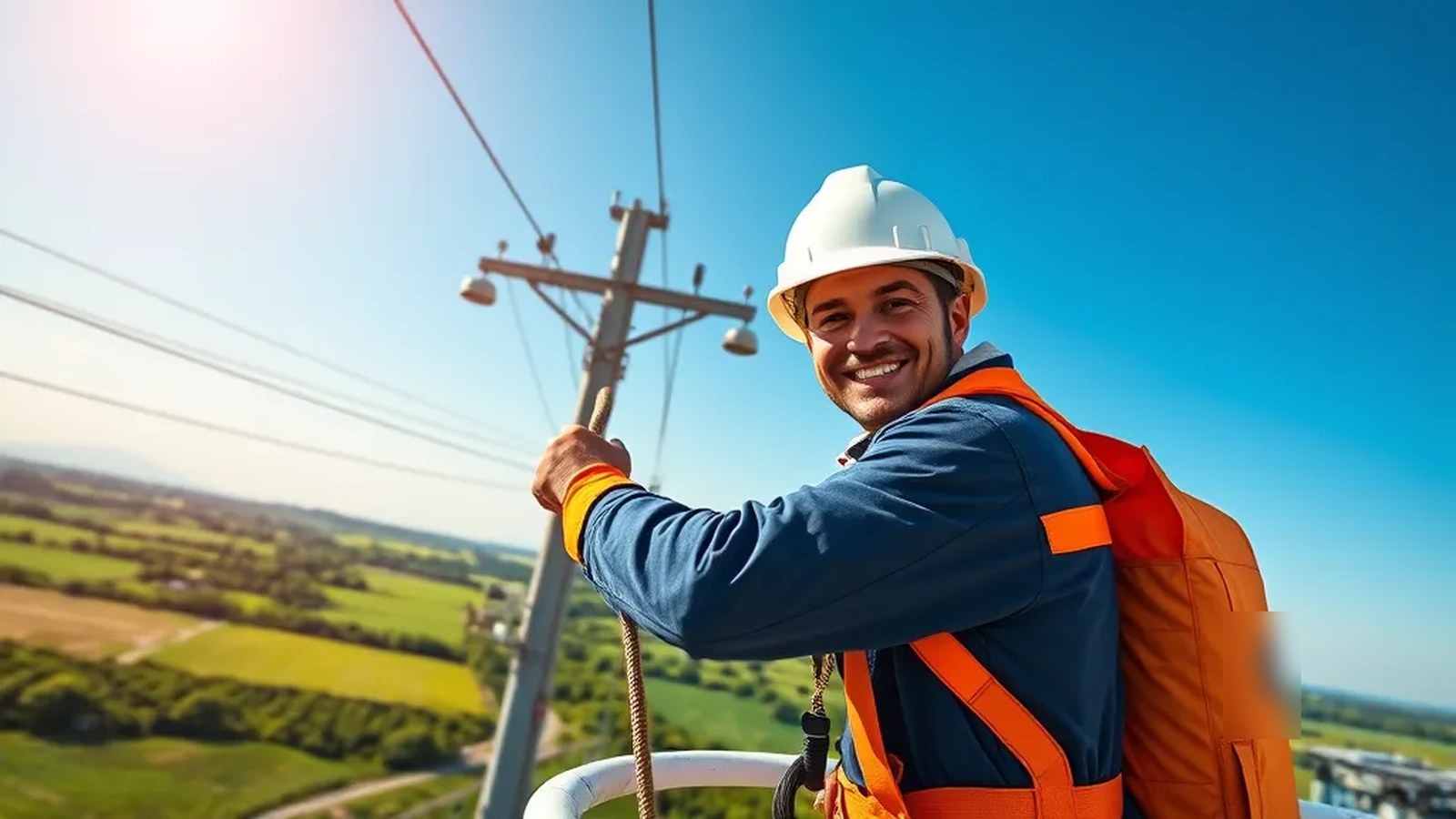
The Bureau of Labor Statistics files lineworkers under the official title of electrical power-line installers and repairers, and describes the job as installing and repairing the cables and wires used in power and distribution systems, sometimes erecting the poles and transmission towers themselves. In practice, that covers:
- Installing, maintaining and repairing the power lines that move electricity
- Stringing cable between poles, towers and buildings
- Finding defective transformers, voltage regulators and switches
- Inspecting and testing lines and auxiliary equipment
- Climbing poles and towers, or working from truck-mounted buckets
- Running the equipment that digs holes, sets poles and pulls conductor
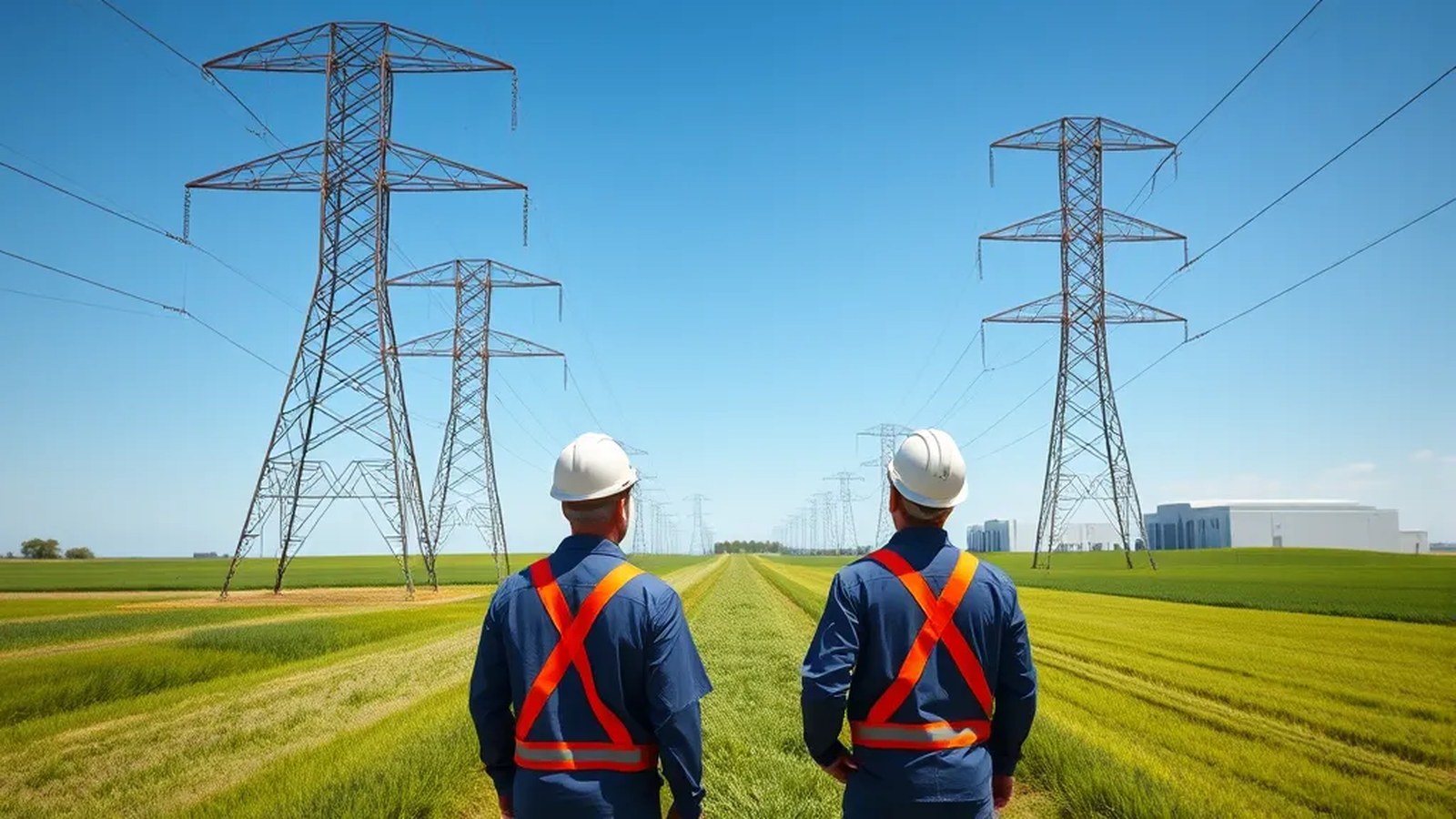
The work splits into a few distinct worlds. Distribution lineworkers usually work for a local utility, maintaining the neighborhood poles, transformers, switches and underground cable that feed homes and businesses. They tend to work close to home, but get called out when storms hit. Transmission lineworkers build and maintain the big high-voltage lines on steel towers, often for contractors, and they travel. As BLS puts it, crews maintaining the interstate grid travel throughout a region. Then there's storm restoration, where crews from all over the continent converge on hurricane- or ice-damaged areas and work long stretches to get power back on.
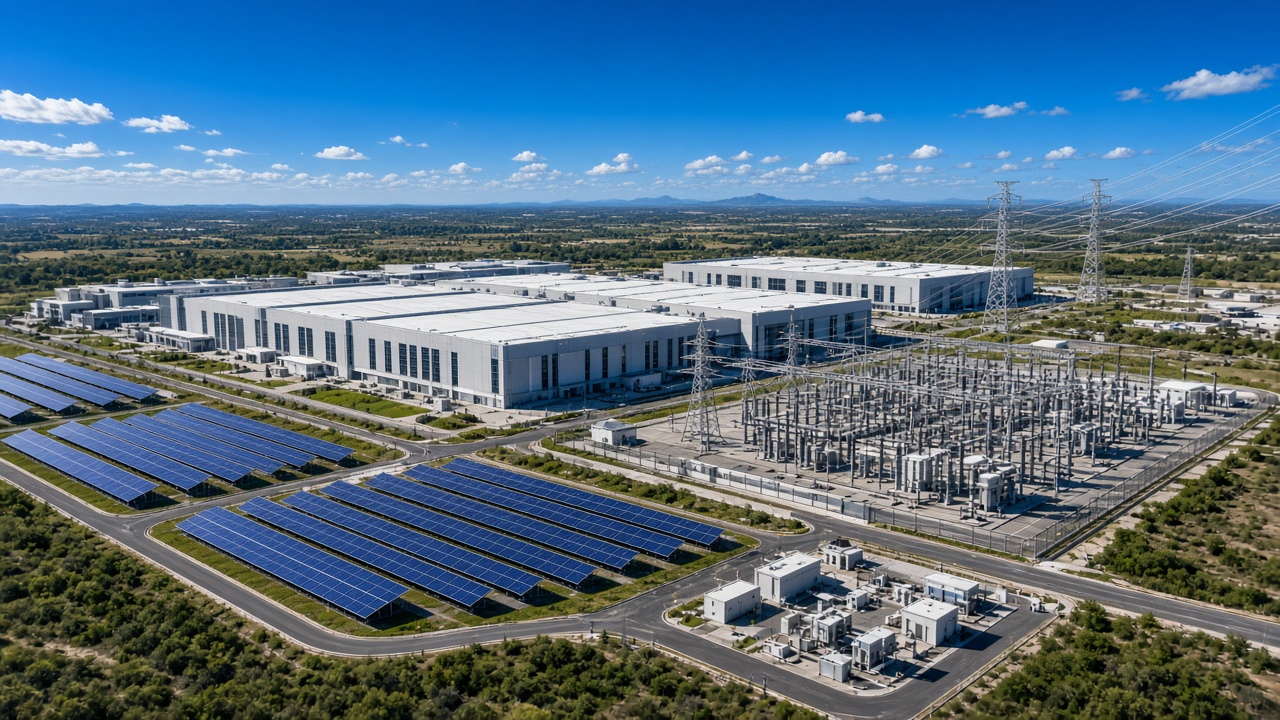
Every one of those is getting busier. Grid operators are planning 765 kV and 500 kV lines for AI data centers, utilities are reconductoring old circuits with advanced wire, and in Ontario, Hydro One has proposed replacing or refurbishing more than 85,000 distribution poles over five years. I wrote about that wave in this week's grid industry update.
What lineworkers earn
This is where the job really stands out. According to BLS (May 2025 data):
- Median pay: $95,320 a year, or $45.83 an hour
- Lowest 10% earned under $51,470; highest 10% earned more than $128,690
- By industry: federal government $111,900, utilities $103,060, local government $90,060, specialty trade contractors $76,980, utility system construction $76,060
For context, the median for all US occupations was $50,980. That makes line work one of the best-paid careers you can enter with a high school diploma. And the median doesn't capture the overtime and storm pay that experienced crews often earn. As BLS notes, some work more than 40 hours a week, and after disasters they may work long hours several days in a row.
Even the training years pay well. Wisconsin Watch reported on Oct. 20 that apprenticeships through IBEW Local 2150 in Wisconsin pay more than $34 an hour and put people on track for union pensions. An analysis by Open Campus and The HEA Group cited in that story found graduates of three Wisconsin line programs earn around $43,000 a year more than the median high school graduate.
How you become one
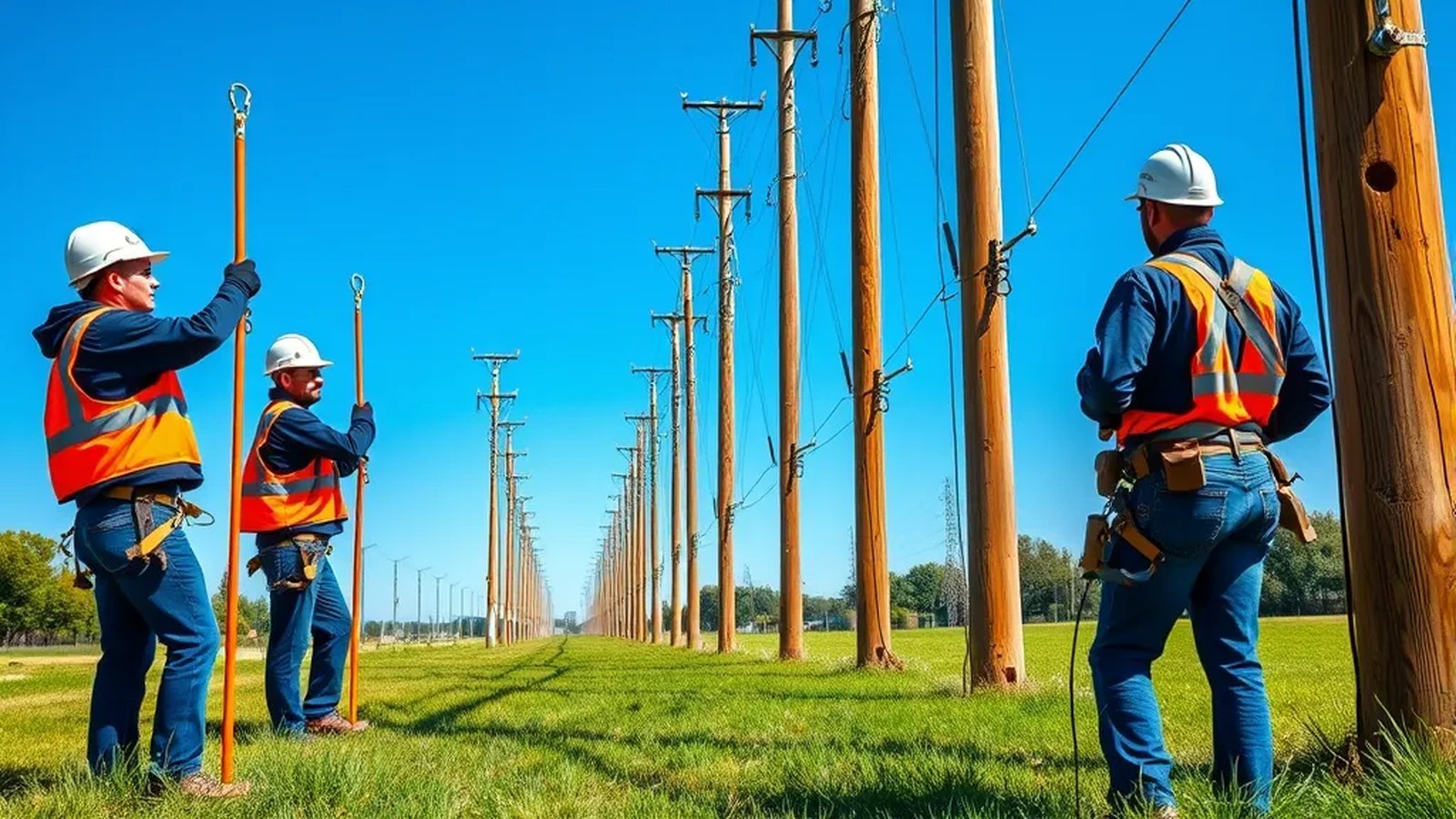
You don't need a degree. The usual path looks like this:
- High school diploma or equivalent. BLS says employers may prefer candidates with basic algebra and trigonometry.
- Optional pre-apprenticeship program. Many community and technical colleges run 1-year certificates or 2-year associate degrees covering electrical distribution, line construction, and pole top and bucket rescue. They're a great way to test whether you love the work before committing.
- Apprenticeship. Typically run by an employer, often jointly with the union. BLS says these programs may last up to 3 years, while Wisconsin Watch reports apprenticeships there run three to six years. Entry can include an aptitude test, drug screening, and a physical or fitness test.
- Journey level. After 3 or 4 years, BLS says qualified apprentices reach journey level and can perform most tasks without supervision. From there, experienced lineworkers can move into foreman, supervisor, trainer and operations roles.
A commercial driver's license matters too. BLS notes that workers who drive heavy vehicles usually need a state CDL, and crews crossing state lines need an interstate CDL.
In Canada, the role is usually called a powerline technician, and it's a Red Seal trade, so certified journeypersons can work across participating provinces and territories. Hours and rules vary by province: Skilled Trades Ontario lists its own apprenticeship requirements, and SkilledTradesBC treats it as a compulsory trade in British Columbia. Check your provincial trades authority before you start.
A real-world snapshot from Wisconsin
The Wisconsin Watch story by Natalie Yahr is the best recent look at this pipeline I've read, and I recommend it. Northcentral Technical College in Wausau runs a nine-month electrical power distribution program for about 14 students a year, and it always has a waitlist. On day three, students race to dig a 4-foot hole by hand and haul a 70-pound load up a 65-foot pole. Instructor Marc Cegielski designs the hole-digging drill to be nearly impossible, because he wants to see who keeps going.
The demand side is striking. Wisconsin's line worker ranks are projected to grow nearly 14% from 2024 to 2034, with about 240 openings a year, against seven college programs that enrolled 265 students in 2025. IBEW Local 2150 reports membership at an all-time high, with room for around 170 new apprentices in a good year. Business manager Jim Meyer put it simply: "There's never been a better time to get involved in this trade." Cegielski told the paper he doesn't think any of his former students are struggling to find work.
Nationally, BLS projects employment to grow 10% from 2025 to 2035, much faster than the 3% average, with about 10,900 openings a year. Importantly, it specifically names AI data centers and grid upgrades as drivers.
The honest trade-offs
I'm an optimist, but I won't sugarcoat this job. Line work is physically demanding and genuinely dangerous: high voltage, big heights, busy roads and every kind of weather. Wisconsin Watch cited a USA Today analysis of federal data ranking power-line installers 16th for fatal injury rates among US jobs. Modern safety training, insulated tools and fall protection have made a huge difference, and a good employer treats safety as non-negotiable.
The hours can be tough, too. "Your phone rings a lot," Cegielski said. Storm calls mean missed weekends and family events, and transmission contractors may keep you on the road for weeks. For the right person, that's the deal: big pay, a strong crew culture, and the satisfaction of switching a town's lights back on.
What I love about it is how future-proof it looks. As Cegielski joked, "it doesn't seem like AI is knocking at our door to take our jobs." Drones, sensors and smart switches are changing how lines are inspected and managed, but somebody still has to climb, splice and commission. The technology is making the work smarter, not making the worker unnecessary.
My advice if you're considering it
- Try it first. A pre-apprenticeship or a groundman role, helping a crew on the ground, tells you fast whether you're comfortable at height and in all weather.
- Train for the physical test. Grip strength, cardio and core matter. Turn up fit.
- Get your CDL sorted early. It makes you instantly more useful to a crew.
- Decide utility vs contractor deliberately. Utilities tend to mean home most nights; contractors often mean travel and bigger overtime. Both are great careers, just different lives.
- Apply widely, and watch deadlines. Union apprenticeship windows can be short. For example, IBEW Local 3's New York City intake for 300 electrician apprentices runs only Oct. 19–30, 2026. Line programs work the same way, so sign up for alerts with your local JATC and utilities.
Next up in Roles Explained: industrial maintenance electricians, solar and battery installers, and controls technicians.
In the meantime, if you're ready to climb, browse lineworker and powerline jobs across the US and Canada on ElectricalRoles.com. There are hundreds of live electrical roles, from groundman and apprentice openings to journeyman lineworker and foreman positions.