

Data Centers Get a Grid Fast Lane: What It Means for Crews
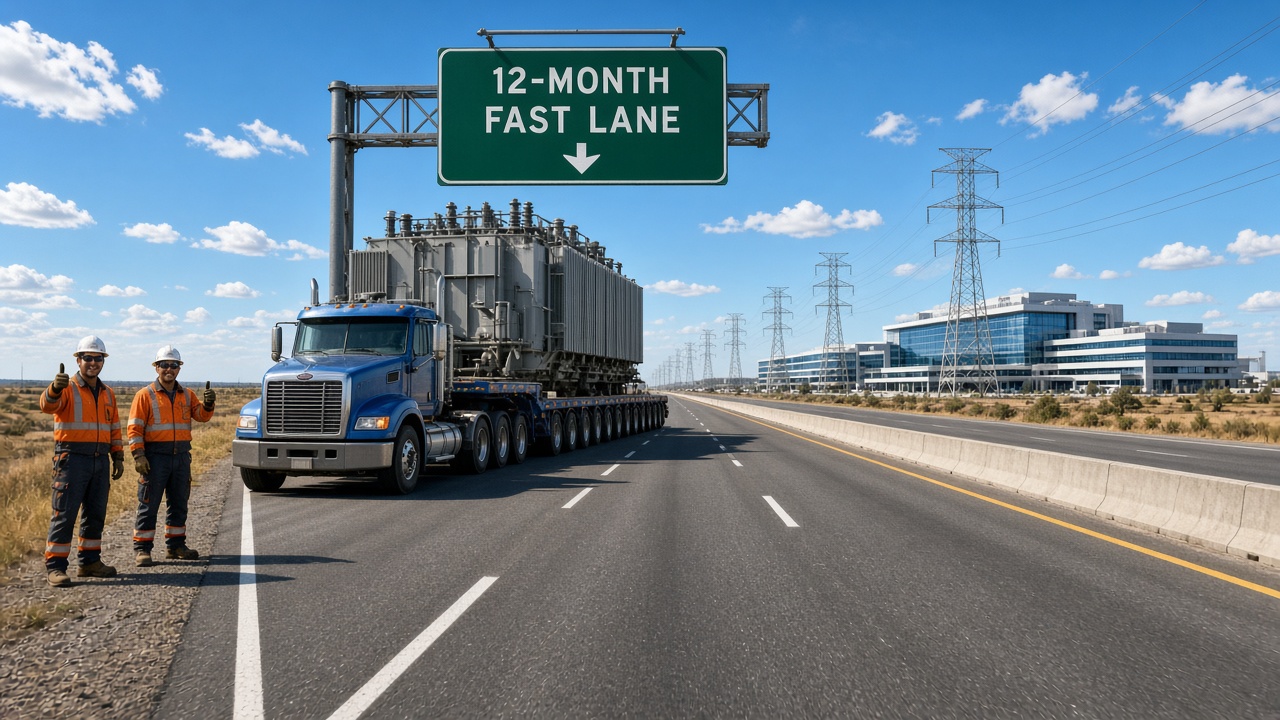
Grid operators filed data center hook-up reforms at FERC, PJM wants one-year studies, and MISO and Oncor plan big builds. Here's what it means for crews.
If you've worked anywhere near a data center project in the past two years, you've probably heard some version of the same complaint: the building is going up fast, but the power isn't. Developers can pour slabs and set racks far quicker than the grid can study, approve and build the connection that feeds them.
This week, the rulebook for that connection started to change. On November 16, most of the major US grid operators filed their proposals for hooking up data centers and other large loads at the Federal Energy Regulatory Commission. The biggest of them, PJM, wants to cut its study timeline roughly in half. Meanwhile MISO is lining up a near-record transmission plan, Texas utility Oncor is staring at an extraordinary queue of data center requests, and New England just switched on smarter line ratings.
None of this is glamorous. It's tariffs, study cycles and dockets. But I'd argue it's some of the most important news of the year for anyone who builds, maintains or tests the grid, because rules like these decide how quickly projects turn into actual work orders.
What FERC asked for, and what landed on November 16
Back in June, FERC issued "show cause" orders saying it appeared that grid operators lacked adequate rules for adding large loads. As Utility Dive reports, the agency wanted answers on five things: faster and more efficient application and study processes (including alternative transmission technologies), protection against cost shifts onto other customers, co-located and behind-the-meter generation, new transmission services for flexible large loads, and a study process for generators that serve nearby large loads.
PJM, CAISO, MISO and NYISO filed on Monday, November 16. ISO New England filed the Friday before, and the Southwest Power Pool is due to file by this Friday. The common threads are clear even though each region's details differ:
- Faster, more predictable studies with standard applications, deposits and milestones.
- Tougher readiness requirements to weed out speculative requests that clog the queue.
- New service options for flexible loads, meaning data centers that agree to cut their use when the grid is tight can connect sooner. CAISO, MISO and NYISO all proposed versions of this.
- Cost transparency, so states and existing customers can see exactly which upgrades a data center triggered. ISO-NE, for example, proposed publishing a list of network upgrades and cost estimates for each large load.
PJM's "Fast Energization": two years down to one
The headline proposal is PJM's. The country's largest grid operator, covering 13 states and DC, says its new Fast Energization process would cut the projected study timeline from two years to one by studying new generation and large-load transmission service together in a single annual process, instead of running parallel, duplicative studies.
A few details stood out to me:
- Earlier screening. Developers get quick rounds of analysis up front, so they can decide whether to put down stricter readiness deposits before entering the full study.
- Interim service. FERC found that some large loads can limit their use of the transmission system, so PJM is proposing service that lets them connect while network upgrades are still under construction.
- State visibility on costs. States get transparent access to the cost of upgrades driven by data centers, so they can bill large loads for them.
- Ride-through rules. In a separate filing, PJM proposed requirements for data centers to stay connected through grid disturbances rather than dropping to backup generation. If that sounds familiar, it builds on the same issue behind NERC's new computational load standards.
PJM has asked FERC for a 60-day comment period and an order within 120 days. So this isn't live yet, and the details could shift. But the direction is the one the whole industry has been asking for.
MISO: a nearly $15 billion plan, mostly about big new loads
In the middle of the country, MISO's 2026 transmission expansion plan, MTEP26, is worth about $14.7 billion across 532 projects, and more than half the cost traces back to large-load additions, according to RTO Insider reporting summarized by Voltgrid News. A board committee cleared it, and the full board vote is targeted for December 3.
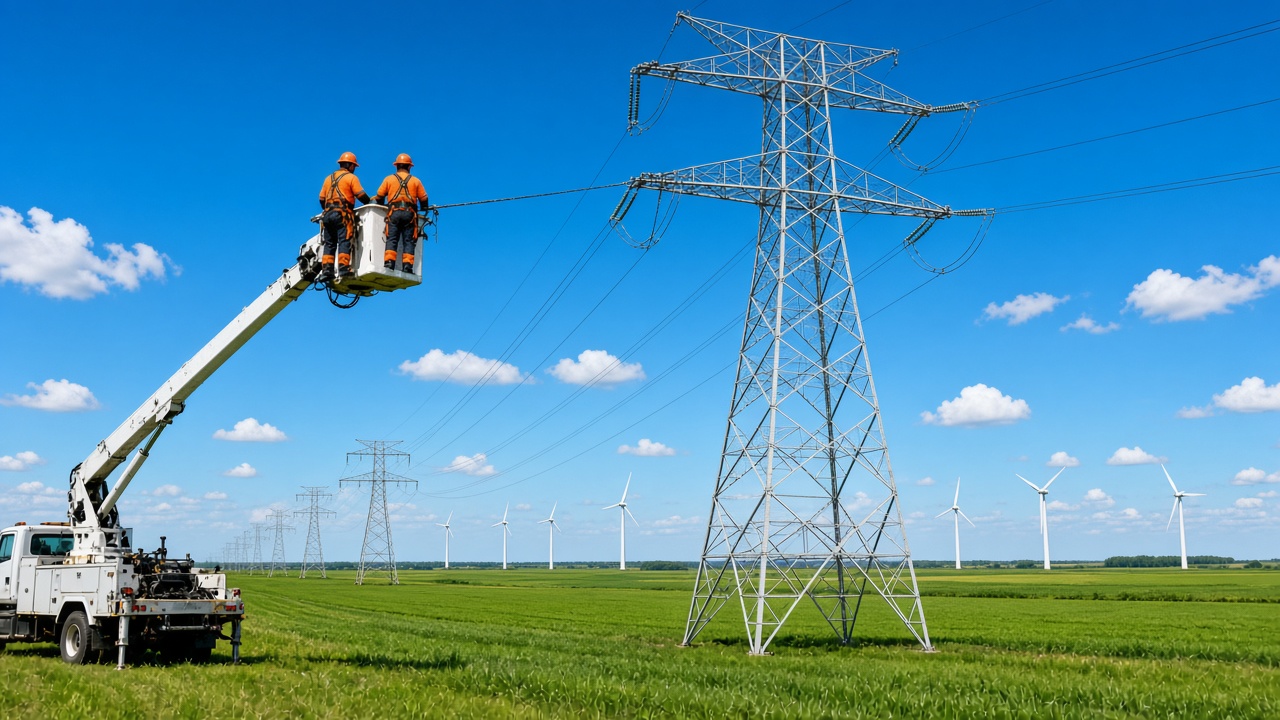
The transmission owners told MISO that load additions drove more than 26 GW of approved new demand and a record 89 expedited project reviews this year. Some of the most expensive projects are 500 kV lines, and three individual projects top $1 billion each. There's a healthy debate about who pays for all of it, and that's exactly what the new FERC filings are meant to settle. For crews, though, the bottom line is simple: hundreds of transmission projects, each needing surveyors, foundation crews, lineworkers, substation electricians and testing techs. (We covered one of the region's flagship lines, the Gopher to Badger 765 kV link, last week.)
Texas: Oncor's queue tells you where the pressure is
If you want one number that captures the moment, it's Oncor's. In its third-quarter results, the Dallas-based utility said its large commercial and industrial transmission queue held 795 requests at the end of September, including about 293 gigawatts from data centers and another 19 GW from other industries.
Let's be realistic: nobody expects all of that to get built. A lot of those requests are developers shopping for sites, which is exactly why every grid operator is now raising deposits and readiness bars. Oncor itself holds about $6.0 billion in customer collateral to protect other customers if projects are cancelled.
But the part that is real is already enormous. Oncor is on track for about $9.0 billion of capital investment in 2026, the largest in its history. It built, rebuilt or upgraded more than 700 circuit miles of transmission and distribution lines in the third quarter alone, and it now expects its 2027 to 2031 capital plan to rise by about 20%, with the final plan due in the first quarter of 2027. That's years of steady work in North Texas.
New England: squeezing more out of the wires we already have
Not every fix involves new steel. On November 17, ISO New England said it has implemented ambient adjusted ratings for transmission lines. Instead of fixed seasonal ratings, transmission owners now send at least hourly ratings based on air temperature, because conductors can safely carry more power when it's cold. This comes from FERC Order No. 881, issued in 2021.
It's a quieter change, but it's part of the same story we covered in our piece on dynamic line ratings and drones: smarter grids need sensors, communications, data and the technicians who keep it all accurate.
What faster hook-ups mean for crews
Here's my take. Speeding up interconnection doesn't reduce the amount of physical work. It pulls that work forward and makes it more predictable. When a study takes one year instead of two, the substation, the line extension and the data center's own medium-voltage yard all move into construction sooner. That shows up in a few places:
- Substation crews. Nearly every large-load connection ends at a new or expanded substation. Expect strong demand for substation electricians, relay technicians and testing and commissioning techs.
- Lineworkers. Plans like MISO's and Oncor's mean miles of new and rebuilt lines. If you're thinking about the trade, our guide on what a lineworker does is a good place to start.
- Data center electricians. Faster grid connections mean shorter gaps between "building finished" and "building energized," so mission-critical electricians and commissioning teams get pulled in earlier. Our data center electrician guide explains the role.
- Flexibility and ride-through skills. New service types for flexible loads and ride-through rules put more emphasis on controls, protection settings, metering and on-site generation and storage. People who understand both the utility side and the facility side will be very valuable.
- Heavy equipment logistics. Transformers, breakers and switchgear still have to be built, shipped and set. The transformer crunch remains one of the real limits on how fast any of this goes.
The pipeline of people is growing too
The other encouraging news this week was about people. NPR visited The Electrical Trades Center of Central Ohio, the IBEW and NECA training center in Columbus, where enrollment has grown from 500 apprentices in 2022 to more than 800 today, and data center work makes up about half of the jobs in its area. Several dozen current apprentices already hold four-year degrees. One of them, a 36-year-old former social worker, told NPR she's earning just over $25 an hour as an apprentice, already more than she made before, and is set to nearly double that in a little over three years.
Employers also have a new reason to take on apprentices. The Department of Labor's pay-for-performance program opened to registered apprenticeship sponsors on November 2. One fund, run by Jobs for the Future, puts $40 million toward apprenticeships tied to data centers, semiconductor plants and nuclear energy infrastructure, and electricians are on its approved occupation list. As Hard Hat Report explains, it pays sponsors $3,750 when a new apprentice stays 90 days and $2,250 at completion or 12 months, so up to $6,000 per apprentice. Note that the money goes to the program sponsor, not the apprentice, apprentices must have enrolled after July 1, 2026, and established programs have to show real growth before they qualify. Still, if you run a contracting business, it's worth a look.
My bottom line
I'm optimistic about this. For two years the grid has been the bottleneck in the AI build-out, and this week regulators and grid operators put concrete proposals on the table to speed it up, while also protecting everyday customers from footing the bill. That's the right balance.
The practical advice is the same as it has been, only more urgent: get trained, get certified, and position yourself where large loads meet the grid. Substations, transmission lines, protection and control, and data center power systems are where the next few years of work will be.
If you're ready to make that move, browse the latest electrical, utility and data center jobs across the US and Canada.