
Minnesota's 765 kV Link and New York's Big Line Rebuild
A 765 kV line for Minnesota, 230 New York lines renewed by 2031, an underground ring at O'Hare and new training money in Wyoming. What it means for you.
Every week I go through the utility filings and project announcements, and every week the same thing jumps out at me: the North American grid isn't getting a patch job. It's being rebuilt, one corridor at a time. This week's batch makes it obvious, with a new 765 kV backbone heading through southeast Minnesota, more than 230 transmission lines up for renewal in New York, an underground ring going in next to one of the busiest airports in the world, and fresh training money landing in Wyoming.
None of these is a flashy one-day story. Put them together, though, and you get years of steady, well-paid work for lineworkers, substation electricians, relay techs, engineers and the people who plan and manage it all. Here's what happened and what I think it means for you.
Gopher to Badger: a 765 kV backbone takes its next step
On November 5, Xcel Energy and Dairyland Power Cooperative announced that they had filed a route permit application with the Minnesota Public Utilities Commission for the Gopher to Badger Link, a new 765 kV backbone transmission line.
The details are worth a look. The primary route starts at the North Rochester Substation near Pine Island and runs to an area near Marion, Minnesota. From there the line joins an existing 161 kV corridor that Dairyland owns and follows it as a double-circuit 765/161 kV line, including the crossing over the Mississippi River into Wisconsin. The Certificate of Need application went in back in February 2026, the two will be reviewed together, and the commission expects to decide in 12 to 18 months.
The companies say the project will create "hundreds of good paying construction jobs." Dairyland's COO, Ben Porath, summed up the thinking well: "The grid of the future starts with the investments we are making now."
I like the route choice. Reusing a corridor that has been in place for decades means fewer new impacts on landowners, and in practice that usually means a smoother path through permitting. For crews, a double-circuit 765/161 kV rebuild on an existing right-of-way is serious, skilled work: big structures, heavy conductor, outages to plan around the existing 161 kV circuit, and plenty of substation work at each end.
MISO's Iowa 765 kV projects now have builders
Gopher to Badger isn't on its own in the Upper Midwest. On October 21, MISO named the developers for the last two competitive projects in its Long Range Transmission Planning Tranche 2.1 portfolio, both in Iowa. Between them, those two projects will add more than 300 miles of new 765 kV line, a new 765 kV substation and more than 100 miles of new 345 kV line.
One of them, the East Adair to Minnesota/Iowa state line project, went to a team of Ameren Transmission Company of Illinois, GridLiance Heartland and, again, Dairyland. Their release puts the MISO estimated cost at about $1.23 billion, and MISO expects the 345 kV pieces in service by June 2032 and the 765 kV line by June 2034. ITC Midcontinent Development won the other one, the Marshalltown to East Adair project.
My take: 765 kV used to be a niche voltage that a handful of North American utilities worked with. That's changing fast. Between AEP's buildout, which we covered last month, Texas's plans and now the Upper Midwest, anyone with real extra-high-voltage experience (EHV lineworkers, substation crews, protection engineers, commissioning techs) is going to be in demand well into the 2030s. If you're early in your career and want to specialize, EHV is a smart bet.
New York: more than 230 transmission lines up for renewal
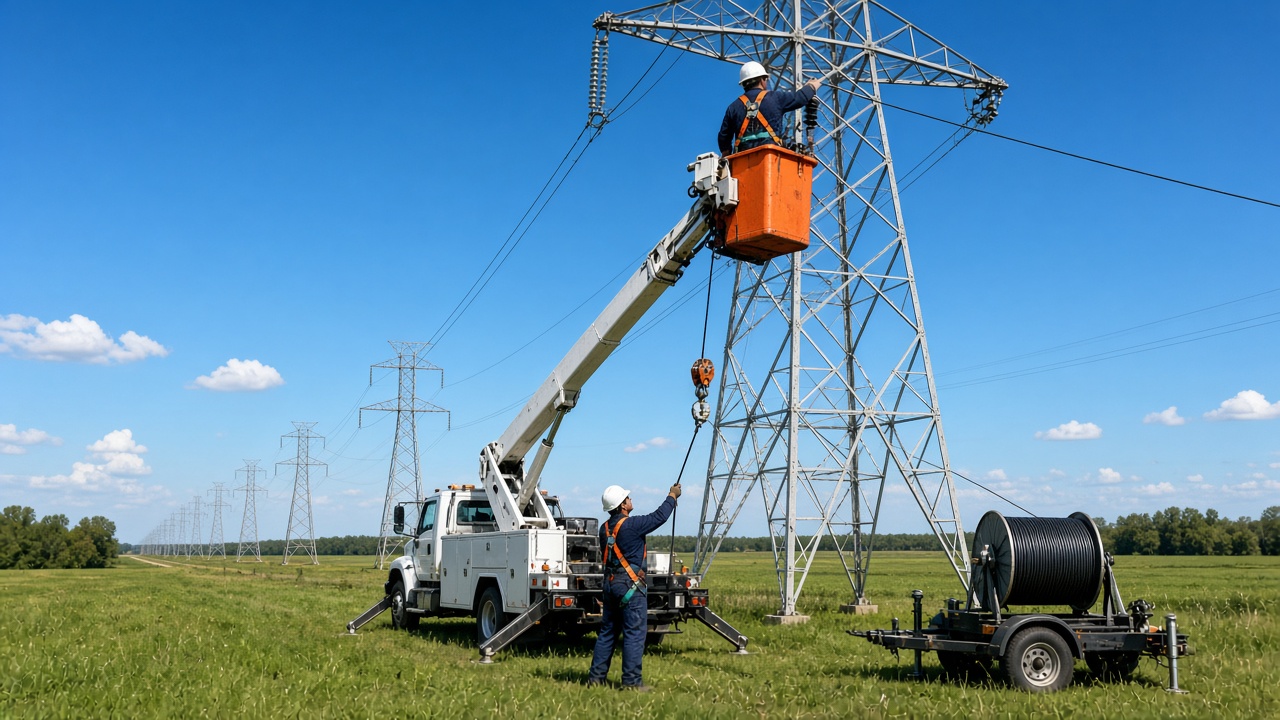
On November 8, Iberdrola said its US subsidiary Avangrid plans to renew and upgrade more than 230 transmission lines covering about 1,300 km (roughly 800 miles) in New York State, with work scheduled through 2031, according to Securities.io's report. The stated aims are more capacity for growing demand and better reliability and resilience in extreme weather. No standalone cost was disclosed for the program. Iberdrola also plans more than €8.5 billion of US distribution investment by 2028, and reports an existing US regulated asset base across New York, Maine, Connecticut and Massachusetts.
This one doesn't make headlines the way a brand-new 765 kV line does, but I'd argue it matters just as much for jobs. Rebuild programs are the steady, predictable work that lets contractors hire for the long term instead of staffing up and laying off. The company hasn't published a line-by-line scope, but a renewal program of 230-plus lines running through 2031 typically involves work like structure replacements, reconductoring, outage coordination and substation tie-ins. For lineworkers and contractors in New York, that's a multi-year pipeline worth watching.
Programs like this usually mean a lot of work behind the scenes too: outage planners, line designers, real estate and permitting specialists, project controls, and the field engineers who keep it all moving.
ComEd's underground ring at O'Hare
Here's a nice example of how much variety the job has. In late October, ComEd said the Illinois Commerce Commission had approved its Grid Reliability Infrastructure Transformation (GRIT) project: four underground 138 kV lines and a new substation, forming a ring that links three substations around Elk Grove Village, Wood Dale and Bensenville.
Why underground? Because Federal Aviation Administration height limits near O'Hare restrict what you can build overhead. ComEd says the project is needed for existing customers and new load, including several large-load customers that have moved into the area. Grading for the new Dierking substation starts this fall, underground work begins in January 2027, and the project should be in service in the second quarter of 2029 (summary and sources here).
High-voltage underground cable is its own specialized world: duct banks, vaults, cable pulling, splicing and terminations, and testing that has to be done perfectly. Qualified HV cable splicers are some of the hardest people to hire in this industry. If you like precise, hands-on work and want a skill that's hard to replace, I'd seriously look at it.
Alberta: low-cost financing saves ratepayers money
North of the border, AltaLink announced on November 10 that its loan from the Canada Infrastructure Bank (CIB) for the Central East Transfer-Out (CETO) project will save Albertans more than $60 million over the 30-year financing period. AltaLink says the CIB rate is roughly 300 basis points lower than a conventional 30-year AltaLink bond, and its final draw under the agreement was $18.8 million in the third quarter. CETO itself, a 130 km, 240 kV line shared with ATCO that connects substations near Red Deer and Stettler, was energized in June 2026. It's a good reminder that how projects get financed matters to the people paying the bills, alongside the national investments we covered earlier this week.
Wyoming: Bechtel puts $1M into electrical training
On the people side, ENR reports that Bechtel will invest $1 million to expand skilled trades training at Laramie County Community College and Western Wyoming College. The money goes toward equipment, faculty and training space under Bechtel's new Build for More campaign, which aims to open pathways into electrical and pipefitting careers across the state.
Bechtel's head of construction, Walker Kimball, put it nicely: "These are well-paying, stable careers that let people build a good life, often without leaving home." He also said that just telling young people the careers are great isn't enough, and that they need chances to see the work up close.
He's right. The biggest constraint on everything above isn't money or steel. It's people. Companies putting money into local colleges, especially in rural states, is exactly the sort of thing that turns a backlog into actual careers.
What this means if you work in the trade
Here's how I'd read this week as someone building a career:
- EHV is going mainstream. 765 kV work is spreading from a few utilities to whole regions. Experience at that voltage, whether on the line, in the substation or in protection and controls, is going to pay well and stay in demand.
- Rebuilds are the quiet career engine. Programs like New York's 230-line renewal give you long, predictable runs of work. If stability matters to you, look for contractors and utilities with multi-year rebuild programs.
- Specialties stand out. HV cable splicing, relay testing and commissioning are where the shortages are worst and the pay is strongest.
- Approvals take time, so plan ahead. Gopher to Badger is 12 to 18 months from a permit decision, and MISO's Iowa lines come into service in the early 2030s. That gives you a real window to train up now and be ready when the crews mobilize.
- The office side is growing too. Every one of these projects needs designers, estimators, project managers and outage planners. If you've done field time and want a career that also uses your head, these projects will need you.
My view
I'm genuinely excited by what's happening. Ten years ago, a 765 kV line in the Upper Midwest or a 230-line renewal program in one state would have been a once-in-a-generation story. Now it's just this week's news. Demand for electricity is rising, utilities are finally investing to match, and regulators are moving projects forward.
For anyone in the electrical trades or thinking about joining them, the signal is as clear as I've seen it: the work is long-term, it's well paid, and it's helping build the backbone of the next economy.
If you're ready for your next move, browse the latest electrical jobs across the USA and Canada. There's a lot of good work out there right now.