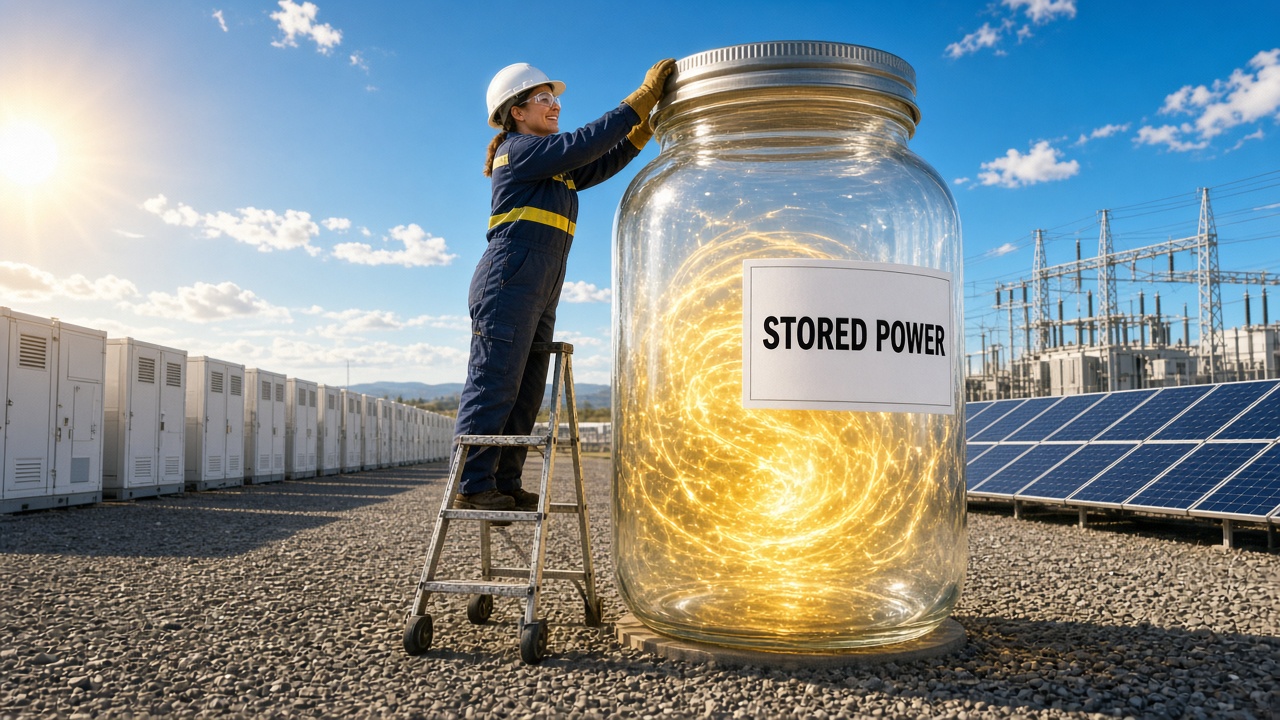

Canada's $115B Grid Plan, Google's $4M Bet and More Transformers
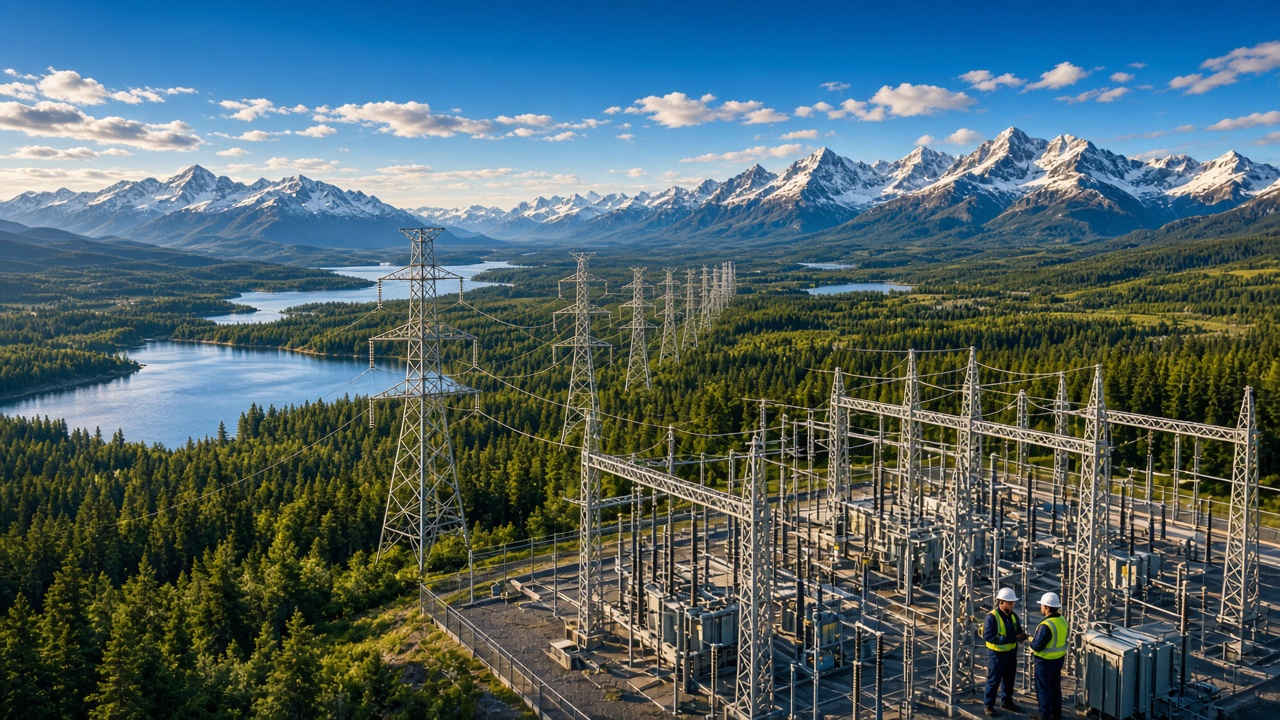
Canada's $115B plan to double its grid, Google's $4M for NECA project leaders, GE Vernova's Shreveport expansion and what it all means for electricians.
Some weeks in this industry feel like a slow drip of news. This wasn't one of them. In the space of a few days, Canada laid out a $115 billion plan to double its grid, Google put real money into training the people who lead electrical projects, GE Vernova committed to making more transformers in Louisiana, and fresh US spending data confirmed just how much of the construction economy is now riding on power and data centers.
Each of these stories points the same way, so I want to go through them one at a time and then talk about what they mean if you're an electrician, a contractor, or someone thinking about joining the trade.
Canada goes big: $115 billion to double the grid
The headline story north of the border is Budget 2026 and its companion action plan, Powering Canada Strong: From Strategy to Action, published November 5 by Natural Resources Canada.
The numbers are big. Ottawa says it's investing $115 billion in electrification through 2041–42, including $52 billion in new commitments in this budget. The aim, set out in May, is to double Canada's electricity grid by 2050. As CBC reported, Finance Minister François-Philippe Champagne put it plainly: "We will connect provincial grids. We will build thousands of kilometres of transmission lines. We will develop the nuclear energy sector."
A few details stood out to me for anyone in the field:
- Transmission gets serious support. The Clean Electricity investment tax credit is being extended to the end of 2040 and expanded to cover the highest-voltage intra-provincial transmission lines in each province. The 30% Clean Technology ITC is also extended to 2040.
- Interties are a named priority. Five priority interties are listed: PEI–New Brunswick, BC–Yukon, Alberta–BC, Alberta–Saskatchewan and Saskatchewan–Manitoba. First Ministers have agreed to finish pre-development work on their intertie projects by July 2027.
- There's a "Make" pillar for equipment. That includes consultations on a domestic content bonus for Canadian-made components, and examples like Hitachi Energy's new electrical-grade pressboard plant in London, Ontario, which makes insulation materials for high-voltage transformers.
- Workforce is front and center. The plan cites Electricity Human Resources Canada's estimate that the sector needs 28,000 new workers by 2028 (we dug into that here), and says more than 80% of electricity employers rank finding skilled talent as their most pressing constraint. Team Canada Strong aims to recruit, train and hire 80,000 to 100,000 new Red Seal trades workers by 2030–31.
- EV charging gets a boost. CBC notes the budget proposes $587 million over five years to renew the Zero-Emission Vehicle Infrastructure Program, supporting more than 55,000 additional chargers.
My take: there's a fair critique, raised in CBC's coverage, that a lot of the money is back-loaded into the 2030s. Most of the ITC cost lands between 2031–32 and 2041–42. But for people building careers, long-dated certainty is actually a gift. Utilities plan transmission over decades, and a tax credit that runs to 2040 is the kind of signal that gets lines designed, substations ordered and crews hired. If you're a lineworker, a substation tech or an industrial electrician in Western Canada or the Maritimes, the intertie list is worth bookmarking.
We wrote recently about where Canada's power build-out is coming province by province. This plan puts federal money behind a lot of it.
Google invests $4 million in electrical project leaders
On November 10, the National Electrical Contractors Association and ELECTRI International announced a $4 million investment from Google to expand leadership development in electrical construction.
The money supports the NECA/ELECTRI Project Management Apprenticeship, a Department of Labor registered apprenticeship, and extends it into new areas: preconstruction and virtual design and construction (VDC), superintendent leadership, start-up and commissioning, and closeout and operations. The first cohorts of the expanded program are due to start in the second quarter of 2027.
NECA CEO David Long said Google is "taking a holistic approach to developing our industry's workforce, from helping people enter the electrical trade to training our professionals in the field and preparing the leaders who guide crews and manage complex projects."
I really like this one, and here's why. Most of the workforce conversation focuses on getting more people into the trade, and rightly so. But the bottleneck on big jobs is often one level up: the foremen, superintendents, project managers and commissioning leads who turn a stack of drawings and a crew of 200 into an energized building on schedule. We've covered those roles in depth (superintendent, project manager, testing and commissioning), and they're some of the best-paid, most in-demand jobs in the industry.
It also makes sense that a hyperscaler is funding it. Every data center needs a contractor team that can lead complex electrical work. The best way to get those leaders is to grow them from inside the trade, and this program is set up to do exactly that.
Practical tip: if you're a journeyman or foreman with ambitions to run jobs, NECA has an interest form for program updates. Ask your employer whether they'd sponsor you. A structured, registered path into project leadership is worth a lot.
GE Vernova adds transformer capacity in Shreveport
Also on November 10, Utility Dive reported that GE Vernova will invest $34.5 million to expand transformer manufacturing at its existing Shreveport, Louisiana, facility. The company expects the investment to grow the plant's workforce by nearly 30%, with production at full capacity by 2028.
"Electricity demand is growing, and transformers are part of the critical grid equipment essential to delivering the power our customers and modern economies depend on," said Philippe Piron, CEO of GE Vernova's electrification segment.
This is the latest in a steady run of transformer announcements. We covered the transformer crunch a week ago, and the shortage is still real. One California contractor told Bisnow this month that transformers can take upward of 160 weeks to arrive on site. Every new line of domestic capacity chips away at that, and every new plant needs electrical technicians, testers and maintenance electricians of its own. Grid jobs aren't only in the field.
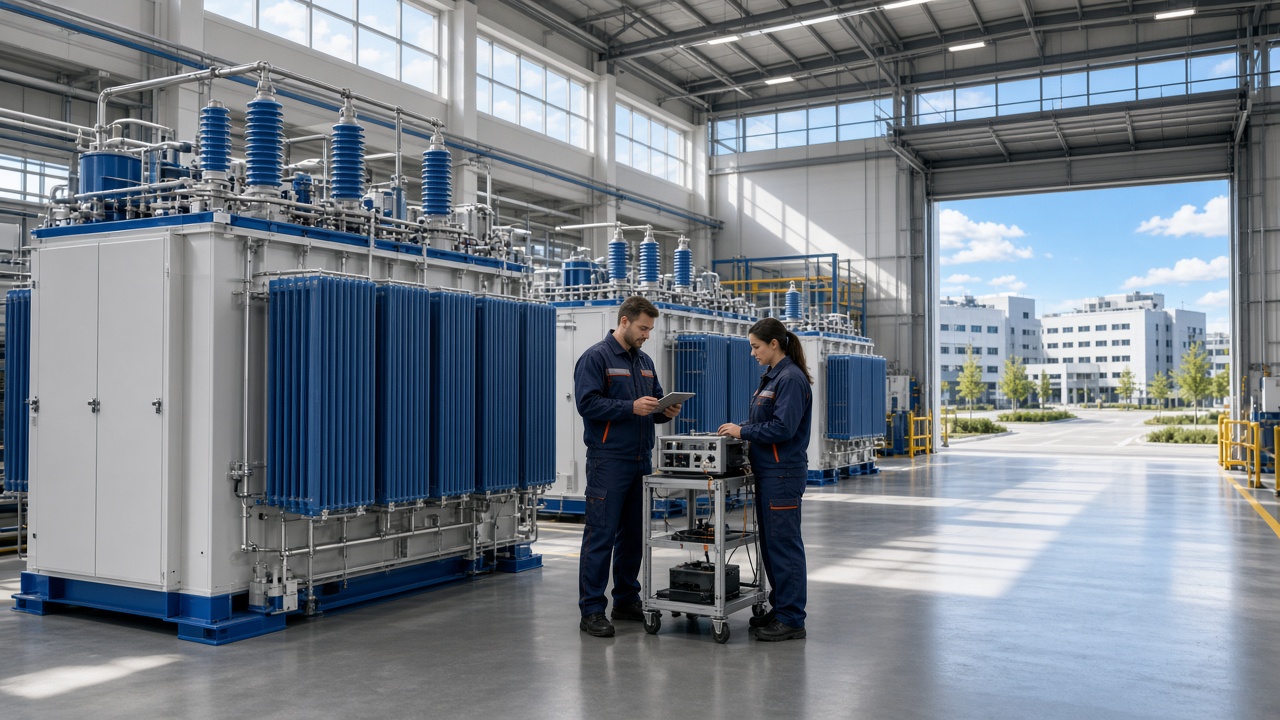
Every new transformer plant needs testers, technicians and maintenance electricians of its own: grid jobs aren't only in the field.
The spending data: power and data centers carry the load
The context for all of this came from the Associated General Contractors of America's analysis of September construction spending, released November 2.
Overall US construction spending dipped 1.9% from August. But inside private nonresidential:
- Data center construction spending rose 8.6% in a month and 90% year over year.
- Private electric power construction climbed 1.3% from August and 14% from September 2025.
- All other private nonresidential categories combined fell 0.2% for the month and 7.8% over 12 months.
That's a striking split. AGC chief economist Ken Simonson said surging demand for data centers and power projects is masking cutbacks elsewhere.
For electricians, the takeaway is pretty simple: the two fastest-growing parts of the construction market are the two most electrically intensive. According to the IBEW, as Electrical Trends noted, between 45% and 70% of a typical data center's construction budget goes to the electrical subcontractor. That's why we keep saying electricians are the hardest hire of 2026.
It also explains some of the other news this month. Jacobs won the program delivery role on AEP's $37 billion transmission program across seven states, and SOLV Energy completed its roughly $45 million acquisition of Texas-based ASB Energy Services, a substation foundations, civil and battery storage contractor. Capital is flowing toward anyone who can deliver high-voltage and mission-critical work.
A quick code note: 2026 NEC Chapter 4
For those of you keeping up with the code, EC&M has a solid rundown of key Chapter 4 revisions in the 2026 NEC. The highlights include expanded marking requirements for switchboards, switchgear and panelboards, a new Part VI in Article 426 covering conductive pavement heating systems, two new motor design types (BE and CE) in Article 430, and new listing requirements in Section 495.2 for equipment over 1,000 volts, with delayed effective dates so the industry can transition. That last one matters more and more as medium-voltage work grows in data centers. If you missed our overview of where the new code is being adopted, it's here.
What it all means for your career
Put this week's news together and you get a clear picture:
- Governments on both sides of the border are committing long-term money to grids, transmission and the workforce to build them.
- The private sector is backing it too, with hyperscalers funding training and manufacturers expanding equipment plants.
- The bottleneck is people, at every level from first-year apprentice to project director.
If you're early in your career, there has rarely been a better time to get into the trade. We just published a full guide to what an electrical apprentice does and how to start. If you're a journeyman, think about which lane excites you most: high voltage, mission critical, commissioning or leadership. Then go after the training that gets you there. And if you're an employer, the incentives for hiring and training are better than they've been in years, so use them.
I'm genuinely optimistic about where this is heading. The grid we build over the next decade will power AI, electric transport, new manufacturing and cleaner, more affordable energy for millions of homes. Electricians are the people who'll make that real.
Ready for your next move? Browse live electrical jobs across the USA and Canada and set up a job alert so the right role finds you first.