AEP's $37B Transmission Push: What It Means for Lineworkers
AEP's $100B plan, a $37B transmission program and triple the 765-kV miles. What it means for lineworkers and substation electricians, and how to get ahead.
Every so often a single utility announcement tells you exactly where the work is heading for the next five years. This week, it was American Electric Power.
On October 28, AEP unveiled an expanded $100 billion capital plan for 2027 through 2031, and the very next day it named Jacobs and WSP to help deliver a $37 billion transmission program across 11 states, as ENR reported. Transmission is the biggest slice of that plan, ahead of $36 billion for generation and about $22 billion for distribution. I've been watching grid spending numbers climb all year, but this one made me sit up. If you climb poles, build substations or terminate control cable for a living, this is your industry telling you, in dollars, that it needs you.
The numbers behind AEP's plan
Here's what stood out to me in the ENR piece. Of the $37 billion, roughly $17 billion is for projects driven by regional transmission organizations, $11 billion for system reliability and $9 billion for transmission serving individual customers. AEP expects its transmission rate base to rise from about $37 billion this year to $69 billion in 2031. That's nearly doubling the size of the network's value in five years.
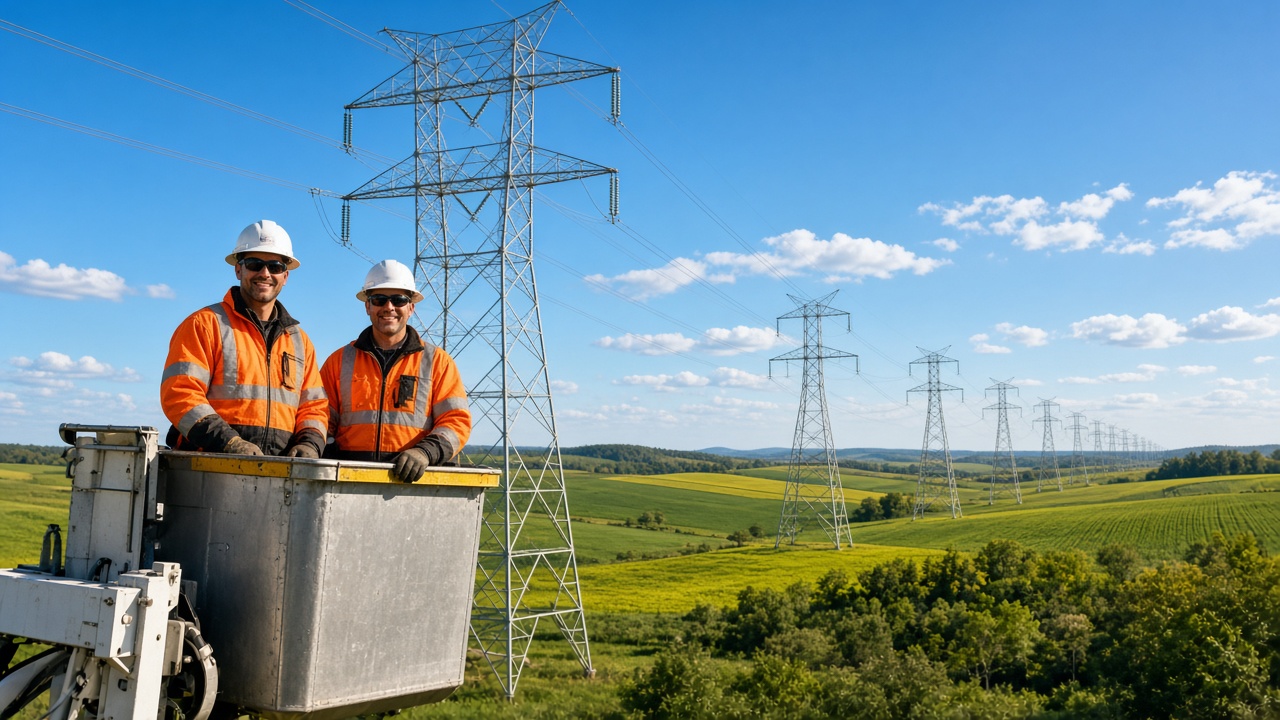
The headline for anyone who works at extra-high voltage: AEP already owns about 90% of the nation's existing 765-kV lines, and it plans to nearly triple its 765-kV mileage. That's the biggest, tallest, most demanding class of line in North America, and there are only so many crews in the country who have built it.
Why the rush? Demand. AEP signed 15 GW of new load commitments in the third quarter alone and expects incremental contracted load to reach 84 GW by 2031, with 92% of that tied to data centers (including crypto customers), according to its investor materials. We've written about the speed-to-power race before, and this is what it looks like when it shows up on a single utility's balance sheet.
Jacobs will support AEP's seven-state eastern portfolio, covering engineering and design, project controls, siting, public outreach, right-of-way acquisition and environmental work. WSP USA takes the four-state western portfolio, with scope that could span planning, permitting, engineering and program delivery. Neither firm disclosed a contract value, and it's worth being clear: the $37 billion is AEP's planned systemwide spend, not the value of those two awards. Separately, ENR reported on October 20 that DOE finalized a $1.6 billion loan guarantee supporting AEP's plan to reconductor and rebuild 5,000 miles of high-voltage lines across five states, part of a $3.56 billion program, with contractors chosen project by project.
Piketon, Ohio: one project, three 765-kV lines
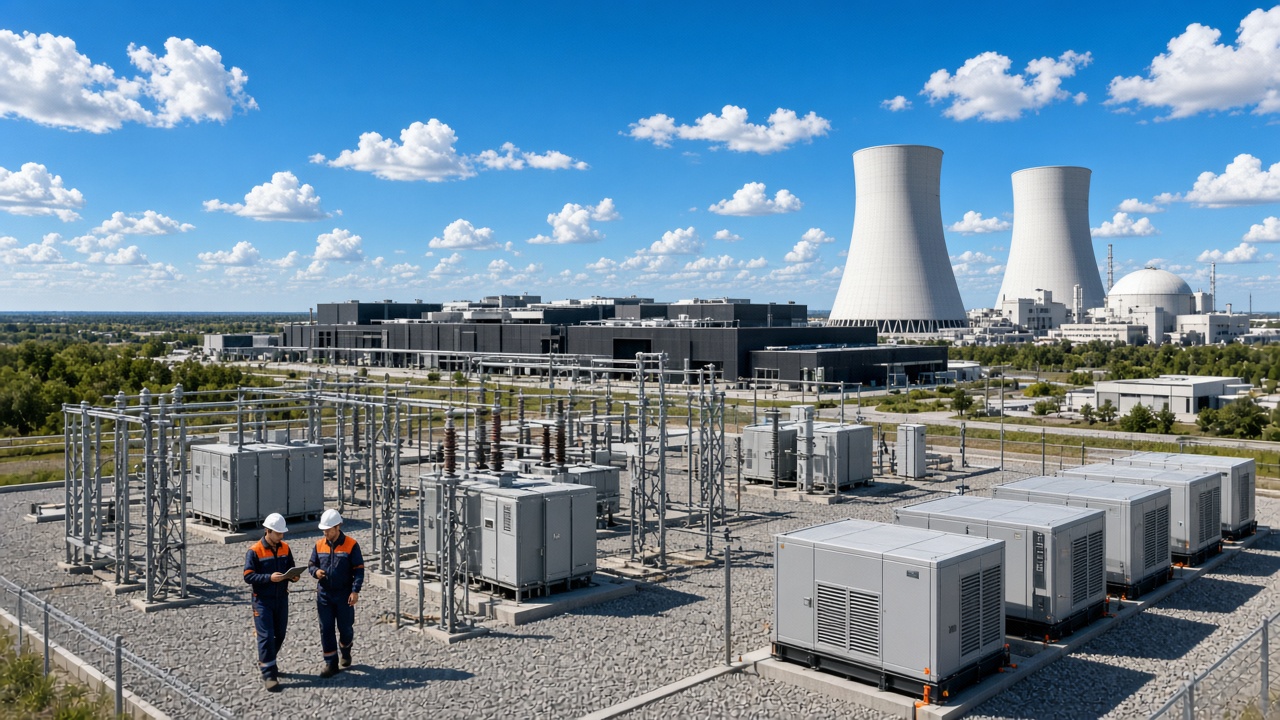
If you want a single example of the scale, look at southern Ohio. AEP's plan includes an approximately $5 billion, 765-kV build to serve SB Energy's planned 10.4-GW data center campus at the former Portsmouth gaseous diffusion plant site in Piketon. Three new 765-kV lines would each add about 3.2 GW of capacity, with targeted in-service dates at the end of 2028, 2029 and 2030. AEP says it has secured substantially all required rights-of-way and expects construction to begin in the first quarter of 2027, though the remaining work still needs approvals from PJM, the Public Utilities Commission of Ohio and FERC.
Let that timeline sink in. Early 2027 is a few months away. Three EHV lines, one after another, each due within roughly a year of the last. That means foundation crews, tower erectors, stringing crews, substation builders and relay and commissioning techs, all needed on a rolling schedule for years. If you live within driving distance of the Ohio River valley, I'd be paying very close attention to who is bidding this work.
Washington is funding the supply chain, too
A grid buildout is only as fast as its slowest transformer delivery, and the federal government knows it. On October 30, the Department of Energy announced a $237 million funding opportunity called Grid SCALED (Grid Supply Chain Alternatives to Lead Energy Dominance). Up to $50 million goes to projects that refurbish and reuse existing grid equipment, and up to $187 million to projects that increase the use of US-made alternative materials and subcomponents. DOE says it's the first round of a Grid Supply Chain Program authorized for up to $375 million for transformers, grid components and materials, with more announcements expected in 2027, including for solid-state transformers. Concept papers are due November 20, 2026.
Why should a field electrician care about a manufacturing grant? Because equipment lead times have quietly become the critical path. As one contractor executive told ENR's Top 600 report, ten years ago construction was the schedule-critical item; now procurement lead times decide whether a project hits its energization date. More domestic transformers and refurbished gear means more substations that actually get built and energized on time, and more steady work for the people who install, test and maintain them.
Getting more out of the wires we already have
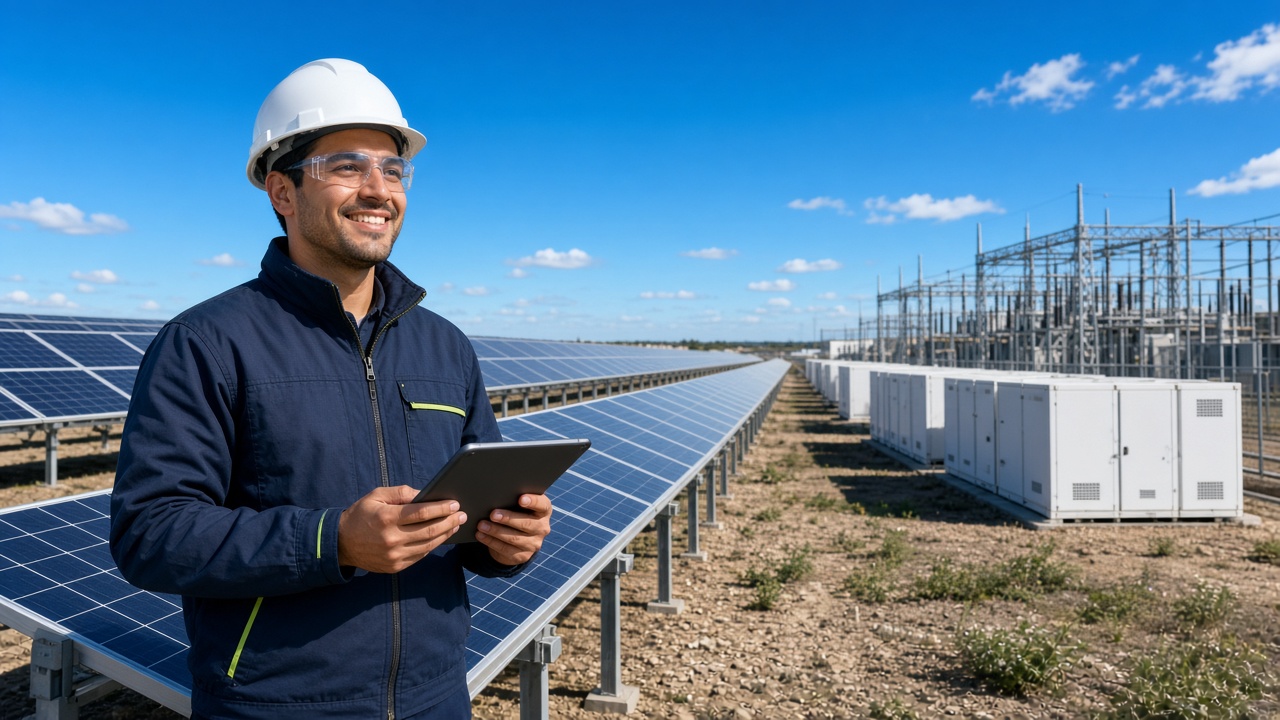
Not every gain needs a new tower. Entergy is using a $13.7 million DOE award to deploy dynamic line rating, targeted surveys, substation and terminal upgrades and hardware integration across 1,125 miles of existing transmission lines in Arkansas, Louisiana and Mississippi. The four-year project aims to unlock at least a 25% increase in transfer capability on selected corridors, and early modeling shows potential gains of 29% to 61%. In a lovely bit of 2026 tech, Entergy says autonomous drones using LiDAR will install more than 600 line sensors, each in under two minutes, without an outage or a bucket truck.
I love this, and I don't think it takes work away from anyone. Somebody still has to upgrade the terminal equipment, rework the protection settings, integrate the sensor data and keep it all running. Advanced transmission technology is a skills upgrade, not a replacement. The techs who understand both the iron and the data will be in a sweet spot.
Canada is building at the same pace
North of the border, the story rhymes. On October 7, Hydro One filed a roughly C$37 billion, 2028–2032 investment plan with the Ontario Energy Board. If approved, it would add transmission capacity to connect about 6,000 MW of new supply, modernize around 1,400 km of transmission lines and replace or refurbish more than 85,000 distribution poles. Out west, BC Hydro says Phase 1 construction of the North Coast Transmission Line is underway, with clearing, access roads, substation site prep and worker accommodation going in around Prince George and Vanderhoof. Same message, different accent: the grid is being rebuilt, and it needs hands.
The catch: there aren't enough of us
This is where it gets real. All that capital is chasing a workforce that's already stretched. In ENR's 2026 Top 600 Specialty Contractors report, three-quarters of electrical contractors said they were short of craftworkers, along with 73.1% of utility contractors. Across all specialty contractors, 62.6% reported a shortage, up from 57.4% a year earlier.
The AGC and NCCER 2026 workforce survey, covered by HR Director, puts electricians at the top of construction's hardest-to-hire list, ahead of HVAC techs, pipefitters and welders. Eighty-seven percent of firms had open hourly craft positions, 88% of those said they were as hard or harder to fill than a year earlier, and 42% said worker shortages delayed projects, the most commonly cited cause. AGC's Macrina Wilkins made a point I agree with completely: you can't simply pay your way out of this, because higher wages mostly move the same people between employers. The fix is training more people.
For workers, that's not a threat, it's leverage. When demand outruns supply this badly, the people with the right tickets choose their projects.
How I'd position myself right now
If I were early or mid-career in this trade today, here's what I'd do.
Go toward voltage. EHV and substation experience is the scarcest thing in this market. If you're a journeyman lineworker, ask to get on transmission and 345/500/765-kV work. If you're an inside wireman, look at substation construction, where control wiring and cable termination hours are in high demand. Our lineworker guide covers the apprenticeship paths.
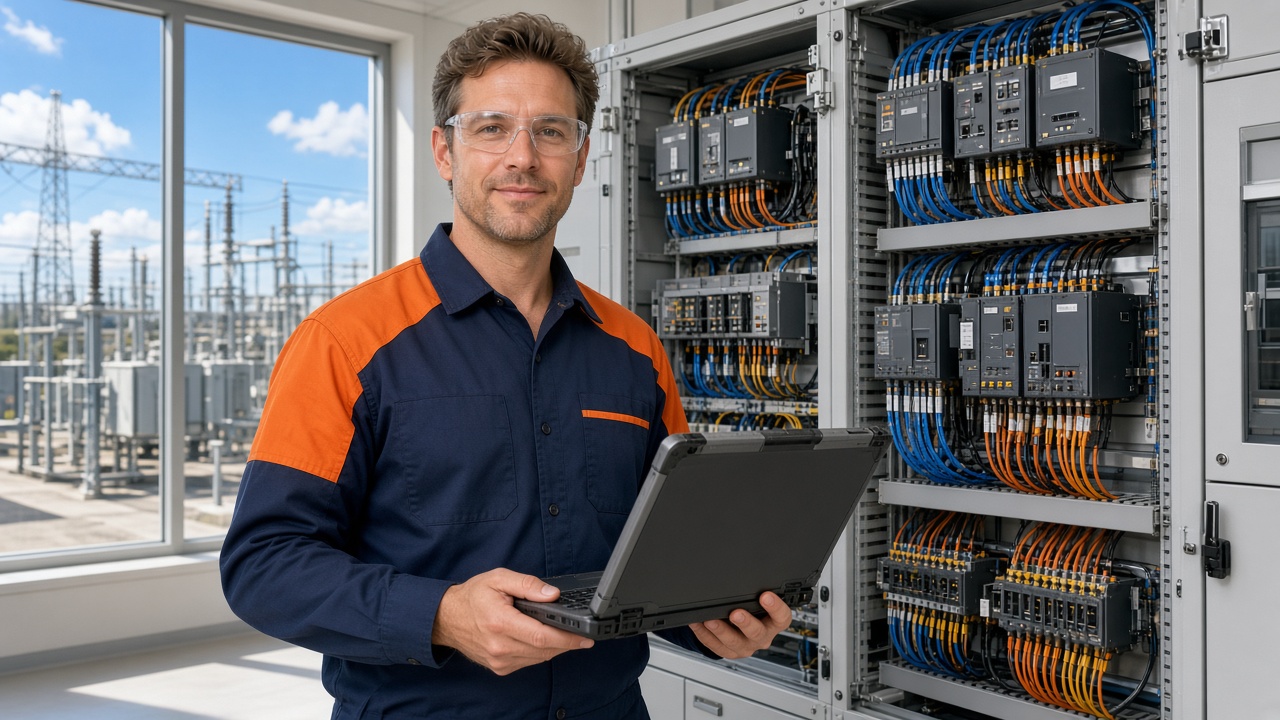
Add a testing and commissioning skill. Every new line and substation needs protection schemes tested before it's energized. To me, relay and protection-and-control work is one of the smartest specializations you can add right now, and it's a great move for electricians who like troubleshooting as much as building.
Follow the projects, not the headlines. Piketon, AEP's reconductoring program, Entergy's DLR corridors, Hydro One's rate plan and BC Hydro's North Coast line are all real work with real timelines. Find out which contractors and utilities are staffing them and get your name in early.
Get comfortable with data. Drones installing sensors, digital substations, real-time line ratings: the field is going digital. A tablet, a laptop and a curiosity about what the numbers mean are now just as important as your hot sticks.
Keep your safety record spotless. On mega-projects with owners watching every metric, a clean record and current certifications are what get you hired and kept.
I'm genuinely optimistic about this. A once-in-a-generation grid build-out is landing at exactly the moment the trade is short of people, and that combination rewards anyone willing to learn and travel. If you're ready to make a move, browse the latest transmission, substation and lineworker roles on our jobs board. The wires are going up, and someone's going to build them. It might as well be you.