What Does an Industrial Electrician Do? Pay, Skills and Outlook

Industrial electricians keep factories, battery plants and data centers running. Real US and Canadian pay data, Red Seal 442A, skills and how to get started.
Walk into any modern factory and you will see robots, conveyors, presses, chillers and compressors all running in sync. Behind every one of them is a motor, a drive, a controller and a lot of wiring, and when any of it stops, the plant loses money by the minute. The person who gets it running again is the industrial electrician. It is one of the most technical, best-paid and least-talked-about corners of the trade, and with factories, battery plants and data centers going up across North America, I think it deserves a lot more attention.
This is the latest in our Roles Explained series. If you are newer to the trade, start with our overview of what an electrician does, then come back here.
What industrial electricians actually do
Skilled Trades Ontario has one of the clearest definitions I have seen. Its Industrial Electrician (442A) trade description covers laying out, installing, troubleshooting, repairing and maintaining industrial electrical systems, "including programming, calibration and preventive/predictive maintenance," across motors, generators, distribution equipment, motor drives, standby power, instrumentation and even renewable energy and energy storage systems. The Red Seal program sums it up as installing, maintaining, testing, troubleshooting and repairing industrial electrical equipment and its associated protection and controls.
In practice, a typical week might look like this:
- Motor controls. Starters, contactors, overloads and interlocks, plus the ladder diagrams that tie them together. When a conveyor will not start, this is usually where you look first.
- Variable frequency drives (VFDs). Setting parameters, chasing fault codes, dealing with harmonics and replacing drives without wrecking a production schedule.
- PLCs and automation. Reading and editing logic, swapping I/O cards, working out whether the fault is in the code, the field device or the wiring. Ontario's curriculum explicitly includes programmable logic controllers and control systems.
- Instrumentation. Sensors, transmitters and loops that tell the control system what is happening.
- Power distribution. Switchgear, transformers, MCCs and standby generators, often at higher voltages than commercial work.
- Preventive and predictive maintenance. Thermal scans, insulation testing and scheduled shutdowns, so the 3 a.m. breakdown call never happens.
What separates a good industrial electrician from an average one is troubleshooting. Commercial and residential work is often about installing new systems to a plan. Industrial work is frequently about walking up to a machine you did not build, with an operator telling you what they think went wrong, and logically working back to the cause. If you like puzzles, this is the side of the trade for you.

Where they work
The classic home is manufacturing: auto plants, food and beverage, pulp and paper, steel, chemicals and plastics. You will also find them in utilities, mining, oil and gas and water treatment. But the newer workplaces are where it gets exciting.
EV and battery plants. Cell and module factories are full of automated lines, dry rooms and formation equipment. SEIA reported that two new battery cell plants opened in Ohio and Tennessee this year, alongside a 50 GWh module plant in Texas.
Semiconductor fabs. Ultra-reliable power, huge process loads and tight controls. Downtime in a fab is brutally expensive, which tends to make skilled maintenance staff very valuable.
Data centers. Strictly speaking these are critical facilities, not factories, but the skill set overlaps heavily: switchgear, UPS systems, generators, controls and a zero-tolerance attitude to outages.
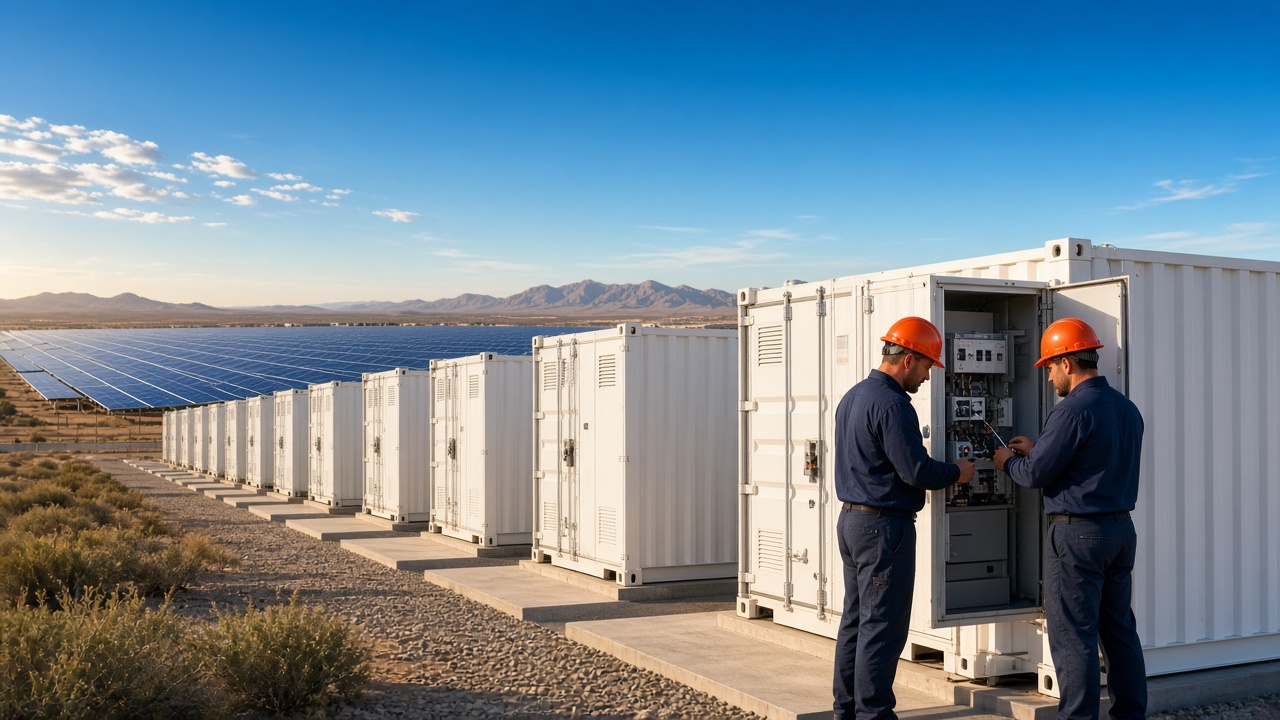
Grid batteries and solar farms. Ontario's trade definition already lists energy storage, and with record battery installs this year, operations roles at these sites are growing. We covered that boom in our latest battery storage and solar news story.
Pay: what the data says
The US government does not publish a separate wage line called "industrial electrician," so you need to look at a couple of sources together.
According to the Bureau of Labor Statistics, electricians overall earned a median of $63,190 in May 2025, with the lowest 10% under $42,640 and the top 10% above $108,510. The interesting number for this role is by industry: electricians working in manufacturing earned a median of $74,550, well above the $61,570 median for those at electrical contractors. Manufacturing employs about 6% of the country's 821,000 electricians.
BLS also tracks electrical and electronics repairers of commercial and industrial equipment, a close cousin focused on industrial controls. Their median was $74,090 in May 2025. If you move toward power systems, powerhouse, substation and relay repairers earned a median of $103,020.
In Canada, Job Bank's wage data for industrial electricians (NOC 72201) puts the national median at $42.00 an hour, with a low of $28.00 and a high of $54.00 (2023–2024 reference period). Provincial medians include:
- Saskatchewan: $49.00
- British Columbia: $45.00
- Alberta: $44.00, with a high of $68.00
- Quebec: $43.00
- Ontario: $40.50
Job Bank also reports that 96.6% of workers in this occupation get at least one non-wage benefit, such as a pension or health plan. Remember these are base hourly figures. Shift premiums, overtime during shutdowns and on-call pay can push real earnings well higher, and that is very common in plants that run around the clock.
Licensing and certification
In Canada, Industrial Electrician is a designated Red Seal trade (NOC 72201) in British Columbia, Manitoba, New Brunswick, Newfoundland and Labrador, Nova Scotia, the Northwest Territories, Ontario, PEI, Quebec and Yukon, according to Red Seal. In Ontario it is trade 442A. Skilled Trades Ontario says the apprenticeship takes about 9,000 hours, roughly five years, mostly on the job with a block of in-school training, and ends with a certifying exam. The trade is non-compulsory in Ontario, but the Red Seal endorsement is the portable proof employers look for. A new curriculum standard is being phased in, with levels 3 and 4 starting from September 2026.
In the US, there is no national industrial electrician license. The BLS notes that most states require electricians to pass a test and be licensed, that the rules vary by state, and that apprenticeships typically run four or five years with about 2,000 hours of paid on-the-job training a year. Some plants hire licensed journeyman electricians, others train maintenance electricians in-house. Check your state board through CareerOneStop before you assume anything.
On top of the license, safety training is non-negotiable. Most plants work to NFPA 70E, the standard for electrical safety in the workplace, and the 2027 edition brings a change requiring an additional person for energized work. Vendor training on specific PLC and drive platforms is also hugely valuable, because many plants standardize on one or two brands.
The outlook
Here is the honest picture. BLS projects electricians overall to grow 9% from 2025 to 2035, with about 72,700 openings a year. The narrower industrial equipment repairer category is projected to stay flat, because BLS expects automation and digital control systems to reduce some hard-wired electronics work. But there are still around 8,900 openings a year across that wider repairer group, mostly from retirements.
I read that as a shift, not a shrink. Plants are not using less electricity or fewer motors. They are using smarter ones. The electrician who can only swap a contactor will feel the squeeze. The one who can open a laptop, go online with a PLC, read a drive's fault log and fix the root cause will be fighting off offers.
The manufacturers agree. A September 2026 study from Deloitte and the Manufacturing Institute estimates nearly half a million manufacturing technician roles are open, and employers may need to fill 2.3 million manufacturing and adjacent technician openings between 2025 and 2030. It also found technician employment could grow six times faster than production jobs in manufacturing over that period. That is the skilled side of the factory floor, and industrial electricians sit right at the center of it.
How to get in, and get ahead
- Pick your path. In Canada, find a sponsoring employer and register as an industrial electrician apprentice. In the US, look at a union or open-shop electrical apprenticeship, or a plant that runs its own maintenance electrician program.
- Do a controls course early. Community college PLC and motor control courses are cheap compared to what they can add to your pay. Technical school credits often count toward an apprenticeship too.
- Get into a plant. Even an entry maintenance role exposes you to drives, PLCs and real troubleshooting faster than almost anything else.
- Learn to read the logic and the prints. Ladder logic, schematics and single-line diagrams are your language.
- Volunteer for shutdowns. That is where you see the guts of the equipment and meet the senior techs worth learning from.
- Stay curious about the tech. AI tools are starting to show up in plant training and troubleshooting, and Deloitte's study is all about using AI to get technicians up to speed faster. Treat these tools as a sidekick, not a threat.
If you love solving problems and want a career right at the heart of modern manufacturing, this is a brilliant one, and the timing has rarely been better. Browse the latest industrial electrician and maintenance jobs on ElectricalRoles.com and set up an alert so the right plant finds you.