What Does a Solar PV Installer Do? Pay, NABCEP and Outlook
What solar PV installers do, real pay from BLS and live job ads, NABCEP certification, and an honest 2026 outlook for solar careers in the US and Canada.
Welcome back to our Roles Explained series. So far we've covered the electrician, the lineworker, the industrial electrician and the EV charging electrician. Today it's the job I get asked about most by people who want a fast, practical way into the energy transition: the solar PV installer.
I love this role because the on-ramp is short and the ceiling is surprisingly high. You can start with a high school diploma and a willingness to work on a roof, and within a few years be running a crew, maintaining a utility-scale solar farm, or holding a journeyman license. But I'm also going to be honest with you about 2026, because the solar market is splitting in two right now, and where you start matters.
What a solar PV installer actually does
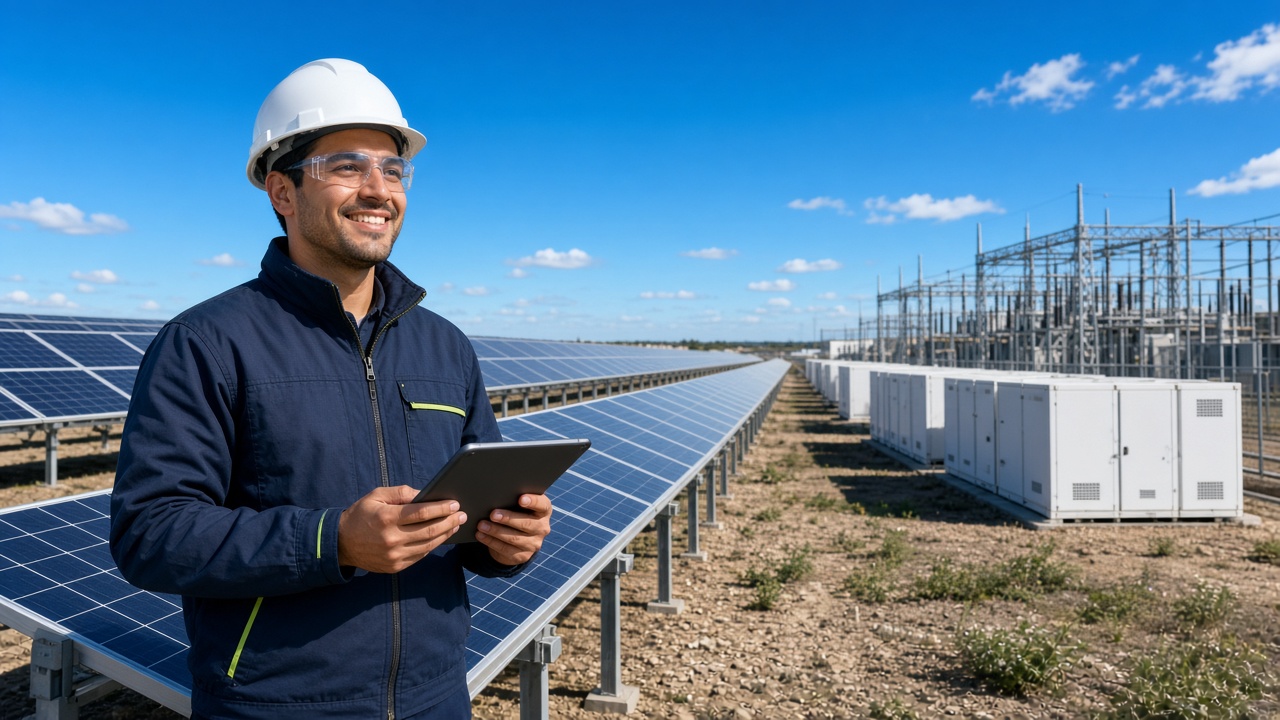
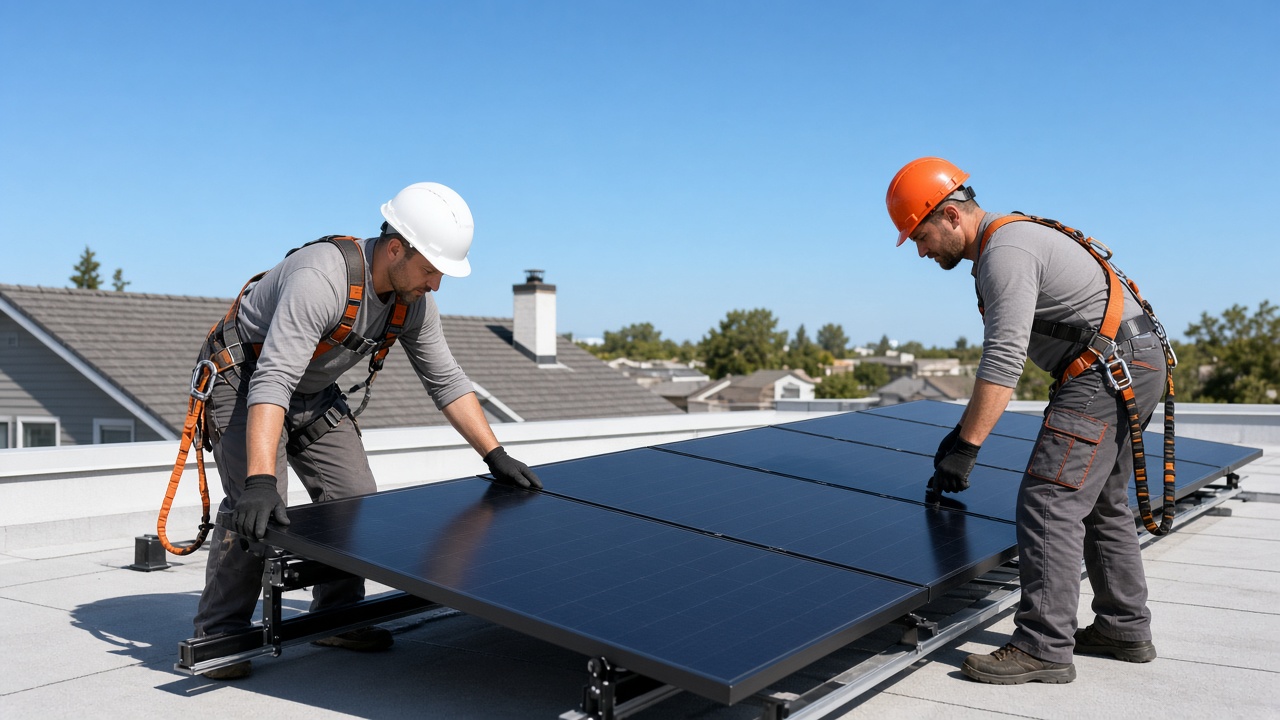
The Bureau of Labor Statistics describes PV installers as the people who "assemble, set up, and maintain rooftop or other systems that convert sunlight into energy." In practice that means planning the layout against the site, measuring and building the racking or support structure, mounting modules, weather-sealing roof penetrations, connecting panels to the electrical system, and then activating, testing and maintaining the system.
In real life, the job looks very different depending on where you work:
Residential rooftop. Small crews, a new house most days, ladders, harnesses, attics and crawl spaces. You're the face of the company to the homeowner, so communication matters as much as torque specs. Look at a real ad like Sunrun's Lead Solar Installer role in Des Plaines, Illinois: it asks for previous solar installation experience, a clean driving record, the ability to carry up to 50 pounds frequently, and comfort working on pitched roofs and in attics. Increasingly, residential crews also install home batteries alongside the panels.
Commercial and utility-scale construction. Flat roofs, carports and, above all, solar farms. Work is at ground level, at enormous scale: piles, trackers, thousands of modules, combiner boxes, DC collection, inverters and medium-voltage gear. It's more like heavy construction, with bigger crews and longer projects.
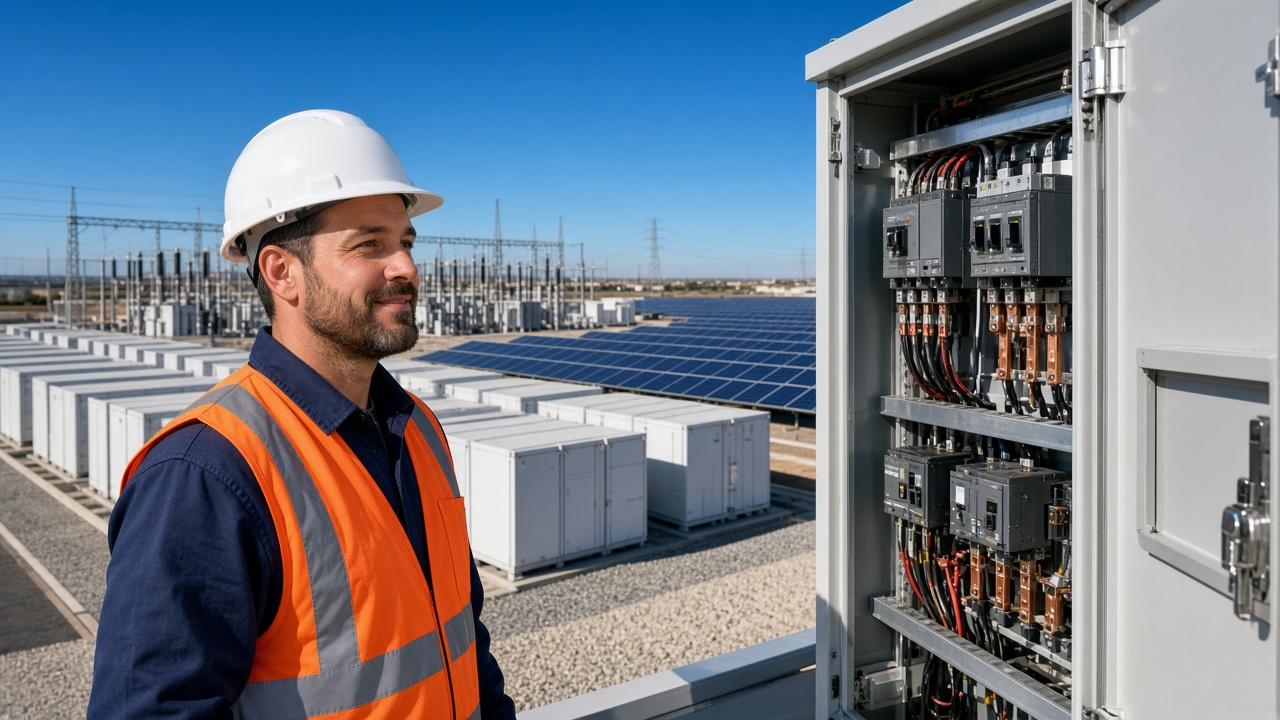
Operations and maintenance (O&M). This is the part of the career most people don't know exists, and it's where I think the long-term opportunity is. Once a solar farm or battery site is built, someone has to keep it running for 20 or 30 years. Solar technicians troubleshoot inverters, trackers and combiner boxes, perform preventive maintenance, prepare switching and clearance orders, and work with SCADA and maintenance management systems. AES's Solar & BESS Technician II ad at the Bellefield project in Mojave, California lists OSHA 10 and NFPA 70E certifications and knowledge of NFPA 855 (the battery storage fire code), and even asks for HVAC and chiller skills to keep battery containers cool. That's a hybrid electrical-mechanical career that barely existed ten years ago.
Installer or electrician? Know the difference
This trips a lot of people up. According to BLS, depending on the job and state law, PV installers may connect panels to the grid themselves, "although electricians sometimes do this task." Licensing varies a lot by state. California, for example, has a dedicated C-46 Solar Contractor classification for businesses that install and maintain solar energy systems. In other states the electrical side falls under the normal electrical licensing rules. In Canada, check with your provincial electrical regulator before you assume what an installer is allowed to touch.
My advice is simple: treat installer work as a door into the electrical trade, not a dead end beside it. The installers who earn the most over a career are the ones who use the experience to get into an electrical apprenticeship, or who become the most electrically capable person on an O&M team. NextEra Energy's PV Solar Field Technician II ad in Tucson lists "Licensed Electrician" and "Licensed Master Electrician" as preferred qualifications, and Ameresco's Solar Electrician role in San Antonio requires a Texas journeyman license plus three years of industrial electrical maintenance experience.
What solar PV installers earn
Here's the official baseline. BLS reports a median wage of $53,140 a year ($25.55 an hour) for solar PV installers in May 2025. The lowest 10% earned less than $41,600 and the top 10% earned more than $79,970. Where you work matters: the median was $58,570 at electrical contractors versus $47,100 through temporary help agencies. For comparison, the median for all electricians was $63,190, which is exactly why I keep nudging people toward the license.
Real job ads tell a more interesting story than the median, especially once you move into utility-scale O&M:
- EDF power solutions, Desert Center, California. Its Renewable Energy Technician (Solar) Level 2-3 ad shows a full range of $23 to $38 an hour for Tech 2 (estimated starting pay $28 to $33) and $26 to $43 an hour for Tech 3 (estimated starting $30 to $36), plus a bonus program. New hires attend a paid 3-4 week training course in Albert Lea, Minnesota.
- SOLV Energy, Tremonton, Utah. Its Solar Field Service Lead role pays $37.11 to $46.39 an hour and asks for at least four years of solar facility maintenance experience, OSHA 30 and NFPA 70E training. That's roughly $77,000 to $96,000 a year on a 40-hour week before overtime, comfortably above the BLS top 10% for installers.
In Canada, Job Bank's latest prevailing wages for the solar panel installer occupation (reference period 2023-24) show a national median of C$26.00 an hour, with a range of C$18.65 to C$40.00. British Columbia led the provinces at a C$30.00 median, with Alberta at C$26.25. Job Bank also reports that 72.6% of workers in the broader occupation group receive at least one non-wage benefit.
The pattern is clear to me: entry-level installer pay is solid but not spectacular. The jump comes with responsibility, electrical skill, and O&M experience on big sites.
The honest outlook for 2026 and beyond
On paper, this is one of the fastest-growing jobs in America. BLS projects solar PV installer employment to grow 37% from 2025 to 2035, from 31,100 to 42,400 jobs, with about 4,200 openings a year. That's against 3% growth for all occupations.
But the market underneath that projection is splitting. The latest SEIA and Wood Mackenzie Solar Market Insight shows:
- Utility-scale is booming. It installed 9.6 GWdc in Q2 2026, up 61% year over year, as developers race to place safe-harbored projects in service before federal tax credit deadlines. The analysts expect 217 GWdc of utility-scale solar to be added from 2026 through 2031.
- Residential is in a dip. With the Section 25D homeowner tax credit gone after 2025, residential installs fell 12% year over year in Q2, and SEIA and Wood Mackenzie now expect the segment to shrink 23% in 2026 before returning to growth in 2027 at an average of 6% a year through 2031.
- Solar and storage together made up 70% of all new US generating capacity added in the first half of 2026.
So if you're choosing where to start, I'd lean toward utility-scale construction and O&M, and toward any employer that cross-trains you on batteries. If you're already in residential, don't panic. Rising retail rates, resiliency concerns and virtual power plants are the long-term drivers the analysts point to, and the skills transfer. We dug into the storage side in Batteries and Solar Are Wiring a Record Year for Electricians.
How to become a solar PV installer
The good news: you don't need a degree. BLS says installers typically need a high school diploma and receive on-the-job training lasting anywhere from a month to a year. Some take short courses at a community college or technical school, and some learn the trade through electrical or roofing apprenticeships. Construction experience as a laborer, roofer, carpenter or electrician shortens the learning curve.
Here's the path I'd take:
- Get OSHA 10 and fall protection training first. Falls are a real risk on rooftops, and nearly every serious employer asks for OSHA 10. It's cheap, quick and shows you take safety seriously.
- Start with the NABCEP PV Associate credential. It's the entry-level credential from the North American Board of Certified Energy Practitioners and a good way to prove you know the fundamentals.
- Build toward NABCEP PV Installation Professional (PVIP). This is the respected one. According to NABCEP's certification handbook, you need OSHA 10 construction training, at least 58 hours of advanced PV training, and installations worth at least six project credits completed in a decision-making role (such as lead installer, foreman or electrician) within the two years before you apply. Systems from 1 kW to 999 kW count for two credits and 1 MW or more for three, and every system needs a permit and a final approved inspection. Then you pass a written exam and recertify every three years.
- Learn the code. Article 690 (solar PV) and Article 705 (interconnected power sources) of the NEC are your bread and butter. See our rundown of the 2026 NEC and where it's enforced.
- Add NFPA 70E and DC skills. Utility-scale and O&M roles expect you to work safely around high-voltage DC, inverters and stored energy.
- Seriously consider an electrical apprenticeship. It's the move that turns a $25-an-hour job into a lifelong licensed trade.
Where the career can go
The ladder is real and it's quick for people who show up and learn. Installer to lead installer to foreman is a common path on residential crews. On the utility side, technician levels from I to IV lead to field service lead, site supervisor and regional O&M management. BLS also notes installers move into project management and sales, or start their own installation businesses.
And the skills travel. Someone who can troubleshoot an inverter, terminate DC collection cable and run a switching order can move into battery storage, EV charging or data center power work. In a world racing toward electrification, that's a fantastic set of options to have.
My take
If you want to work outdoors, see your work make a visible difference, and get into the energy industry without years of school, solar installation is one of the best doors I know. Just walk through it with a plan: get certified, get electrical, and get close to the big utility-scale and storage projects where the growth is strongest right now.
Ready to start? Browse solar, storage and electrical jobs across the US and Canada on ElectricalRoles.com. There are dozens of live solar technician and installer roles on the site right now, from Arizona and Texas to Oklahoma and California.