

What Does a Cable Splicer Do? Pay, Training & Outlook
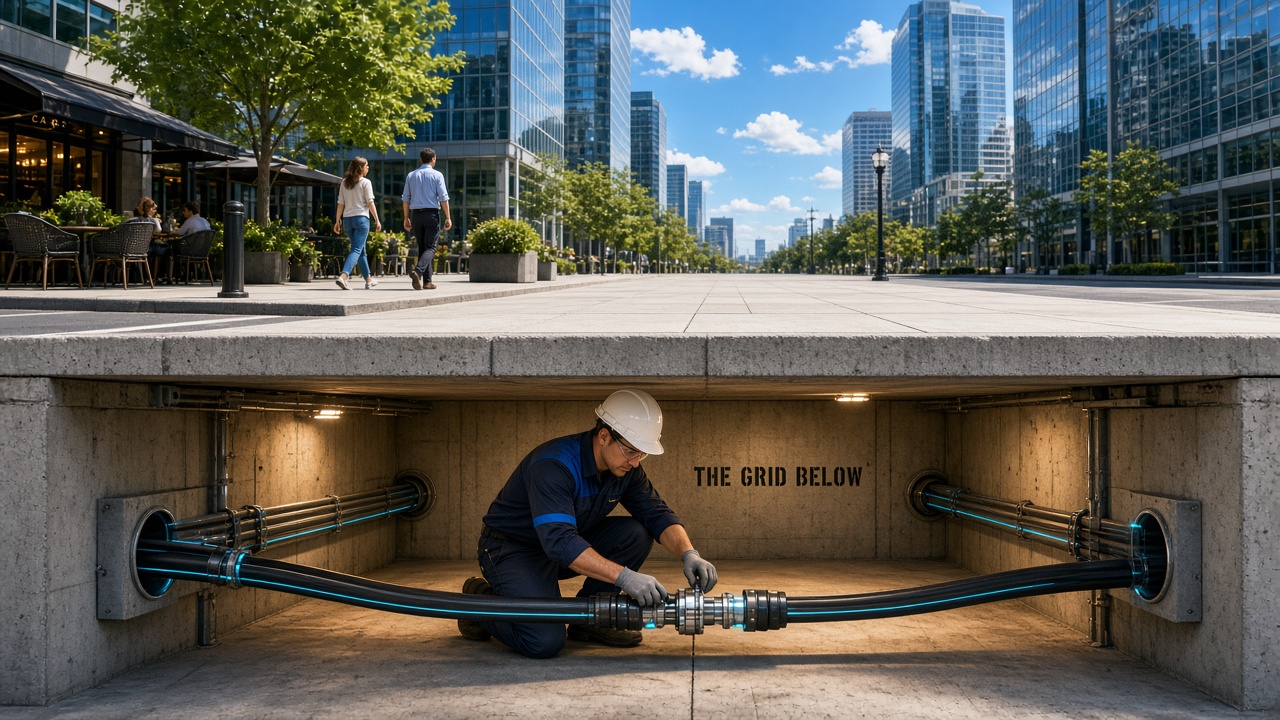
Cable splicers join and terminate the high-voltage cables that power cities and data centers underground. Here's the work, real pay rates and how to get in.
Every city you've ever walked through is running on cables you'll never see. Under the sidewalks, through the vaults and duct banks, into the basements of hospitals and the electrical yards of data centers, there are thousands of miles of medium- and high-voltage cable. Every single one of those cables had to be joined, terminated and tested by someone who really knew what they were doing.
That someone is a cable splicer. It's one of the least talked-about jobs in the electrical world, and honestly, one of the best-kept secrets. The pay is strong, the skill is rare, and the demand is heading in one direction.
We've covered a lot of roles in this series already, from lineworkers to relay technicians and testing and commissioning electricians. Cable splicers sit right alongside them: if lineworkers own the overhead grid, splicers own the grid underground.
What a cable splicer actually does
A cable splicer installs, joins, terminates, tests and repairs power cables, mostly in underground systems. Seattle City Light's apprenticeship posting sums it up well: splicers learn to "splice, terminate, and maintain low and high voltage power cables in an underground network distribution system," along with installing and maintaining transformers, network protectors, relays and switches, and locating and repairing electrical faults.
On a typical week, that can look like:
- Making splices (joints). Connecting two lengths of medium- or high-voltage cable so the joint performs as well as the cable itself. That means precisely stripping the jacket, shield and insulation, cleaning, applying a connector, and rebuilding the insulation and shielding layers with a splice kit.
- Making terminations. Finishing a cable end so it can connect to a transformer, switchgear or overhead line, usually with stress-control components that manage the electrical field.
- Working in vaults, manholes and tunnels. A lot of splicing happens in confined spaces under the street, so confined-space entry, ventilation and rescue procedures are part of daily life.
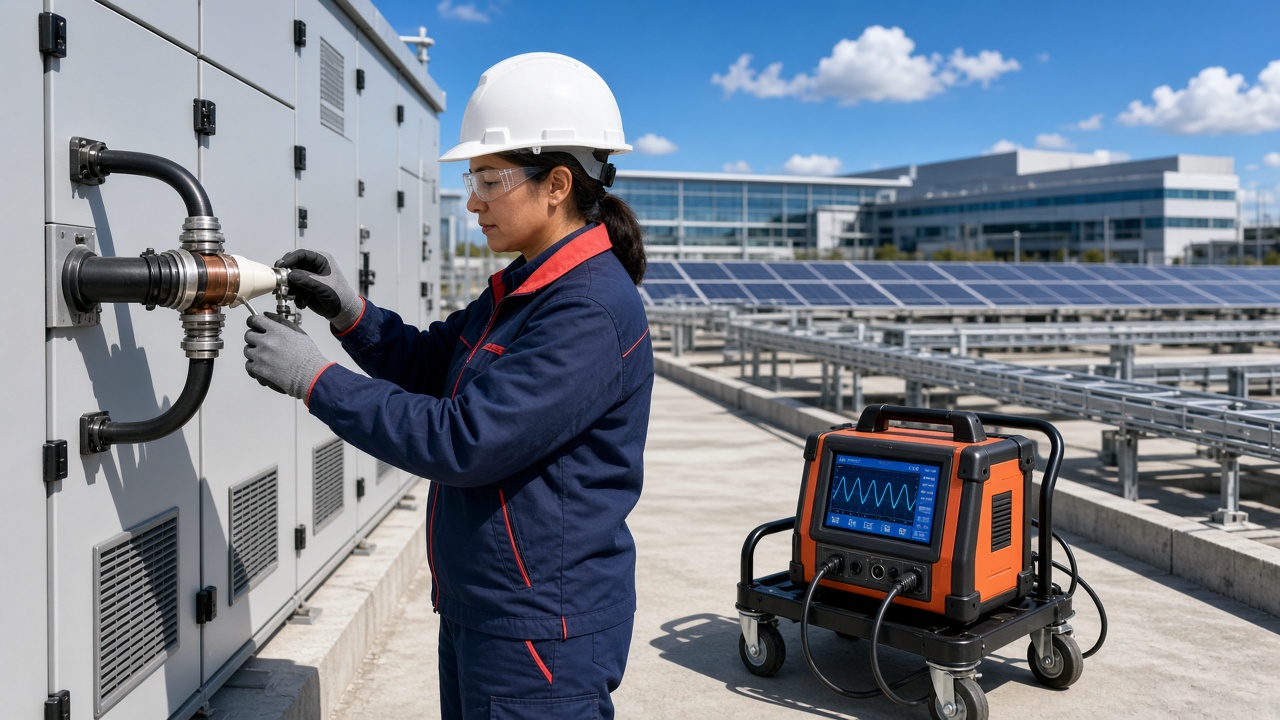
- Finding faults. When an underground cable fails, you can't just look up and spot the problem. Splicers and their crews use fault-location gear like time-domain reflectometers and surge generators ("thumpers") to pin down exactly where to dig.
- Testing. New and repaired cable gets tested before it goes back into service, increasingly with very low frequency (VLF) withstand and partial discharge testing.
- Maintaining network equipment. In dense downtowns, splicers often look after the network transformers and protectors that keep power flowing even if one feeder trips.
The craft sits somewhere between electrician, surgeon and watchmaker. A single nick in the insulation or a speck of contamination inside a 15 kV or 35 kV joint can become a failure years later. The best splicers I've met are calm, patient and slightly obsessive about cleanliness, and they're proud of it.
Where cable splicers work
The traditional home is the electric utility: investor-owned utilities, city-owned utilities like Seattle City Light, and big provincial utilities in Canada. But the field has widened a lot:
- Underground conversion programs. Utilities are moving more distribution lines underground for reliability and resilience. PG&E alone passed 1,500 miles of undergrounded lines, and every one of those miles needs splices and terminations.
- Data centers. Hyperscale campuses run medium-voltage cable from on-site substations to switchgear and unit substations across the site. Contractors who can terminate and test that cable well are in heavy demand. JLL said this week that some finished facilities have sat waiting months for qualified commissioning personnel, and cable testing is part of that chain.
- Solar, wind and battery projects. Utility-scale renewables have long runs of buried collector cable, with joints and terminations at every turn.
- Industrial plants, hospitals, airports and campuses that own their own medium-voltage distribution.
- Specialty contractors that do nothing but splicing, terminating and cable testing, often traveling between projects.
What cable splicers earn
There's no single government pay category just for cable splicers in the US, so here are the most reliable reference points I could find.
United States:
- The closest federal benchmark is electrical power-line installers and repairers, the group the Bureau of Labor Statistics files a lot of utility cable work under. The BLS reports a median wage of $95,320 in May 2025, with the top 10% earning more than $128,690.
- Real postings run higher in expensive cities. Seattle City Light's 2026 Cable Splicer and Electrician Constructor Apprenticeship listed an hourly range of $51.83 to $73.49.
- Overtime is a big part of the story. Underground faults don't wait for business hours, and storm or outage work can add a lot to annual earnings.
Canada:
- Job Bank lists "cable splicer – electrical power" with a national median of $46 an hour, and a high of $62. Alberta's median is $55 and British Columbia's is $50.
- At Hydro One, cable splicers come up through the PWU/Hydro One joint apprenticeship. Its recent Toronto cable splicer posting said apprentices start at $33.26 an hour including benefits, pension and vacation pay, with fully qualified Construction and Maintenance Electricians at a wage package of about $72.56 an hour.
My take: for a job you can enter with a high school diploma and a paid apprenticeship, the earning power of a journey-level splicer is excellent. It's also the kind of skill that keeps you employable in any economy, because the cables already in the ground still need someone to keep them working.
How to become a cable splicer
The most common path is a paid apprenticeship, usually through a utility or a union joint apprenticeship committee.
- Seattle City Light runs a four-year, 8,000-hour apprenticeship registered with Washington State. Applicants need a high school diploma or GED, some algebra or geometry (or the utility's Basic Electricity and Math class), a little electrical training or experience, and a driver's license. Selection includes the CAST aptitude test, a hands-on working test and a panel interview.
- Hydro One trains splicers through a Construction and Maintenance Electrician apprenticeship: five work terms of 1,800 hours, plus three 8 to 10 week blocks at a community college. Grade 12 math, English and a senior science or electrical shop are required.
- Other paths include starting as a lineworker, a ground worker on an underground crew, or an electrician with a contractor that does medium-voltage work, then moving into splicing.
Once you're in, the learning keeps going. Many splicers earn manufacturer training on specific splice and termination kits, and the industry standards for cable terminations and joints (IEEE 48 and IEEE 404) are worth getting to know. If you can add cable testing and fault location to your hands-on splicing skills, you become very hard to replace.
Practical tips if you want in:
- Brush up on your math now. Almost every utility apprenticeship tests it, and good scores move you up the list.
- Practice for aptitude and physical tests. Utility selection processes like CAST and working tests are competitive. Preparation shows.
- Get comfortable with confined spaces and heavy work. It's physical, and some days are cold and wet. If that doesn't scare you, you're ahead of most applicants.
- Watch utility career pages and apprenticeship committees. Openings are often posted for short windows. Seattle's 2026 application window was one week long.
- Show you're meticulous. In interviews, talk about any work where precision and cleanliness mattered. That's the core of the craft.
The outlook
I'm really bullish on this one. BLS projects employment of power-line installers and repairers to grow 10% from 2025 to 2035, much faster than average, with about 10,900 openings a year. On top of that, three big trends all point underground: utilities burying lines for reliability, cities densifying (Vancouver just approved a C$1.457 billion underground substation), and data center campuses pulling miles of medium-voltage cable through every new site.
Put that together and you get the sweet spot every career-changer should look for: rising demand, a skill that takes years to master, and not enough people learning it.
If you like the idea of a calm, precise, well-paid trade that keeps the lights on for entire cities, cable splicing deserves a serious look.
Ready to explore? Browse the latest electrical and utility jobs across the US and Canada.